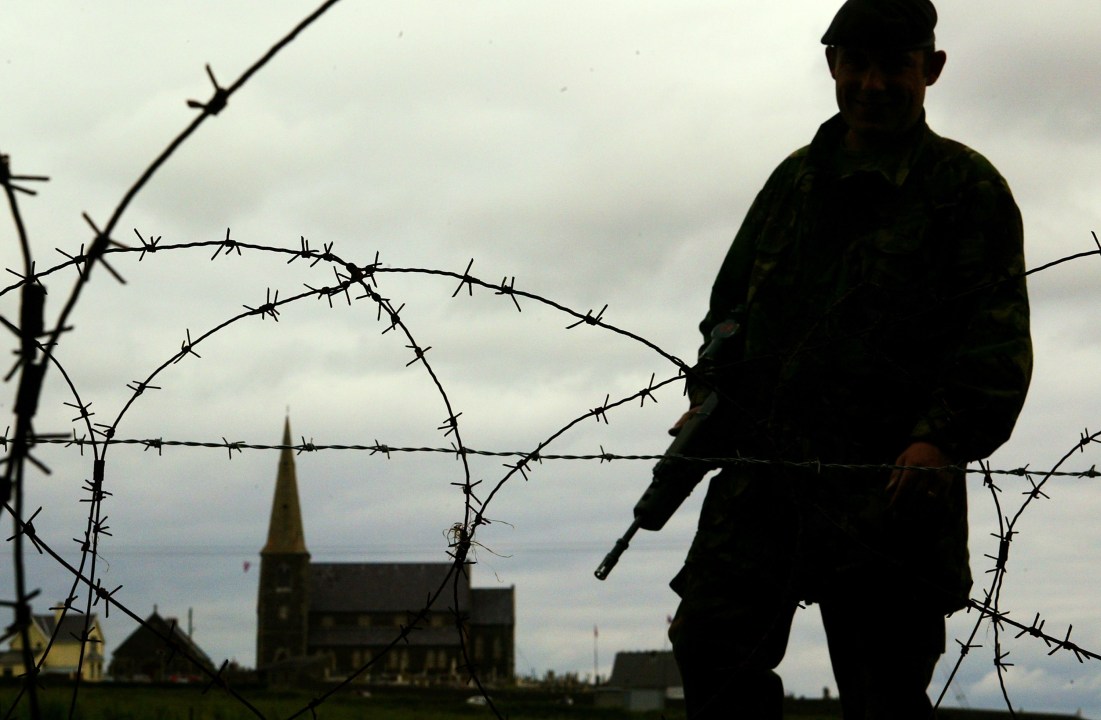
Drumcree Parish Church on the outskirts of Portadown in County Armagh is what comes to mind when thinking of Winston Churchill’s comment about the ‘dreary steeples’ of Northern Ireland.
A drab Church of Ireland outpost on a hill, it was catapulted into global consciousness in the 1990s when it provided the backdrop to one of the most vicious battles in Ulster’s kulturkampf.
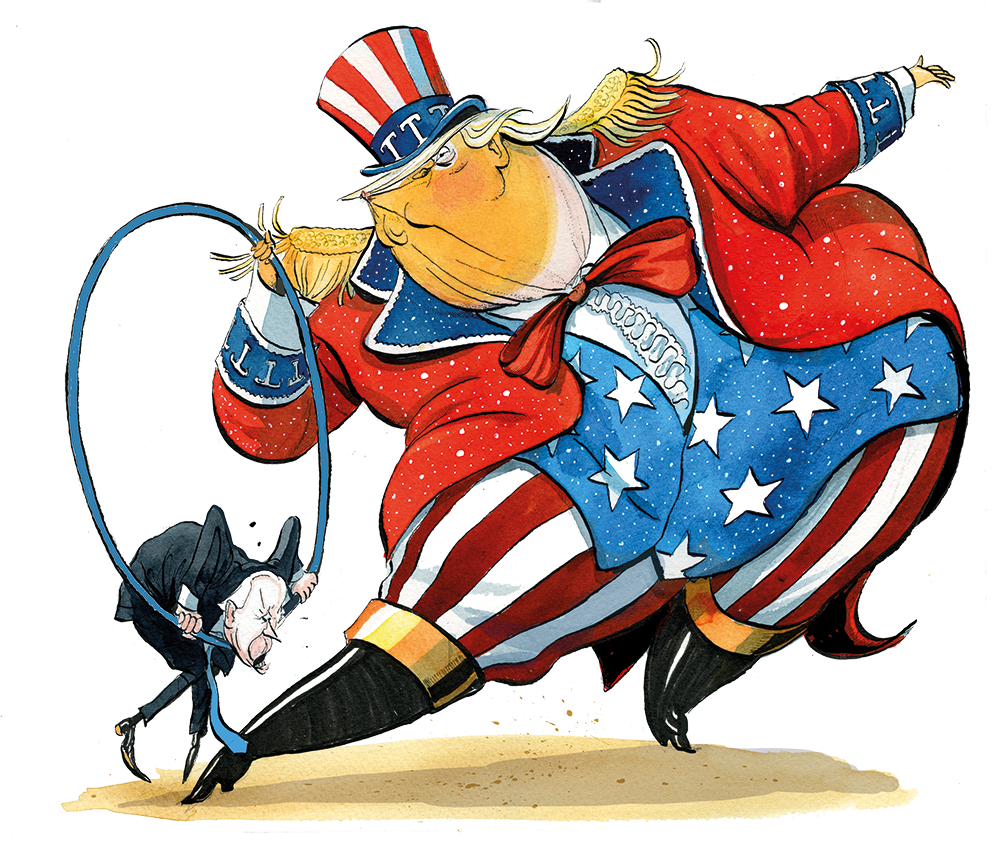
On one side, bowler-hatted Orangemen of the Portadown District, who, following a service at the church, would then process down the Garvaghy Road – the traditional route, as the late David Trimble put it – back into the centre of Portadown to conclude their parade. On the other, the nationalist residents of the Garvaghy Road who did not take too kindly to what they saw as gratuitous Protestant triumphalism taking place on the other side of their curtains.
The disturbances centred around Drumcree until the early 2000s crystallised all the various anxieties of Northern Ireland; unionist and loyalism’s ‘no surrender’ instinct chafing against nationalism’s pushback against what they saw as the most visible representation of the so-called ‘Orange State’.
Once the dark hand of loyalist paramilitaries intent on destabilising the peace process joined in, the Drumcree disorders quickly escalated into one of the most acute security challenges facing the British government during the Troubles. The quaint country lanes which surround Drumcree were soon characterised by the buzz of Army helicopters, barbed wire and thousands of troops separating the two warring factions.
Any time the parade was let down the Garvaghy Road, nationalist areas of Northern Ireland would explode in a spasm of rioting. It led to gratuitous sectarian violence. But when the march was eventually banned from going down the Garvaghy Road by the nascent Parades Commission, the body founded to adjudicate on contentious marches following the Belfast Agreement, three young brothers, the Quinns, who lived in a loyalist estate with their Catholic mother, were murdered when their home was petrol bombed in the re-routed 1998 marches.
Since 1998, no Orangeman’s brogues have gone down the Garvaghy Road. Each year, the Parades Commission would deny any request made by the Orange Order. There would be an occasional tokenistic protest with Orangemen marching up to the lines of policemen sent to enforce the Commission’s determination, but what was once one of the great flashpoints in Northern Irish society had been consigned to irrelevance.
However, it never became an irrelevance for those Orangemen and others who regarded this as the most egregious example of the decks being stacked against them in favour of a pan-nationalist front. The Garvaghy Residents Association who led the counterprotests to the parade were dismissed as little more than a sock-puppet for Sinn Fein-IRA. In that maximalist interpretation, the desire for equality was little more than a Trojan horse.
In 2026, Drumcree is back in the headlines. Following a legal challenge by the Orange Order, in late August the High Court quashed the Parades Commission’s decision to refuse permission for the march. The ruling found all sorts of procedural shortcomings by the Commission in their determination and has led to various demands for members of the Commission to resign. The newly installed Secretary of State Chris Bryant has established a review to see what went wrong.
The main takeaway is that because of a quango’s incompetence, after 28 years, the dreary steeple of Drumcree is back in play. The Orange Order in Portadown has applied for 60 members to march down the road in silence on 27 September, otherwise known as Ulster Day, the anniversary of unionists signing the Ulster Covenant against Irish Home Rule in 1912.
Unionists and loyalists have identified, belatedly, that relying on legalese and being overly reasonable may bring more results than repeated protest. After all, who could honestly argue against 60 nominally respectable Orangemen marching in silence? The scattered remains of the loyalist paramilitaries have also said they have no interest in re-entering the Drumcree fray, making the context fundamentally different from 1998.
Unionism smells blood
What this means for nationalism is equally significant. It would be a tremendous loss of face for political nationalism, Sinn Fein in particular, if the march was to go ahead. Refusing any form of mediated settlement with the Orangemen plays into their hands.
Indeed, given Sinn Fein and nationalism’s commitment to the notion of a New Ireland – and repeated insistence that unionist tradition would be respected in a united Ireland – surely it would be a powerful symbol if they were to give their assent to this scaled back version of a parade.
That seems unlikely. Unionism smells blood, and is likely to use this playbook of spotting procedural anomalies to relitigate other symbolic or cultural issues which have not been to their liking, with nationalists responding in kind. A decision on the new parade is due around 23 September, and will likely be appealed. Northern Ireland’s court rooms are increasingly the theatre where its intractable problems are played out.




Comments