The line of ex-prime ministers at the Cenotaph ceremony is getting embarrassingly long. Since 2016, Britain has added four to the invite list and is about add a fifth. We wouldn’t wish for any of them to return to their former office. In any objectively scored league table of post-war British PMs, May, Johnson, Truss, Sunak, and now Starmer would all struggle to get out of the relegation zone. This run of bad leaders is one of the central mysteries of British politics, and perhaps we don’t ponder it enough. Is it an unlucky streak, like getting tails five times in a row when you bet on heads? That seems implausible. There is probably a shrinking number of talented candidates. Even so, you’d think we might get lucky now and again.
Some argue that our attritional democratic environment makes even good leaders look mediocre. I do not find this convincing. The idea that Britain in 2026 is ‘ungovernable’ and that, in more stable times, Keir Starmer would be acclaimed as a decent or even half-decent prime minister seems far-fetched. Starmer’s inadequacy transcends the moment. He has proved timelessly abysmal at the job. To a slightly lesser extent you could say similar of Theresa May, or – well, let’s not go on.
I want to be clear about what I mean by a ‘bad’ prime minister. I don’t mean one who took decisions that turned out badly or who changed the country in ways I don’t like. On that basis, you might include Tony Blair for Iraq, or David Cameron for austerity or the Brexit referendum, or Thatcher or Attlee for whatever you think they got disastrously wrong. Your answer will depend on your politics.

That’s one way of looking at it, but I’m talking about something narrower and less value-laden; the day-to-day, month-to-month ability to do the job: to run No.10, to make sensible appointments, to set direction for ministers, to resolve internal conflicts by making tough decisions, to bring coalitions of MPs and voters together, to communicate clearly and persuasively, and so on. I disagreed with some big things that Cameron’s government did, but I never once thought, ‘This person is wildly unsuited to the job, by ability and temperament.’ I have thought that about every one of his successors.
Operational competence is a prerequisite of achievement in office, regardless of whether we ultimately deem the achievement positive or negative. The reason that PMs like Blair or Thatcher are consequential at all is that they were at least reasonably good at all the fundamentals of the job, the best evidence for this being that they got re-elected. And yet, when we’re assessing and arguing over potential PMs, we tend to focus on their politics and underweight the question of competency. We argue about the direction this or that candidate would take the country, without stopping long enough to ask whether they’re capable of taking it any direction at all.
For the most part, failed prime ministers do not fail because they’re socialists or neo-liberals or conservatives, but because they are situationists. I don’t mean in the sexy French sense, but in the sense that they are captives of whatever situation they find themselves in. Bad prime ministers don’t make things happen; things happen to them. They stand outside No.10, say some fine words, then go inside and kneel down before the real boss: events. (By which I mean not just unforeseen events, but all the economic, political and institutional forces that constrain and batter you from day one).
Why do these leaders submit so meekly to this master? Because they cannot execute on the fundamentals of the job. The first of these fundamentals is a strong sense of purpose or mission. What everyone in this bad run has had in common is that they didn’t know what they wanted to do with power (and I mean across the board, from the economy to foreign policy to immigration and welfare). Either that, or they ‘knew’ but only in the vaguest sense, Liz Truss being the obvious example. Having a clear direction without having a sensible plan can be nearly as bad as having no direction at all, and maybe worse, especially when you are short on necessary leadership abilities. Johnson knew what he wanted to do at first – get Brexit done – but after it got done, he was clueless. Yes, he had to deal with the pandemic, but he dealt with it in his hapless, myopic style, which would have revealed itself under any circumstance.
After this primary failing, bad prime ministers also tend to lack one or all of the following three things: the personal ability to bring voters and MPs onside; the intellectual ability to deal with the demands of a very complex job; the temperament to make tough decisions under pressure. Some, like Starmer, fail on all four dimensions. Others have had one attribute in abundance (Johnson had personal charisma, Sunak was clever) but fall short on the others. Nobody on our post-2016 list has had the first or fourth.
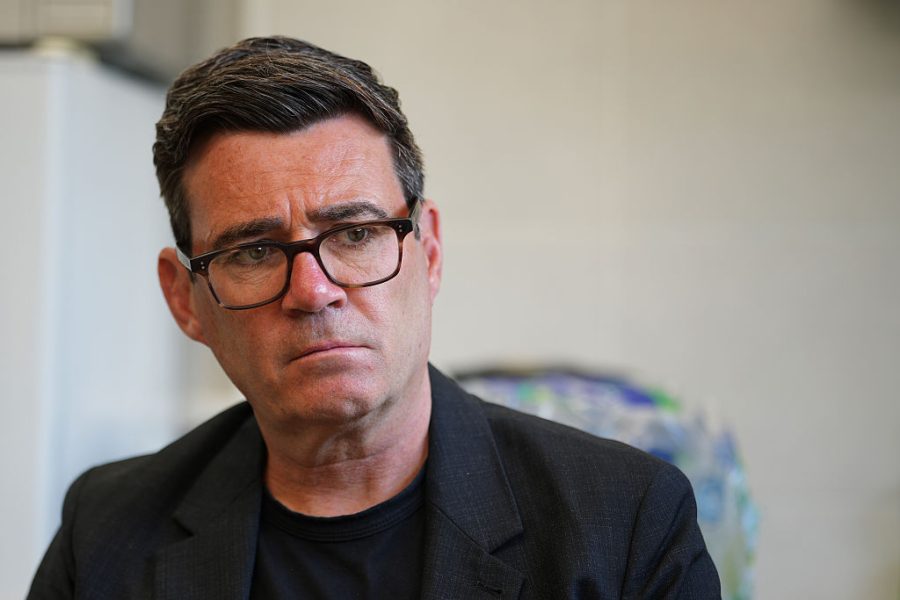
Now, how do we think Andy Burnham will do?
Let’s start with where he scores well: the personal. Andy Burnham is a likeable guy. He seems genuinely ‘normal’, which is unusual for a senior politician, and an art in itself. You only have to watch his Makerfield launch video to see how voters in Manchester feel about him, and how he responds to them. He’s warm and funny and, in certain contexts at least, at ease in his own skin. He has the rare ability to speak from the heart in public, plainly and directly. In private, according to those who know him, he is the same; he is friendly, courteous, caring, asks questions and listens to the answers.
Banal as it may sound, Burnham comes across as genuinely nice, and that counts for quite a lot. I can well imagine that as and when he replaces Keir Starmer in No.10, the nation will greet him with a smile of relief. At last, a national leader who doesn’t grate on our nerves every time we hear his voice! At last, a leader who sounds like someone we might know. Burnham’s charm will give him a head start. It will buy him some time. But when you’re prime minister, events move fast and they are out to crush you. To stay ahead of them, other qualities are required.
I said Burnham is at ease with himself ‘in certain contexts’. He’s very good at talking about football or music, and all the non-political stuff. He’s also good at presenting his political views, so long as he’s speaking to a sympathetic audience and isn’t pushed to go beyond generalities. He is superb with voters on the doorstep, partly because voters tend not to know or care much about policy. He is comfortable talking about how politics is broken, and Labour needs to change; about how government has forgotten about the needs of ordinary voters, especially those outside London. Put together a reel of such moments and you would say, this is a first-rate communicator.
But take a look at Victoria Derbyshire’s Newsnight interview with him from a couple of weeks ago and tell me if you see a great communicator at work. I see someone tense, dry-mouthed, bumbling, brittle and evasive, unsure of his footing at every step. This wasn’t even a punishing interrogation. None of the questions were very hard to predict or prepare for. Derbyshire didn’t probe him much on policy, other than tax cuts for small businesses, in response to which Burnham gingerly set out one position (cut business rates) only to end up half-assenting to another (reverse the national insurance rise).
He does not seem to have ever worked hard at understanding the trade-offs and complexities involved in national government
As and when he becomes prime minister, his interviews will only get tougher. In the age of social media it is possible that political leaders can minimise the importance of this kind of public appearance and maximise the friendly, superficial kind. Burnham will have a good prime ministerial TikTok game. But a successful prime minister still needs to be convincing in both contexts. If nothing else, performance in interviews is a proxy for actual grasp of policy and government. If a PM is short on that, they are likely to fail. Burnham is desperately short on it.
That’s a little surprising, given that he’s been in politics all his adult life and has been a cabinet minister. But he does not seem to have ever worked hard at understanding the trade-offs and complexities involved in national government nor to have had much appetite for doing so. As health minister, he was liked by officials but known to be indecisive and incurious about policy detail. He made party-pleasing noises about being anti-privatisation but essentially passed through without touching the sides. Once he became mayor of Manchester, he no longer had to even bother with that onerous stuff. On national issues he could make gestures in the politically expedient direction without having to square them with his record or his plans.
The result is that he can sound startlingly vacuous. We all know the remark about not wanting to be ‘in hock’ to the bond markets, without seeming to understand what bond markets are or why we are in hock to them, but it was hardly an anomaly. He mouths the phrase ‘fiscal rules’ without ever giving the impression that he knows what they are or why they matter. Here’s how he answered a question about the EU, during Labour’s conference last September:
Journalist: ‘Rejoin the EU or stay out?’
Andy Burnham: ‘I want to rejoin. I hope in my lifetime, I want to rejoin the European Union. I believe in the unions of all kinds. The union of the UK. The EU benefitted this country. Trade unions. People prosper more when they’re part of unions.’
I’m sorry to break the flow of my Flaubertian prose, but – fuck me. I believe in the unions of all kinds. It’s like something from an essay by a primary school pupil. That’s the extent of his thinking, on one of the most important geopolitical questions of the age? I’m just not sure how you get from there to prime minister-level within a year, or ever. (I need hardly add that as soon as the byelection campaign started, he said he didn’t actually want to rejoin at all).
Burnham doesn’t have a burning mission or purpose except in the vaguest sense. He has a genuine and noble wish to do right by voters who feel alienated and let down by successive governments. But he doesn’t have a serious analysis of what’s gone wrong with the country, which is why he leans on empty phrases like “‘orty years of neo-liberalism’. In terms of philosophy and policy he travels light. That’s why his sudden acquiescence to the whole Starmer-Reeves programme was frictionless and why his u-turns arrive with the frequency of his beloved buses.
So far, his own policy agenda is embarrassingly thin: public control of utilities that are already tightly regulated (presumably more public ownership is attractive because the British state runs everything with Singaporean efficiency?); more social housing in a country that already has an exceptionally high stock of it; various tax cuts and spending promises that he makes or rescinds on a daily basis; no plan to deal with our parlous fiscal situation.
If you’re thinking ‘Well, he’s been in campaign mode, it will be different now he’s preparing for government’ then I wonder whether you would have said the same about Starmer and Reeves, who had years. You can’t just rig this stuff up from nothing after a couple of away-days.
I am sceptical that Burnham has the intellectual capacity to ‘learn on the job’ and certainly not at the speed he would need to do so if the job is not to overwhelm him. It’s not the hardware that’s the problem – as a young man, Burnham was clever and diligent enough to scale the British establishment from the outside. It’s the software he’s been running for the last thirty years, narrowly designed for advancement within the Labour party. His instinct has always been to please the party, and you don’t do that by challenging its worldview or assumptions. But unless you do, your intellect and curiosity will atrophy.
Now that Burnham is pitching for the most powerful job in the land, he is suddenly being asked to think outside the realm of Labour boilerplate. But it’s too late. I cannot see Andy Burnham coping with running a government while trying rewire it, which he will have to if he wants to get anything done. I can’t see him getting to grips quickly with big hairy problems in energy, defence, AI, housing, social care, justice, and all the others that will be hammering on his door every day, while America staggers around like a drunk giant and China and Russia try to undermine and weaken us. Nor is he part of a network of talent who can help him meet the moment; for the most part, he will be relying on the same people who are in charge now, plus a few newcomers from Manchester and some aged lefty think-tankers.
Beneath this deficit of ability is a more profound one: one of temperament, or character. Burnham is a people pleaser. To some extent that’s a good thing – politicians have to please people. But it can be a very bad thing in a leader. A crucial attribute of an effective Prime Minister is a willingness to upset people – to size up who they will have to disappoint or anger to get something done, and either assuage them or make them irrelevant. Avoid these trade-offs and you only end up angering everyone, as Keir Starmer has just discovered yet again.
If a Prime Minister in our system has ‘one job’ it’s to be the tie-breaker – to take the decisions that can’t be resolved by ministers and officials. Starmer’s single biggest operational deficit has his consistent failure to play this role. I find it hard to believe Burnham will be any better. Would he have broken the deadlock between Defence and the Treasury? Would he have even grasped the issues involved?
He wants to be Andy, mayor of Britain. But a Prime Minister is not a mayor. The decisions are bigger, more complex, and more contested, by an order of magnitude. I’m not convinced that overseeing an upgrade to Manchester’s bus system qualifies you to chair the national security council or to act as First Lord of the Treasury. Mayor Burnham did not have to make decisions – on, say, immigration – which were bound to be hated by big parts of his electorate. In fact, you could say that’s why he became mayor. He had got about as far in national politics as an inveterate pleaser can.
His second Labour leadership campaign in 2015 was agonisingly bad, especially for those of us who wished him well. (Many of the people now talking him up either weren’t paying attention back then or have erased the trauma from their memory). He wanted the party establishment to like him and he wanted the Corbynites to like him. By trying to please everyone he lost everyone’s respect, shrinking as the campaign went on. His lack of a core idea or philosophy was painfully apparent in every shifty, oily interview. He has become a more relaxed and adept public performer since then but that’s partly because he hasn’t had to straddle divides and interests on a national scale.
Burnham is an emotional man who cares about others and cares about what others think of him. This is part of what makes him appealing. But an effective Prime Minister must have a sliver of ice in the heart; at some level they have to be a killer. Burnham is soft in the middle. There is a fundamental weakness which emanates from him like cheap aftershave whenever he is put under pressure. Events will brutally expose it, and over time the affection of voters will curdle into contempt. His national ratings have already started to decline. If he becomes Prime Minister he will be very unpopular within a year. I doubt that he will ever be hated as widely and coldly as Starmer is. Many voters who like him now will still like him then, but they will feel sorry for him, which may be worse. They will see that he’s a good man in the wrong job.
An effective Prime Minister must have a sliver of ice in the heart
Here’s the worst thing: I believe all this and yet I also think Burnham should become Prime Minister. There are Labour MPs I think would do a much better job, like Streeting or Mahmood, but they are simply not going to be elected by their party. The reasons I prefer them are the same reasons their party doesn’t. So for the time being, that leaves Starmer or Burnham, and while I don’t think Burnham will be much of an improvement, Starmer has to go.
But I don’t want to put aside my astonishment at the calibre of national leaders we get. Although I can see how it happened, I find it unbelievable that Andy Burnham is the person that Britain, a great country, is installing as prime minister, amidst war in Europe, major technological disruption, violent unrest across the country, and a public sector coming apart at the seams. Is this really the best we can do? Apparently it is.
Even more astonishingly, he may represent a slight upgrade. At least Andy will raise a smile from time to time. But among elites at least, there is a strong tendency towards magical thinking at these moments. Let’s not fool ourselves with debates over whether Andy Burnham is going to ‘change Westminster’ or take the country in a different direction. As Joshi Herrmann said in his superb, definitive profile, there is no ‘Burnhamism’, nor will there ever be. We have that pretend conversation because we don’t want to face up to the truth about what’s coming next.
I really, genuinely hope I’m wrong, but this is how I see it. Once in No.10, Burnham will rejig the cabinet, disrupting and slowing whatever progress this government has started to make on delivery. He will then find himself forced to the right by our fiscal position and set against his own party without wanting to confront them, while fighting multiple fires he doesn’t understand, one of which may become a full-blown crisis. At some point, everyone will conclude that this Prime Minister is also unsuited to the job, by ability and temperament, and on a Remembrance Sunday in the not-very-distant future, the line of former prime ministers will lengthen once again.
Still, maybe the next one will be better?
This article was originally published on Ian Leslie’s Substack ,The Ruffian.


Comments