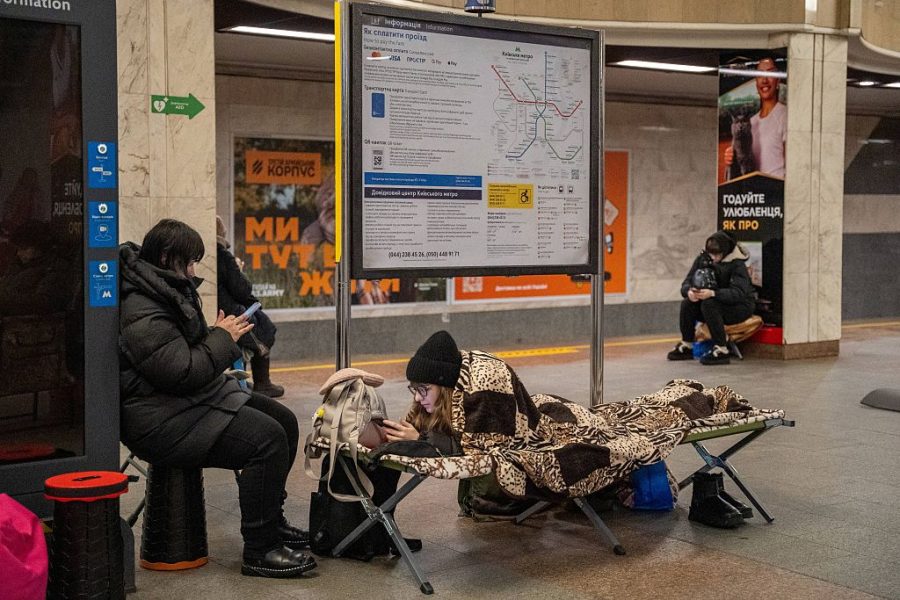
How do you convey the oddness of Kyiv during Russia’s invasion of Ukraine? The reality of living under the constant threat of drones and missiles, combined with the undeniable fact that life continues as normal for most of the time?
Kyiv isn’t just bombs. It’s pet grooming salons with neon signs and coffee shops called ‘202 Degrees Fahrenheit’. It’s WiFi signal that doesn’t fail, matcha tea with your choice of milk, ride-sharing apps and electric scooters. The city is as cool as the coolest corner of Shoreditch.
Almost the first thing I do when I arrive is explore the bomb shelter underneath my flat. It’s surprisingly clean and recently renovated – a step up from the bare bricks and water pipes you might expect of a basement. There’s a kettle, free Wi-Fi and power sockets. There is even a loo and a sink.
A neighbour tells me that as many as 25,000 people sleep in the metro on a bad night of bombing and that just as many have shelters underneath their building, but there are 3 million people in the city. This is a drop in the ocean. She also tells me that there are a couple of homeless men living in our basement.
Kyiv is as cool as the coolest corner of Shoreditch
Later in the day, there is an alert and I go downstairs to sit it out. A man walks in. For a moment, I’m excited to see that I’m not the only one because it seems the locals react sparingly to alerts until things get serious. ‘Where’s Vanya?’ the man asks. ‘I don’t know,’ I say. Well, perhaps not, then.
But I’m curious. ‘Who’s Vanya?’ I ask. ‘He’s the man who… lives here,’ he says. ‘Aha,’ I think. ‘The homeless man is called Vanya.’
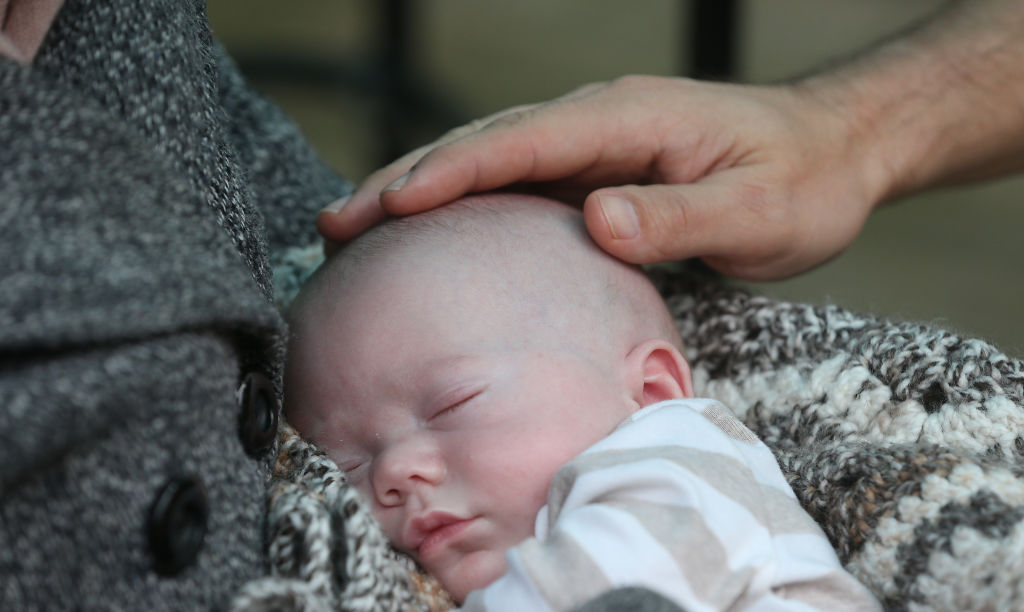
The issue of homelessness is a pertinent one in Kyiv because so many people moved from the east of the country as Russia occupied it, taking almost nothing with them. I learn later that this causes tensions with the residents who feel the shelters are part of their communal property.
I have come to Ukraine because I co-lead a small non-profit called Medical Life Lines Ukraine (MLLU). Our drivers fundraise for a second-hand ambulance, then drive it over in a convoy to Ukraine with our team. I typically join the drivers at the Polish border to help with customs documents. I’m Ukrainian by birth, and after one of our trips, I decide to stay a bit longer and reconnect with my roots.
I have always been Ukrainian and never quite Ukrainian. I moved from Kyiv to London as a child because my mother joined the newly created BBC World Service when Ukraine became an independent country in 1992. I spent every summer in Ukraine with my grandmother at her small country dacha and fell in love with a dreamy distant cousin. But as I grew older, went to university and established myself with a group of London friends, I forgot about this episode of my childhood. I was too busy working and trying to live a life in London.
The Russian full-scale invasion in 2022 changed all that. I stopped sleeping. I woke up almost every night at 3 a.m. to check Twitter for at least a month. I volunteered a lot before MLLU, then went to Lviv with them, and then to Kyiv for a couple of days. Every time I visited, I was getting closer to the real step that I wanted to take, which was to spend a longer period of time in Kyiv.
During my current stay, it takes me a while to realise that in Kyiv, there are two types of alerts and most people distinguish between them through a constellation of Telegram channels. First, the ‘Alert!’ app sounds. During the day, it typically does so to tell you that a missile-carrying MiG jet is taking off. The alert means they’re going…somewhere. But at this point, there’s no way of knowing where, so the whole country goes ‘red’.
Many people ignore these, essentially because there is so little time to do anything, as it takes around five minutes for a ballistic missile to reach Kyiv. In a city of high-rises, even those who have a shelter don’t always have the ability or energy to reach it. It’s easy to feel that the chances of being one of an unlucky handful among 3 million is small. So life goes on.
From my limited experience, the pattern a serious attack typically takes on starts with a swarm of drones between 10 p.m. and 11 p.m. The (relatively) good thing is that they take longer to fly over, so you have time to pack your things and lock up before you go down to the shelter. I have my half-laced trainers by the door, along with my air mattress and sleeping bag.
The next time there was a nighttime alert, I went downstairs to set up for the night. I could hear nothing apart from the distant echo of Vanya’s snoring, so I inflated my mattress and drifted off to sleep with a book.
I woke up at about 2 a.m. and there were at least ten other people around me. There was also a dog, a bird and a cat I discovered is called Marcello. More were coming in among the dull thuds in the distance. I realised with some relief that this was mainly the sound of the metal door slamming shut but if I listened very closely, I could also hear explosions and the unmistakable sound of a machine gun shooting down drones. I drifted off to sleep.
I next woke up at a little past 8 a.m. and there wasn’t a single other living being in the room. I hadn’t heard a thing. Well, at least I’m sleeping again, I thought. It’s been three years and unexpectedly, I am sleeping again! It only took going home.



Comments