Of the many political headaches Keir Starmer does not need right now, further American warnings that Britain is suppressing speech are pretty high on the list.
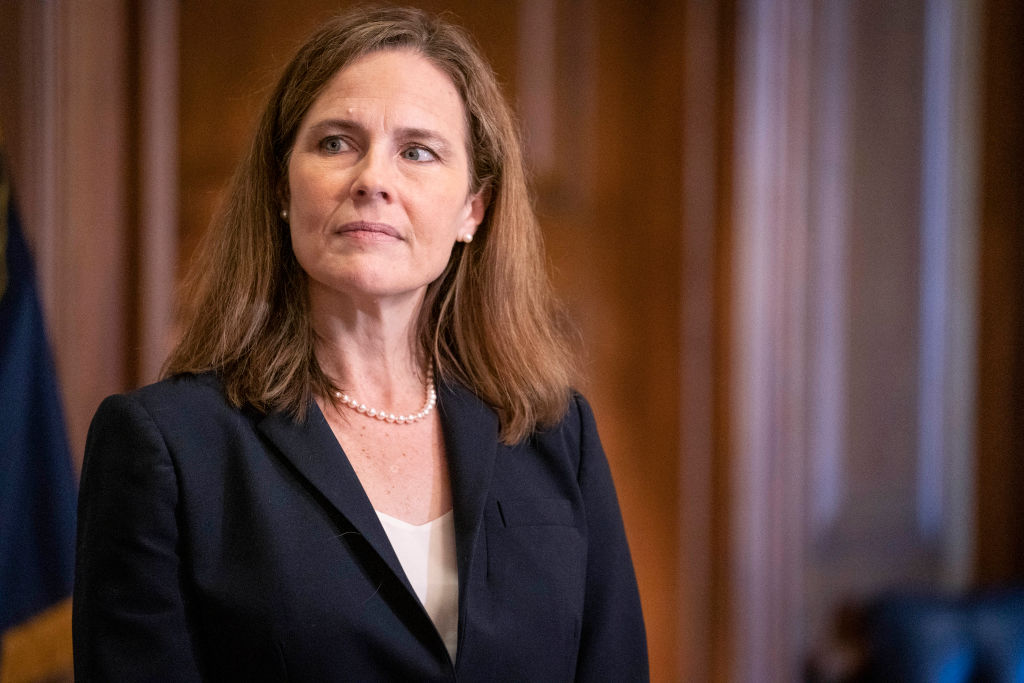
Unfortunately for the Prime Minister, another prominent US public official has voiced concerns about a crackdown on freedom of expression in the UK – and a Supreme Court justice no less.
Justice Amy Coney Barrett was interviewed on Sunday’s edition of Bishop Barron Presents, a podcast hosted by Catholic prelate and public intellectual Robert Barron, bishop of the Diocese of Winona-Rochester. During a discussion of the purpose of law, the risks of using legislation and courts to inculcate virtue, and the maintenance of pluralism, Justice Barrett said:
‘Think about what’s happening with respect to free speech rights in the UK. Contrary opinions or opinions that are not in the mainstream are not being tolerated, and they’re even being criminalised. Because of the first amendment, that can’t happen here, and so I think the first amendment protects, guarantees, forces us to respect one another and to respect disagreement. There’s a tolerance of different faiths, a tolerance of different ideas. We can see what would happen if you didn’t have the guarantee to hold that in place.’
Barrett was nominated to the Supreme Court by Donald Trump during his first term but has drawn the ire of the Maga movement and was branded ‘Amy Commie Barrett’ for siding with the Court’s progressive jurists on the lawfulness of executive actions on foreign aid and deportations.
In August, US Vice President J.D. Vance warned then Foreign Secretary David Lammy against the UK going down a ‘very dark path’ on censorship. While his intervention was embarrassing for Keir Starmer, Vance is known for sharp, ideological rhetoric. The words of Barrett, a senior jurist and legal scholar, will be more difficult to dismiss.
Her damning analysis is a reminder that Britain’s already weak protections for expressive liberty, which have repeatedly been assailed by Tory and Labour governments, not only undermine freedom of speech at home but diminish the UK’s democratic reputation overseas.
Will a political class never done gushing about the importance of its ‘good global citizenship’ to Britain’s much-touted ‘soft power’, now agree to relax our speech-restricting laws to save our international image?

Comments