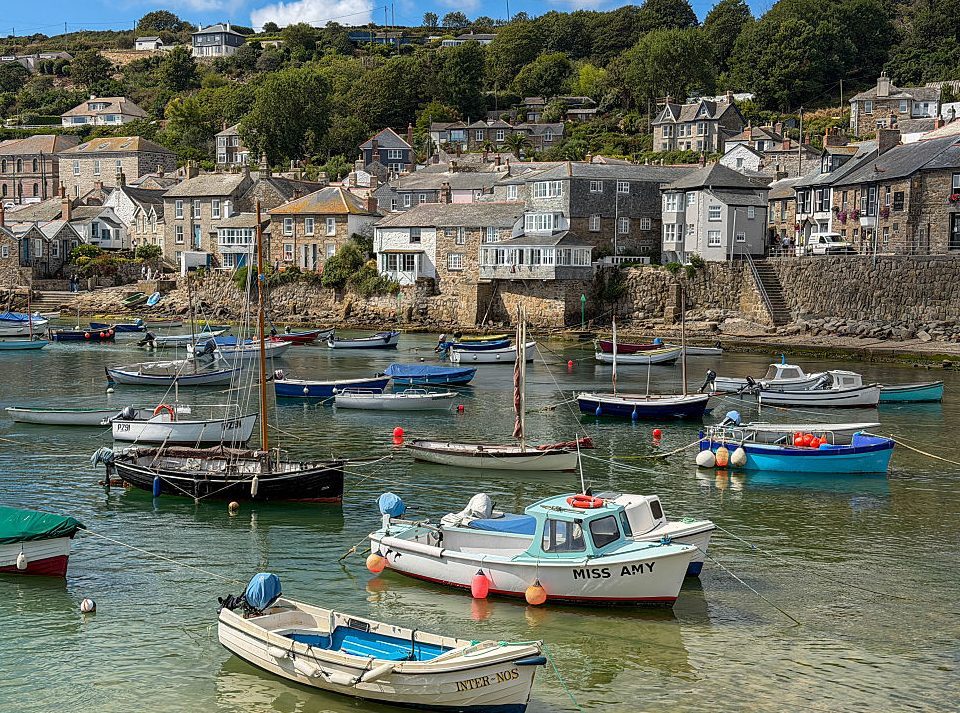
I was once called ‘rude and uncivilised’ by an Airbnb host and accused of leaving the flat ‘covered everywhere with small stones brought in from the beach’. I was taken aback, as I’d paid extra for cleaning. Did Lorenzo not agree that this included sweeping the floor? Perhaps that’s just Italians for you. His Nonna probably still does the hoovering for him.
A five-star hotel will not leave you feeling like you’ve somehow imposed upon it by paying for a service
I expect Lorenzo (not his real name) will be gesticulating wildly at news that Airbnb has officially excused guests who pay a cleaning fee from washing up and stripping beds. New ‘house rules’, which come into effect on 20 November, stipulate that hosts should not require guests to do dishes, laundry or take out rubbish, stating that ‘asking [guests] to do things a cleaner should handle can negatively affect their stay’.
It was Christopher Hitchens who said his vision of earthly bliss was ‘to be vindicated in my own lifetime’, and now I know how it feels. But it will not tempt me back to Airbnb. Even if you’re a total slattern like me, you end up cooking and cleaning in a rental property. I go on holiday to get away from domestic duties, not just recreate them in another setting.
Holiday lets are always hopelessly ill-equipped for such tasks. Every kitchen knife is always blunt. The hob will be tiny and it will be impossible to figure out how it works. There’s never a toaster. If you should graciously attempt to mop up the red wine you’ve spilled, you won’t be able to find the wherewithal because it will be in an obscure and probably locked cupboard known only to the housekeeper.
Then there’s the Airbnb aesthetic. Driftwood ‘sculptures’, posters that say ‘Prosecco O’Clock’, decorative shells, pictures of French cafes – none of these crimes against taste would exist if it weren’t for holiday lets. Design forums encourage prospective hosts to stick to a neutral palette with ‘pops of colour’ and to ‘add local character’. No one would actually live somewhere that bland.
Airbnb was started in 2007 when Brian Chesky and Joe Gebbia inflated three air mattresses in their San Francisco living room and advertised them for cheap overnight stays. It was originally conceived as a social venture as much as a travel one, connecting like-minded peers across the world. It now lists over 9 million properties for rent and has a market capitalisation of over $100 billion.
There are entire parasite professions now associated with it. There are mortgage brokers who specialise in the sale of holiday lets, professional co-hosts who liaise with guests for you and designers who can ‘stage’ your property to its best advantage. Such is their popularity that there are now ghost towns in parts of Devon and Cornwall with no permanent residents, as every house is a holiday let. Tourist cash is a welcome boost for these struggling economies, but it is also leading to a shortage of rental properties for locals and calls for tighter regulation. This is no longer a loose network of Californian hippies helping each other out with spare beds – it’s an industry.
This new guidance about cleaning is surely an acknowledgement that hosts are selling a product, not doing their guests a favour. Some 17,000 people have signed a petition calling on Airbnb to rescind the guidance, but I hope the company sticks to its guns. That said, tourists should behave themselves. It’s hard not to sympathise with the Cotswold landlord who opened her door to find dog faeces on the floor and vomit on the bed. Sarah Mitchell estimated she incurred £1,400 of cleaning costs and had to replace the mattress. She told the iPaper that ‘The worst part was realising somebody had slept in that bed, made that mess and then simply walked away’. She added that her clients had ‘seemed perfectly normal. They even asked for restaurant recommendations’.
But for every nightmare customer there’s an unscrupulous vendor. The internet is awash with Airbnb horror stories, from misleading listings to pest infections and even hidden cameras to spy on guests. Ana told Buzzfeed she found a live tick on her pillow – perplexing given that ‘this was in a city with no wooded areas around’.
Since my run-in with Lorenzo, I have avoided scrapes like this by eschewing Airbnbs in favour of five-star hotels. They’re just better. You pad around carpeted corridors in branded bathrobes and slippers. Maids sneak into your room to clean while you’re out, leaving only little chocolate gifts as clues to their presence. Nothing says sophistication like having all your shoes lined up for you. Plus you can charge drinks and meals to your room and then it’s almost as if you don’t have to pay for them at all. I once stayed somewhere so fancy that, instead of a ramekin of humid peanuts with my drink, I was presented with oysters. You don’t get that at ‘cozy mezzanine apartment near centre ville’.
Yes, hotels are more expensive, but at least they recognise that you are engaged in a transaction, not a relationship. A good hotel will not leave you feeling like you’ve somehow imposed upon it by paying for a service. If that makes me rude and uncivilised, so be it. I’d rather order room service than scrub someone else’s pan.




Comments