For decades, we on the liberal right have been sold the fiction that Republican lawmakers are fighting for small government. There are many reasons why the state seems to relentlessly expand no matter who is in office; an important, though overlooked, one is that it is incredibly difficult to persuade voters that smaller budgets and reduced employee counts can achieve equal or superior results. Voters might dislike bureaucracy, but they fear what happens when the machinery behind it is dismantled – what if the alternative is worse? One needs look no further than the backlash against DOGE to see that the right needs to prove a smaller government can improve citizens’ experience in dealing with it.
These reforms could challenge the assumption that protecting public services means protecting bureaucracy
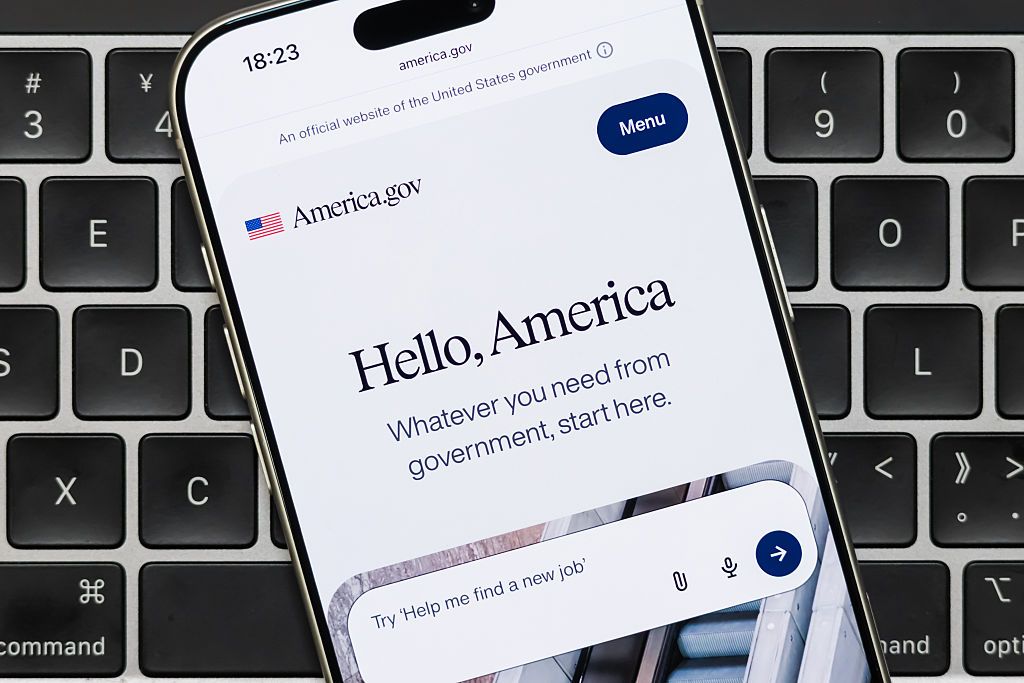
America.gov, the Trump administration’s new AI-powered portal for government information, could be the first step in fixing our bloated and inefficient public services. In its current form, it assists users in navigating information about federal policy and procedures. What currently serves as a simple information retrieval tool could become what the right needs to make a convincing case for smaller government. Amid widespread fear surrounding AI, conservatives should champion this effort as a means to prove that America’s AI bet will prevail, while setting demanding standards for its success.
Spending cuts and personnel reductions present voters with an immediate, tangible risk and an abstract, distant payoff. A citizen who could complete a routine application in minutes online, rather than endure repeated phone calls and an office visit, would have a concrete benefit to weigh against that risk. If automation can improve a service while reducing the administrative hours required to deliver it, the argument that adequate services necessitate an ever-expanding bureaucratic workforce becomes harder to sustain. The key is to improve services first, before using the results to justify reductions in staffing and a slash in spending. Citizens must first have faith in the program; only then can both innovations in AI and the reform it enables command durable support.

The chatbot is a good start, but America.gov cannot stop here. Its next step should be to help people complete administrative tasks: checking applications for errors or missing information before they land on an employee’s desk, for example. This could free employees to handle difficult cases, while allowing the number of generic administrative positions to naturally decrease. Success should be measured against clear benchmarks, like processing times, error rates, cost-per-transaction and staff hours spent per task. Should the program prove effective, the Trump administration would ideally encourage and assist states in adopting similar ones.
After botched attempts at making government more efficient, this could be the program that allows the Trump administration to give voters a tangible reason to associate Republican governance with competence. If successful, these reforms could challenge the assumption that protecting public services means protecting every administrative process and position. (Of course, savings must outweigh the costs of building and operating these programs, otherwise, this is just another shiny toy for the government to tout as progress.)
This is a test of whether the administration can convert technology into something that makes measurable improvements in voters’ daily lives. The humble chatbot might be uniquely suited to help make the case for smaller government, if the people behind it can deliver.






Comments