If I recommended you an American novel called Stoner, what would you think? You’d probably assume it was some hallucinogen-inspired rubbish from the 1960s by someone who once met Allen Ginsberg. You wouldn’t think it was a plangent, devastating story about the failed life of an English literature academic. That’s because, if a campus novel like this were British, it would have been written by Kingsley Amis, Howard Jacobson or Evelyn Waugh. It would never have had such a terrible title and would also be comic rather than achingly sad. That’s the difference between British and American novels: American novels aren’t funny.
Perhaps Americans just take things more seriously
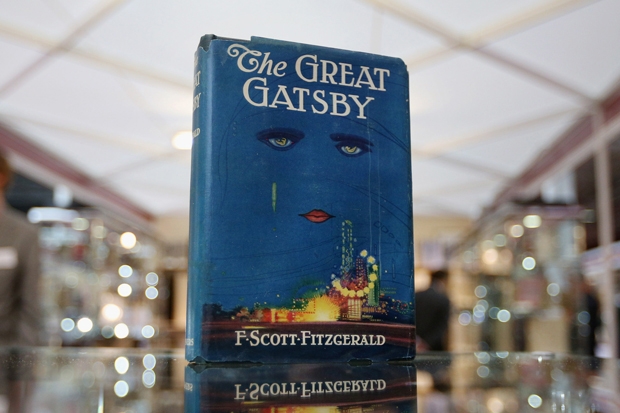
Moby-Dick, The Great Gatsby, The Scarlet Letter, The Secret History – none of these totemic American greats has a joke between them. Nor are the prevailing themes of US literature – slavery, colonialism, the fragility of the ‘American Dream’ – especially funny. That is not to say that our trans-Atlantic cousins aren’t funny. They have mastered the TV sitcom (Seinfeld) and elected Donald Trump. But when it comes to novels, they lose their sense of humour.
Perhaps Americans just take things more seriously. Britain is a nation of gentleman amateurs whereas the home of the free is a land of strivers. The difference is particularly apparent in the world of business, where Brits tend to be blaggers who rely on personal charm while Americans believe that success is a technique that can be learned. That’s why they celebrate risk-taking and wealth while we think it’s cheating.
Likewise with democracy. America took a British system that was messy, layered and unwritten and codified it. The Constitution is a single document that purports to contain almost infinite human relevance. No British person except Casaubon from Middlemarch would try to write such a thing. Spoiler – he is not the hero of that novel. ‘Great American novels’, however, are less shy of the challenge.

English novels, by contrast, have been inherently comic from the start. Initially, they were considered trivial compared to poetry and therefore mainly for women. Tom Jones, Tristram Shandy, Gulliver are all slight and funny characters whose broader truths are almost adjuncts to their jokes. Dickens and Austen refined the medium, then the Yanks took what was light and made it weighty.
America also has hardly any history – a piddling 250 years – so her writers often try to make the current moment epic. Gatsby is an example, with Fitzgerald spinning a deep tragedy for seemingly superficial people. John Updike’s Rabbit series charts a vast spectrum of experience in the life of a single man.
But like any rule, it’s the exceptions that make the unfunniness of the American novel most interesting. Jonathan Franzen’s The Corrections is funny, though it does feature an extended sequence involving a talking poo. Tom Wolfe’s The Bonfire of the Vanities is an almost peerless satire and one that could only have been written by an American. Something about Wolfe’s own self-mythologising ease within society made him brilliant at skewering it. I like to think it’s because he was a journalist before he became an author.
Andrew Sean Greer’s Less is so funny you almost think it must have been written by a Brit. As an examination of literary envy and inadequacy, it’s like a Martin Amis. As a slapstick farce, it’s like a PG Wodehouse. It’s only with the endearing sweetness of the Hollywood ending that Greer diverges from his colonial masters.
And there’s Portnoy’s Complaint – a perfect comic novel. It was so good that Philip Roth never wrote a joke again. American Pastoral, The Human Stain, The Plot Against America – all brilliant, muscular and panoramic. But not funny. Both Portnoy and Less derive much of their humour from the protagonists being at a slight angle to American society, the former being Jewish, the latter being gay. There’s a case for Portnoy as Roth’s most Jewish and least American novel, though it’s hard to imagine a writer from another part of the diaspora giving the same prominence to a hamburger.
Is it because everything matters more in America? America is an experiment – in nationhood, capitalism and being the world’s moral leader – so maybe its art is rightly in a higher register. I don’t know, humour is subjective. You might think Henry James is hilarious.
So what of the American novels yet to be written? It’s a cliche to say that Donald Trump has killed satire. But he has undeniably deranged some British writers. Pussy, a roman a clef about a giant baby princeling who doesn’t know any words, was beneath a writer as funny as Howard Jacobson. But now that the tenor of their politics has become so hysterical, let’s hope American writers can start taking themselves less seriously. A US confused about itself, like Victorian Britain, rather than one convinced it is the world’s policeman, is surely more fertile ground for comedy.
God knows we could all use a laugh.






Comments