Every day, I play a game that I call “How Low Can He Go?” Despite the simple premise, it’s harder to win than you might think, since Donald Trump always manages to exceed my worst expectations. Most recently, his shocking appropriation of the political opinions of four American soldiers killed in the war against Iran (he claims that they all supported his idiotic and unconstitutional military campaign) took me by surprise. Wasn’t it impolitic to risk invoking the wrath of the soldiers’ grieving families? Wasn’t Trump aware that American corpses in uniform are no longer guaranteed fodder for rally-round-the-flag rhetoric?
In 2016, when I first started playing HLCHG, Trump denounced John McCain, a respected former PoW and Navy veteran tortured by his Vietnamese captors, as “a loser” on the battlefield. But I’ve finally found the rock-bottom of Trump’s behavioral basement, since it shows him as being spectacularly insensitive not only to others but to his own political advantages. Let’s call it the NAFTA betrayal, since the effects of the North American Free Trade Agreement – not least via its victims – clearly provided Trump with his thin margin of Electoral College victory in 2016 against Hillary Clinton.
‘A really big deal,’ blathered the President on Truth Social.‘Tariffs at work!’ Not really
Now, paradoxically, the betrayal has been underscored by Trump’s boasting that a new Toyota plant in Texas proves his trade policy is reversing the outsourcing of jobs to Mexico caused by NAFTA. It does no such thing.
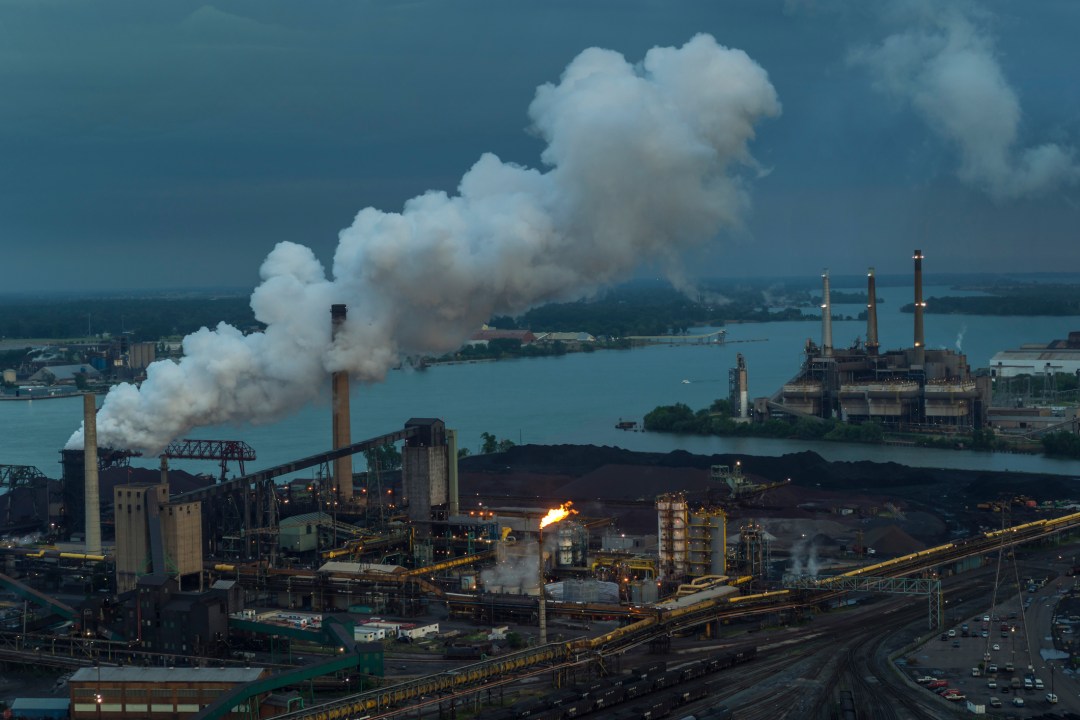
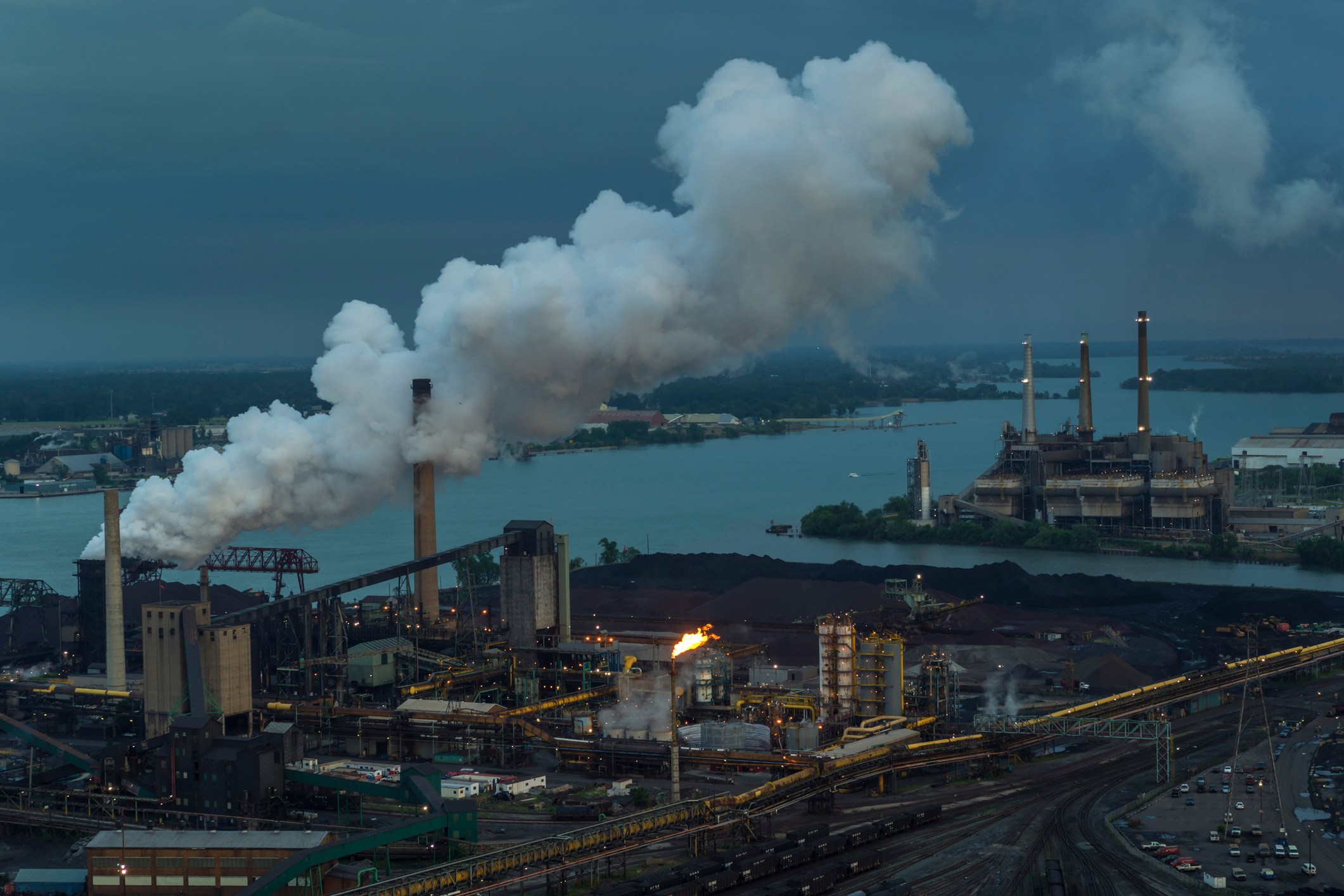
As enlightened voters may recall, in 2016 Trump carried the crucial swing states of Wisconsin, Michigan and Pennsylvania by roughly 80,000 votes spread across the devastated industrial landscapes of these once-powerful centers of manufacturing and the well-paid jobs they provided for skilled and unskilled labor. The Midwest was particularly hard hit by NAFTA’s lucrative benefits for US factory owners: it encouraged the hiring of millions of Mexicans willing to work for a dollar an hour, established a de facto no-strike guarantee and provided powerful insurance against expropriation in case the Mexican government moved left (as it did in 1938) and started seizing American assets. About 1.5 million US jobs were “displaced” by post-1993 Mexican “imports,” according to the Economic Policy Institute. So it’s easy to understand why so many angry former factory workers and their neighbors – angry at Bill Clinton and the other Democrats who joined corporate-friendly Republicans in passing NAFTA – lunged for the real-estate guy from New York and Palm Beach instead of voting for the “free-trade”-tainted Hillary Clinton. Trawling for votes, Trump was politically astute enough to call NAFTA “the worst trade deal ever.”
Arguably, Permanent Normal Trade Relations with China (PNTR), a trade deal also pushed through Congress by Clinton in 2000, did greater damage to the American working class than NAFTA, but by then the shift from majority Democrat to majority Republican in NAFTA-afflicted counties was already completed. While NAFTA didn’t by itself kill the Rust Belt working class, it may have killed the American republic by giving us Trump.
But how did Trump respond to the deeply alienated people who put him in the White House the first time? As a candidate and president-elect, he initially appeared to cater to his working-class supporters, many of them unionized: his rhetorical confrontation with Carrier Corporation in Indiana over the company’s plan to move an air-conditioner plant from Indianapolis to Monterrey, Mexico, created headlines when the company said it had agreed to keep 800 jobs in Indianapolis in exchange for government subsidies. It was, however, a Pyrrhic victory for the employees, since under the deal with Trump, Carrier eventually eliminated more jobs in Indiana than it kept, then went ahead with launching its Monterrey plant and started building a new factory in China.

Meanwhile, what did the new friend of the working man and woman do about NAFTA itself? During his first term, Trump could have simply pulled the United States out of Clinton’s signature trade pact, or moved to repeal PNTR, which at least would have given pause to American factory owners eager to exploit cheap labor but nervous about making riskier investments in foreign countries. But Trump and his new trade representative, Robert Lighthizer, instead negotiated a 2020 replacement deal called the United States-Mexico-Canada Agreement, which made slight changes to NAFTA that mostly benefited Mexican auto workers outside the border maquiladora belt. Not a bad idea in principle, but the basic guarantees protecting US capital and squeezing Mexican labor stayed in place, and so did the maquiladoras employing upwards of three million workers, the large majority concentrated along the Mexico-US border.
At the beginning of Trump’s second term, on April 2, 2025, he announced radically high tariffs on almost every country imaginable – except Mexico. Trump called it “liberation day,” arguing that high tariffs alone constituted a genuine industrial policy that would rescue the Rust Belt and restore manufacturing prosperity to cities and towns wrecked by Democratic party neoliberalism and traditional Republican party favoritism to big business. At the end of last year, the Wall Street Journal, in its Christmas Day edition, published a front-page story reporting the curious news – surprising only if one took Trump’s anti-NAFTA denunciations to heart – that Mexican exports to the US were on track to hit a record level in 2025, up 9 percent compared with the first 11 months of 2024. “Liberation Day” was as phony as a Trump memecoin. Under USMCA, about 85 percent of Mexican exports are still tariff free. No factories would be moving back from Mexico to revive production at Carrier in Indianapolis, or Master Lock in Milwaukee or Autolite spark plugs in Fostoria, Ohio.
True, Toyota did recently announce plans to build a new assembly plant in San Antonio, Texas, and eventually shift production of Tacoma trucks from Baja, Mexico. But not to Wisconsin, Michigan or Pennsylvania. “A really big deal,” blathered the President on Truth Social. “Tariffs at work!” Not really. Toyota plants are non-union and pay lower hourly wages than auto plants in the Midwest, $14.80 on average, compared with $18.64 in a unionized plant in Michigan.
How low can he go? I think boasting about a Japanese car company’s plan to build a new plant in Texas – promoted as relief to the unhappy people living in stricken northern states who made him President – is pretty hard to beat. What next, Mr. President?






Comments