The story of Cambridge professor Jason Arday’s academic scandal seems to have no end. First there were allegations of plagiarism, then accusations of dodgy data-gathering, not to mention other self-contradicting exaggerations about his academic achievements. Liverpool John Moores University says it conducted an investigation into the allegations against Arday and cleared him; however, it’s clear that dozens of passages in his work are verbatim copies of text by Brunel University’s Paula Zwozdiak-Myers.
But in British academia, Arday is just the tip of the iceberg. The media organisation Retraction Watch keeps an eye on which papers are corrected or retracted, often due to unrepeatable results, investigations by universities or journals, data fabrication, or outright plagiarism. They flagged the Arday affair too, saying that the Times Higher Education supplement dropped its original story due to legal pressures. Retraction Watch’s role is tough: it covers retractions from Cambridge to Canton, mainly in scientific journals, but in the social sciences too. The number of academic papers published per year has almost doubled from 1.9 million a decade ago to 3.4 million today, which many researchers fear has eroded trust in academia.
Many of the publications that have been retracted are from medical journals
Retractions are commonplace in British academia but often the reasons aren’t sinister. Academics often update articles following new findings, or sometimes journals may publish an article containing accidental errors and need to retract it before republication. However, there are many cases of plagiarism too. So, which British universities have had academic staff with the most paper retractions according to Retraction Watch?
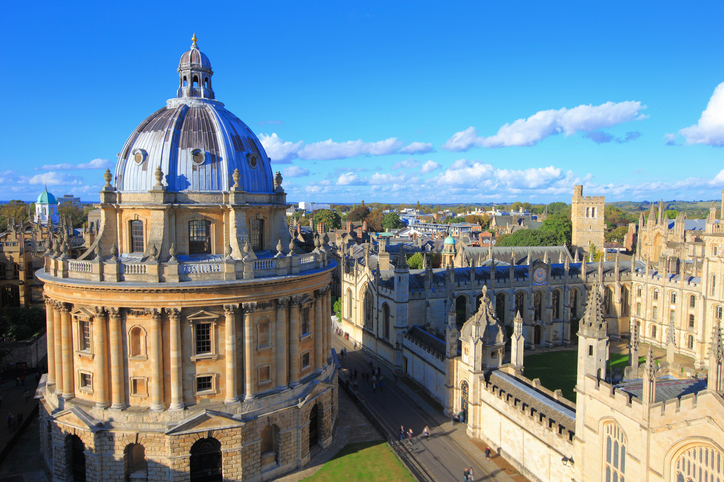
It may at first seem odd that the highest-ranked universities have academics whose papers have been retracted – universities such as UCL (4th on Times Higher Education rankings), Imperial (3rd) and Oxford (1st) – whereas lower-ranked universities such as Bath Spa or Liverpool Hope have fewer. Surely they have the best academics who are less likely to make errors or try to bluff results?
The reality is that papers in less prestigious publications, particularly in the humanities or social sciences, are less scrutinised than scientific ones. For instance, many of the publications that have been retracted are from medical journals. It’s also down to scale. Oxford-affiliated academics publish some 8,500 articles a year; Edge Hill University has around 4,000 scientific papers in its history. Papers are retracted when flagged and investigated by peers, so there’s no real body that oversees it.
If we break down the top two universities on the list, here’s what’s caused the retractions of papers written by their dons. For the 102 known retractions of papers involving UCL academics, the main causes are: unreliable results (41), investigation by the institution (35), investigation by the publisher (20), manipulation of data (19), error in analyses (13), concerns about data (12), errors in results (11), error in data (10), and so on. It’s a similar spread for the 92 known retracted papers involving Imperial academics: unreliable results (25), concerns about data (22), error in data (14). For more severe reasons, such as plagiarism, by the number of times they’re mentioned for each author in Retraction Watch’s data, it’s Oxford academics at the top.
Arday’s case has kicked off a round of scrutiny into academia. There are plenty of other academics who have plagiarised research, fabricated data or produced erroneous results. What’s scary is that there’s not enough scrutiny to catch them all, or even a few.


Comments