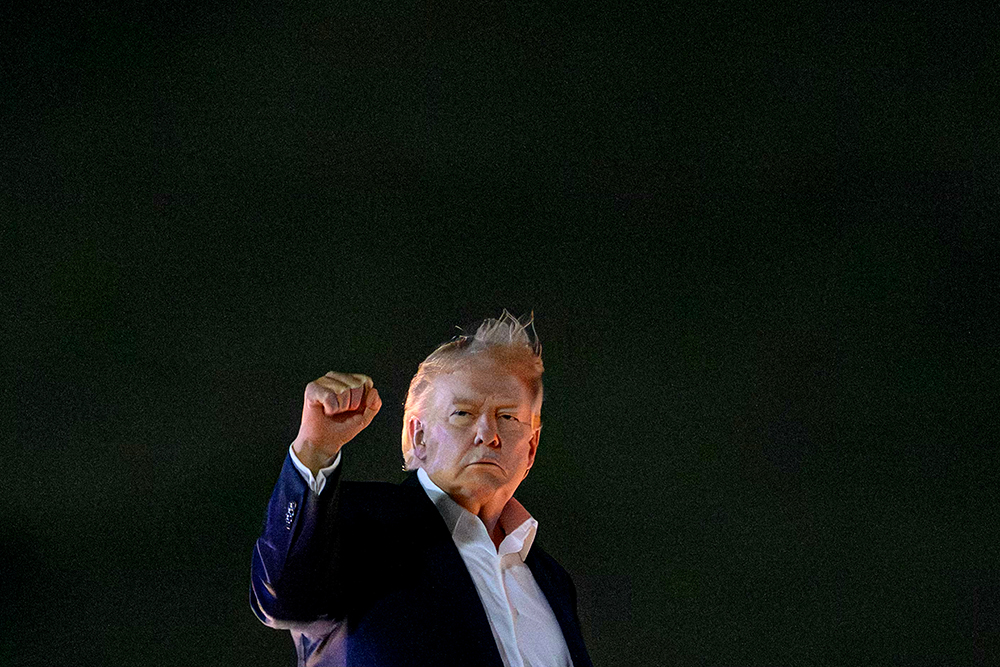
The Founding Fathers may have modelled America on Ancient Rome, but they would have found the ersatz gladiatorial spectacle Donald Trump mounted at the White House to mark his birthday a grotesque perversion of their dreams. An ‘ultimate fighting contest’, staged to pay homage to Trump’s rule (though dressed up as part of the United States’ 250th anniversary celebrations) was exactly the cult of one man the Founding Fathers most dreaded.
The President is not an emperor unconstrained, however. A shellacking in November’s midterm elections will show how hemmed in he is. And nowhere is his weakness more apparent than in his so-called ‘peace agreement’ with Iran. It is the latest in a series of humiliations visited on the Great Republic by this tawdry tinsel Caesar.
The President’s spin obscures his disastrous unwillingness to plan properly for conflict and see it through
The ‘memorandum of understanding’ between Washington and Tehran is not a permanent peace deal, rather the latest in a series of ceasefires. The US and Iran will have 60 days to discuss the latter’s nuclear programme. Iran will reopen the Strait of Hormuz; billions are to be released in sanctions relief. Trump claims that at the ‘appropriate time, when all is calm’, the US ‘will go in and get the nuclear dust’, but what leverage does he now have when he has crumpled before Tehran’s intransigence?
The President’s spin obscures his disastrous unwillingness to plan properly for conflict and see it through to the end. He has not just blinked but bent, brought to heel by Iran’s closure of the Strait of Hormuz.
When the US-Israel bombardment began, the ultimate objective was clear: regime change, with Iranians encouraged to rise up against their government. Thousands had perished doing so.
With the Islamic Republic unmoved, their deaths have been in vain. Bloodied but unbowed, the regime will pursue its ambitions: regional hegemony, support for the West’s enemies and Israel’s encirclement. The billions in sanctions relief will fund terrorism abroad, enable repression at home and underwrite Tehran’s rearmament. This is a demonstration of American inconstancy and western weakness which will only embolden our enemies.
Yes, America has shown the world that it can bring massive kinetic force to bear. Iran’s leadership has been decapitated, its navy sunk, its economy ravaged, its stocks of missiles and drones depleted and its nuclear infrastructure badly damaged. But an unwillingness to finish the job – to, as this magazine suggested in March, provide ‘a commitment of time, troops and patience’ to achieve ‘a free, successful, post-Islamist Iran’ – wastes those achievements.
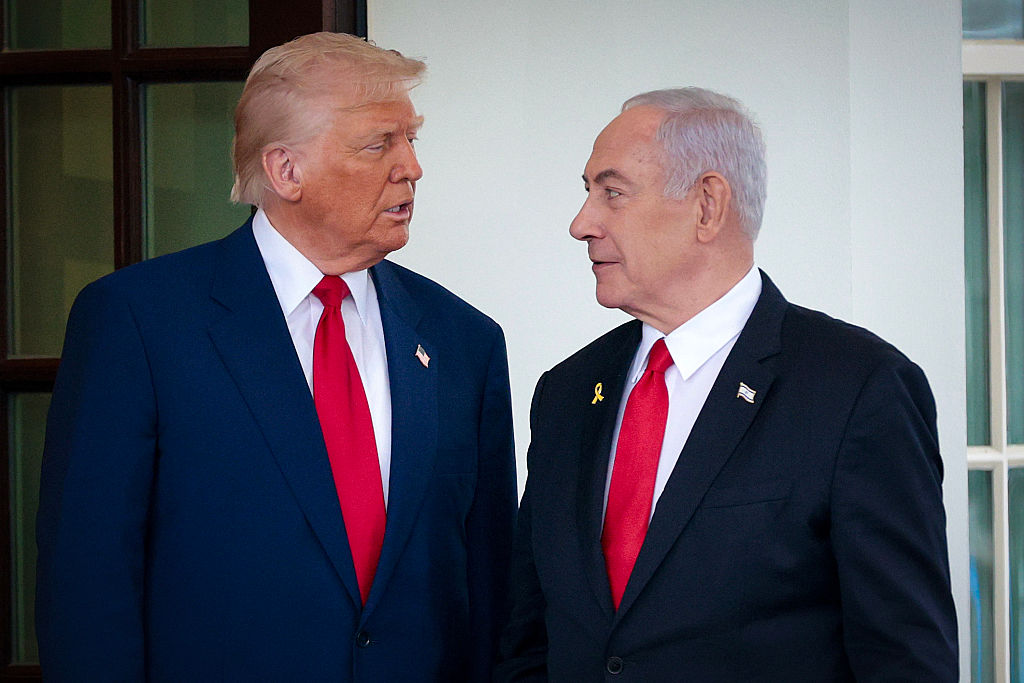
The proposed $300 billion ‘reconstruction fund’ is a grotesque reward for enduring evil. The Islamic Revolutionary Guard Corps which now rules Iran can reward its loyalists and re-arm its militias with money left over to funnel to Hamas, Hezbollah and the Houthis.
The war has also demonstrated that Iran can deploy a weapon that hits Trump where it hurts most: in the pocket. The closure of the Strait of Hormuz triggered a global supply crisis, and Tehran gained vast leverage. The economic damage has made a material difference to American incomes, western growth and Trump’s own Treasury. The Iranian leadership has shown it can both take pain and inflict it. Trump only ever manages the latter. In January 2020, the President posted on social media that ‘Iran never won a war but never lost a negotiation’; the author of The Art of the Deal has found himself outplayed.
Trump has also betrayed Israel. American sympathy for Israel’s position has been tested by the grim reality of years of war since 7 October 2023. Yet Israel has been fighting not just for its own survival but against an Islamist state and extremist network bent on threatening us all. Israel is the West’s frontline in the fight against terror. To back off now leaves Israel exposed and the West more vulnerable.
The President may claim that Iran’s nuclear programme has been halted. But his opposition to previous agreements was based on the impossibility of trusting Tehran. If, or rather when, Israel is forced to act again, any agreement will have been for naught and the dream of a secure Israel living in peace with a democratic Iran and a stable Middle East further from reality. The patience of America’s allies, already worn thin by the Greenland debacle, has been further eroded. China and Russia will be cheered by their ally’s survival; for Ukraine, any Trump-led peace process now seems indistinguishable from a surrender. It is all the more imperative that Ukraine is supported by Europe to bolster its own defence.
Trump hoped to be an Augustus, the harbinger of America’s ‘Golden Age’, finding a Washington made of bricks and leaving it resplendent in marble – complete with a new White House ballroom. Instead, he looks like Julian the Apostate: a believer in restoring past glory undone by his own arrogance, his dreams broken by defeat in a fruitless Persian war. This is another chapter of imperial Decline. It is urgent that we reflect on how we can avert the Fall.


Comments