
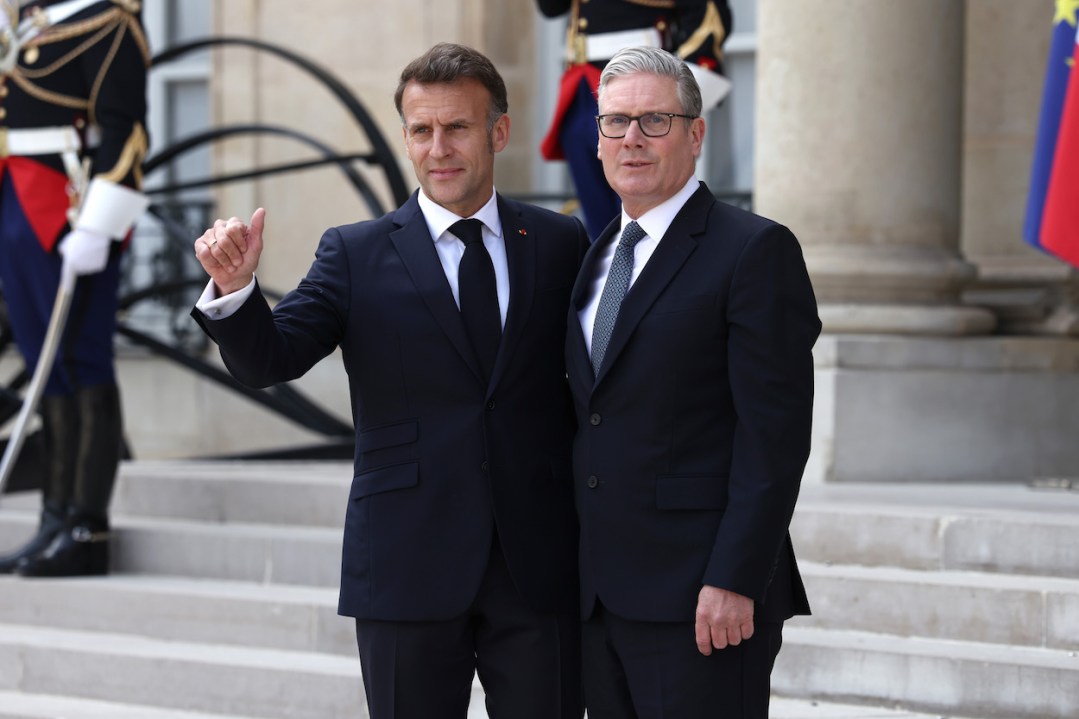
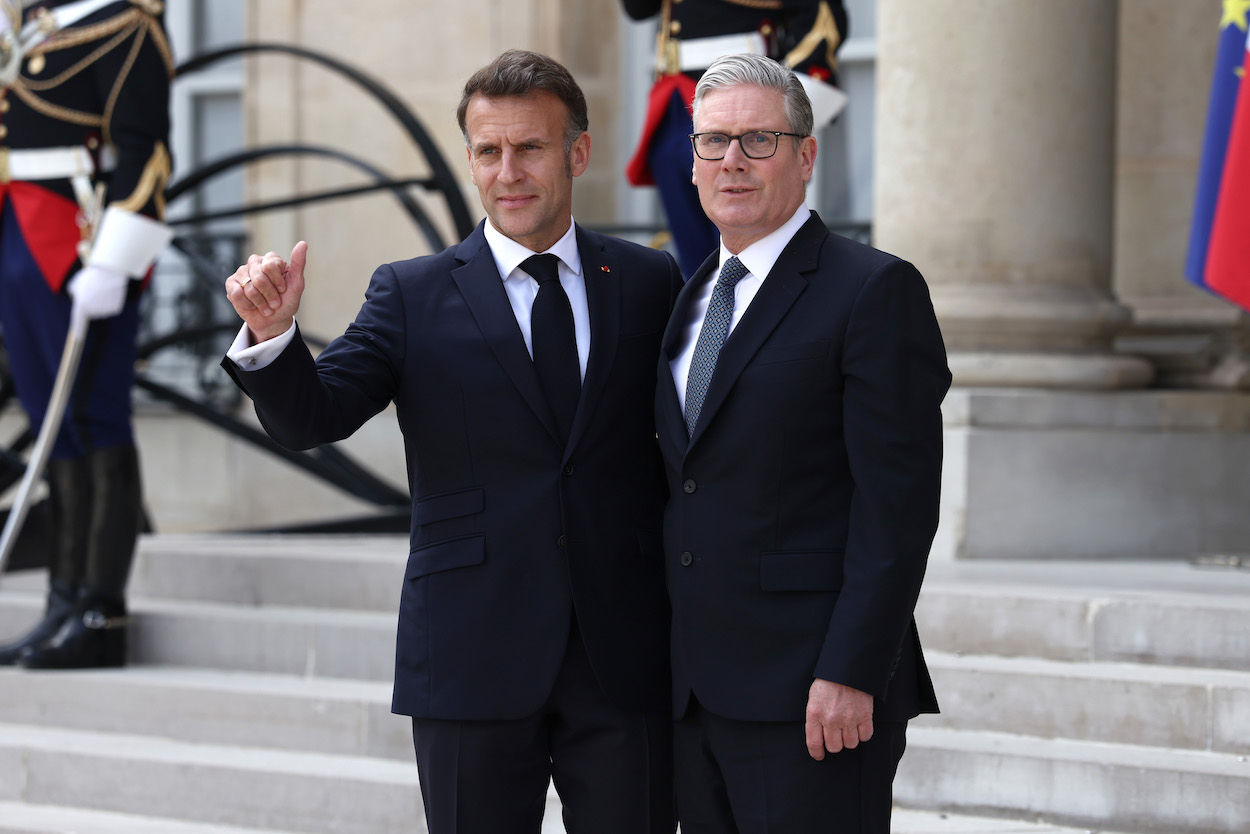
Despite usually being a fan of escaping domestic trouble with travel abroad, Keir Starmer would be forgiven for thinking his trip today was terrible timing. The Prime Minister was in Paris this afternoon for a summit hosted by president Emmanuel Macron tackling the thorny issue of how to make the Strait of Hormuz safe again.
Starmer joined Macron alongside approximately 50 representatives of other countries for the meeting – named the ‘Strait of Hormuz Maritime Navigation Initiative’. While many leaders, including those from Australia, Canada and South Korea, dialled into the meeting virtually, Starmer and Macron were joined in person by their German and Italian counterparts Friedrich Merz and Giorgia Meloni. Notably, no representative from the US was invited.
At a joint press conference held after the summit, Starmer, Meloni, Merz and Macron delivered a pointed message that clearly appeared directed at Donald Trump. Starmer reiterated the leaders’ call for the Strait to be reopened ‘with no tolls and no restrictions’ and said ‘unnecessary trade restrictions’ should also be avoided. He also confirmed that Britain would, alongside France, lead a ‘multinational mission to protect freedom of navigation as soon as conditions allow’.
This ‘initiative’ has more than a whiff of the Ukrainian ‘coalition of the willing’ to it
The Prime Minister added that more than a dozen countries had agreed to contribute military assets to the mission so far. Merz has already provisionally offered up the services of the Bundeswehr in the form of minesweepers, a supply ship and aerial reconnaissance.
This ‘initiative’ has more than a whiff of the Ukrainian ‘coalition of the willing’ – Starmer and Macron’s other joint venture – about it. The theme under discussion is, similarly, how to make the Strait safe for ships to pass through once fighting has stopped. The mission would be ‘strictly peaceful and defensive’, although details will reportedly be hashed out further by allied military chiefs at a meeting at the British armed forces’ Permanent Joint Headquarters in Northwood next week. Given Trump’s increasingly sharp criticism of Nato and its European alliance members, it can’t be totally ruled out that, just like the coalition of the willing, this Hormuz initiative is also designed to placate the American president.

Forward planning such as this is, nevertheless, sensible, not least given how vital the Strait of Hormuz is to international shipping and, therefore, the global economy. While today’s meeting was ongoing, Iran’s foreign minister announced that the Strait would remain ‘completely open’ to commercial shipping for the duration of the fragile 10-day ceasefire agreed with America. Trump soon responded that the US blockade of Iranian ship and ports in the Strait would be enforced until America’s ‘transaction with Iran is 100% complete’.
Given Donald Trump keeps giving contradicting indications of when his war with Iran might conclude, some could argue that Macron and Starmer’s ‘initiative’ is putting the cart somewhat before the horse. Still, such European plans for securing the Strait with minimal or no US help are telling of how much transatlantic trust has been damaged in recent months – and that Starmer, Macron and their allies are perhaps finally coming to terms with the notion that Trump is not a reliable partner on defence.
Perhaps unsurprisingly, there was reportedly some debate among Starmer and his European allies over whether or not to invite American representatives to today’s meeting. While France briefed out that invites had solely been extended to ‘non-belligerent states’ – excluding the US, Iran and Israel – Merz reportedly wanted to discuss the involvement of US armed forces in their plans.
What would fall under the scope of a ‘defensive’ mission in the Strait remains, at least until next week, a grey area – something that is likely to come under further scrutiny in Westminster. Questions, for example, have already been raised by some MPs over how Trump is able to blockade the Strait without using British bases in the region as staging posts for US military and naval assets.
With the Royal Navy over-stretched and under-resourced – and the government’s long-delayed defence investment plan no closer to being published – Starmer will have his work cut out explaining where the resources for securing the Strait of Hormuz will come from. Just another of the growing headaches awaiting the Prime Minister on his return home.
Comments