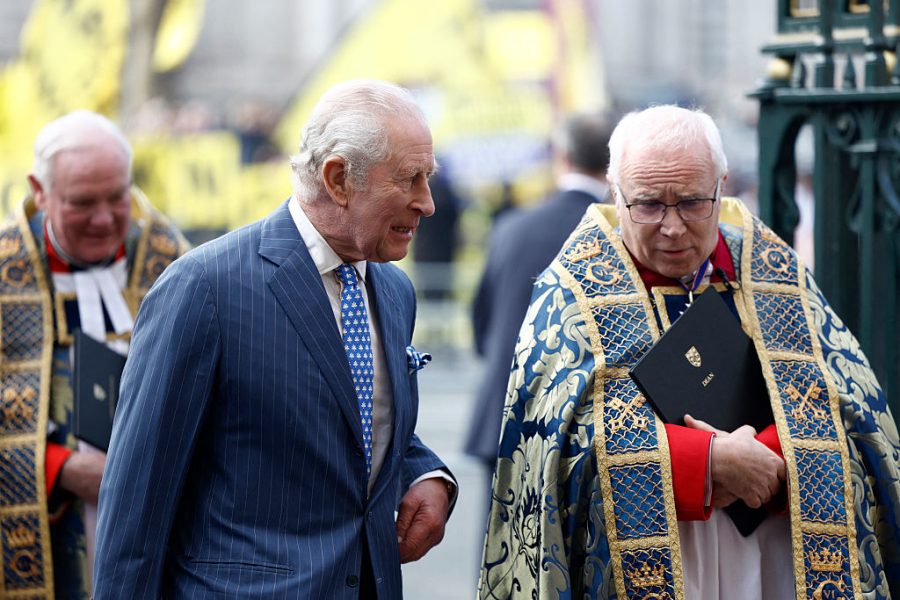
Under normal circumstances, King Charles’s message to the Commonwealth would be a carefully crafted and anodyne series of platitudes, designed for little more than to fulfil its brief and to keep the other Commonwealth leaders happy. However, this year, the King is faced with two pressing issues.
The first is international, in the shape of the war in Iran – something that Charles himself has little direct influence on. The second, however, is rather more personal and concerns the continued embarrassment that his younger brother Andrew Mountbatten-Windsor has brought on the royal family. Calls are growing for him to be removed from the line of succession by legislation, special decree or any other method that will take the troublesome, troubled former Duke of York further away from the Firm.
Such an action will require the consent of all 15 Commonwealth realms, but it is unlikely to meet with any significant resistance. The King is expected to hold private talks with their leaders this week and see if such a move can be expedited.
As is usual with all royal communications, the wording in today’s Commonwealth message is deliberately vague, talking of ‘a time of great challenge and great possibility’, as well as ‘testing moments’ during which Commonwealth countries face ‘the increasing pressures of conflict, climate change and rapid transformation’. Yet there is far more on the environment (‘Across so many parts of our Commonwealth, climate change is not an abstract or distant threat but a lived reality’) than there is on war. Noticeably, there is nothing personal or familial at all, other than the inference of ‘great challenge’.
Anyone who was expecting an emotive and personal message from the King ahead of today’s Commonwealth Day service at Westminster Abbey would be disappointed. The reason why the King’s statements on his brother’s arrest last month and commensurate disgrace were so unusual was because they were relatively direct, if terse, and stripped of the usual florid verbiage that royal communications are usually caked in. (Today’s contains the words ‘When leaders meet, they do so on behalf of millions whose quiet determination, resilience and generosity give true meaning to our shared endeavour,’ for instance.) But those were very much an exception, rather than a new form of public address.
Still, it is not unreasonable to expect rather more on the Iran war, which many would argue occupies greater international significance than woo-woo about ‘the stewardship of nature’. And here we see the relative impotence of the Crown all over again. While Charles has undeniably had a hand in crafting this message – hence its prominent environmental themes – it is still subject to government approval. At a time when the country seems hopelessly conflicted as to what to do or say about the current conflict, it is hardly as if the monarch can be expected to strike out on his own and offer a new national policy. Better, in that case, to stick to the trees and the oceans and hope for the best.
This would probably work were it not for the continuing furore surrounding Andrew. The newspapers published some embarrassing-looking photographs yesterday showing a man who bore a strong resemblance to the disgraced former duke holding a young woman on his lap, and there is almost certainly more to come.
It is likely – indeed probably inevitable – that Andrew’s removal from the line of succession will attract support from the Commonwealth leaders. Australia’s prime minister, Anthony Albanese, wrote that ‘my government would agree to any proposal to remove him from the royal line of succession’. The King will be hoping that spearheading this popular move will dampen any criticism of him for not going far enough.
Yet at a time when the Prince of Wales has openly speculated that the Commonwealth will come to an end during his reign, it seems increasingly as if Charles is at risk of shilly-shallying when he needs to take more decisive and clear action. His fence-sitting message may do what it is supposed to in the short term, but many of his subjects – in this country and the greater Commonwealth – may wish that he had gone rather further, too. The time for hesitation and euphemism is over.


Comments