Australian and British politics have one thing in common: in both countries the right of politics is shattered.
Australia’s Liberal party, in coalition with the regional Nationals, was walloped at the most recent general election by the Australian Labor party. Its then leader, Peter Dutton, lost his seat, leaving behind a centre-right leaderless, rudderless, and at war with itself. Dutton’s deputy, long-serving former minister Sussan Ley (she added the extra ‘s’ for numerological reasons), took the reins of the shattered Liberals, while post-election the Nationals broke and re-formed the coalition. Ley and her vanquished party looked down and out for a decade or more, leaving Labor prime minister, Anthony Albanese, rampant and unchallenged by his opposition.
That was until last month’s anti-Semitic massacre at Sydney’s Bondi Beach, when Albanese, having presided over a government that failed to stop the wave of Jew hate building ever since 7 October, then failed to respond effectively to the anger and grief of not only Australia’s Jewish community, but the whole nation. Ley, however, read the national mood shrewdly, and showed real empathy towards the families of the dead and wounded. From the verge of overthrow by her own party, Ley suddenly was setting the agenda, and Albanese looked rattled and reactive.
So much so, that Ley demanded parliament be recalled from its summer recess to pass urgent measures to combat anti-Semitism. The government was forced to agree, and last week introduced a hate speech bill, drafted in haste with minimal consultation, sweeping in scope, and laden with unintended consequences for free speech and even normal political debate.
The opposition parties succeeded in watering the bill down, their shadow cabinet signing off on a compromise with Labor enabling the legislation to pass, albeit still badly flawed. Three Nationals frontbenchers voted against it regardless, however, and resigned according to convention. But their leader, David Littleproud, then proved he has little to be proud of. He demanded Ley reinstate the three frontbenchers, claiming exceptional circumstances. When Ley refused, in an astonishing hissy fit Littleproud led all Nationals out of the shadow cabinet and broke the coalition for a second time. Then, on the official day of mourning for Bondi’s victims, Littleproud chose to denounce Ley and insisted the Liberals dump her.
Her political strategy having blown up in her face, Ley swiftly went from hero to zero. She hasn’t the confidence of her own party, but survives for now because even her internal opponents condemn Littleproud’s bastardry. Yet a leader who lost the coalition not once, but twice, is a leader condemned, and Liberal knives are still out for Ley.
Her predicament is compounded by another, more existential factor. To the right of the Liberals and Nationals a populist insurgency has overtaken the traditional centre-right parties in the opinion polls. One Nation is a Reform-like party of grievance, especially on mass immigration and its dilution of Australia’s long-time Anglo-European social fabric. Its personality cult leader, former fish-and-chip shop owner Pauline Hanson, intellectually is a third-rate imitation of Nigel Farage, and she prefers attention-grabbing stunts to doing hard policy work. Currently, however, Hanson rides a wave of popular support after Bondi as disaffected and angry Liberal and Nationals voters are attracted by her simplistic siren song.
Unlike the Conservatives, only Liberal MPs select party leaders. Those MPs look at the dozens of seats lost to Labor and soft-left ‘Teal’ independents in recent elections on the one hand, and on the other polls suggesting One Nation wiping them out, and can’t agree on which way to turn.
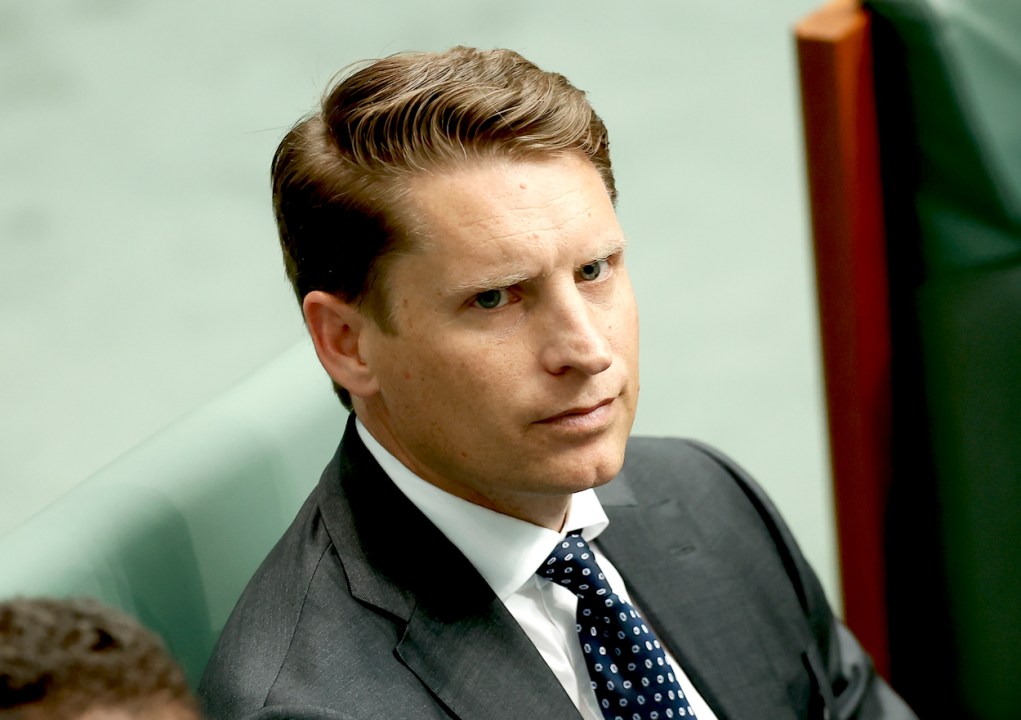
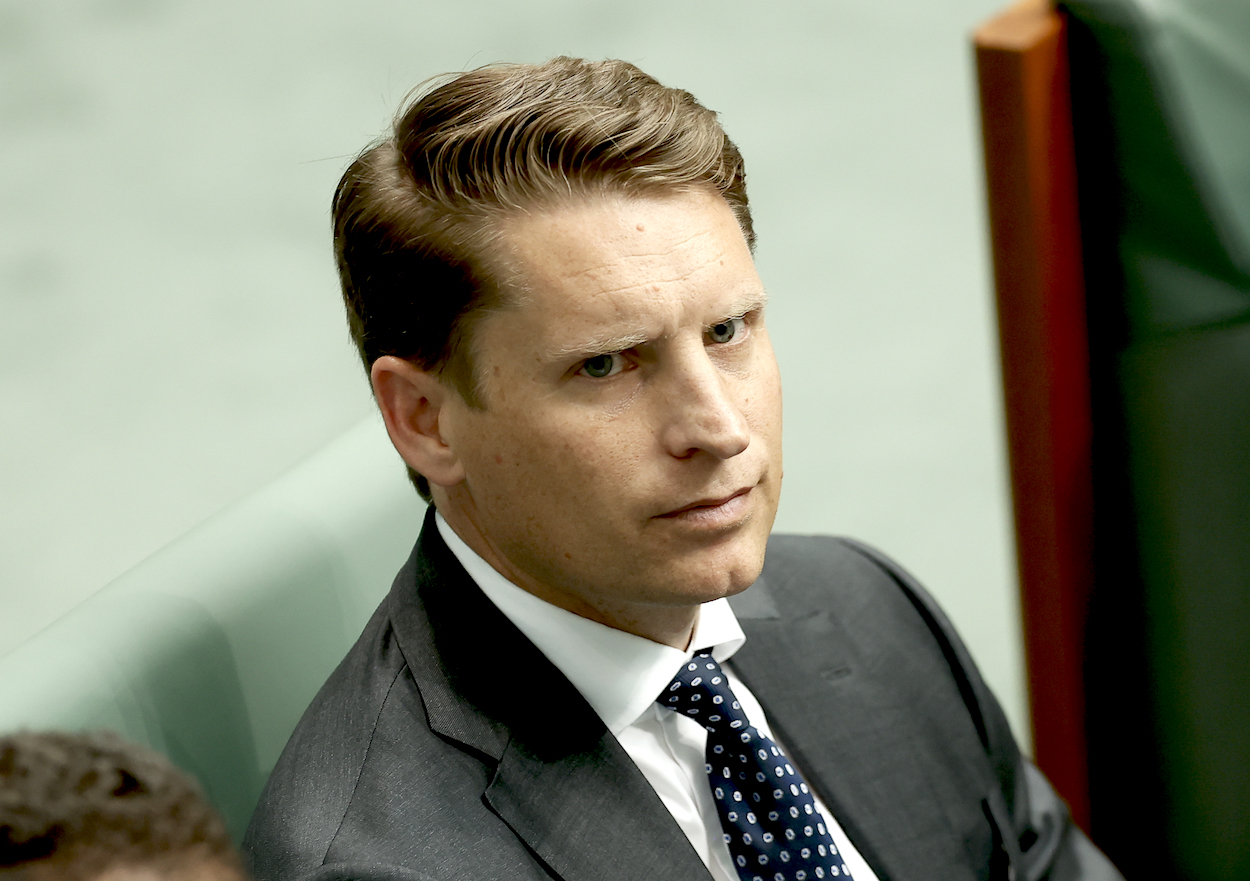
Until today, the centrist Ley has been relatively safe because the party’s conservatives have been split between two very different candidates. More Burkean and economically-orthodox is Angus Taylor, a former cabinet minister, Rhodes scholar and McKinsey partner. His younger rival is Andrew Hastie, a former SAS captain who served with distinction in Afghanistan – the very sort of brave soldier who Donald Trump denied existed in his recent diatribe against America’s allies. After blindsiding Ley by resigning his frontbench role late last year Hastie has been, Robert Jenrick-like, skilfully using social media to campaign against mass immigration and for the revival of Australian manufacturing industries through government intervention – very much Hanson’s populist issues. Unlike Jenrick, however, Hastie’s staying put.
What Hastie did not admit that he lost much of his wider right-wing support
On Thursday, the two conservative rivals met to thrash out who would stand for the leadership, but got nowhere. Today, however, Hastie threw in the towel, saying ‘after consulting with colleagues and respecting their honest feedback to me, it is clear that I do not have the support needed to become leader of the Liberal party’. What Hastie did not admit that he lost much of his wider right-wing support when he railed against the proposed hate speech laws but meekly voted for them when the time came, petulantly berating his disappointed supporters on social media. He cruelled himself.
So Taylor now is the man most likely, and could move against Ley as early as when parliament sits next week. But indications are he hasn’t yet got enough MPs to win, meaning a slow-drip leadership contest tormenting the Liberals for weeks, even months. The despairing reality, however, is that neither Ley, Taylor nor Hastie are up to the job. Ley’s political judgment has been proven woeful, and she has the demeanour and presentation skills of an earnest sixth-form debater. Hastie is a charismatic communicator with movie star looks and an enviable backstory, but no policy depth. Taylor has policy chops, but retail politician and political operator he very much is not. None of them have the ability to unite and inspire their fellow MPs, let alone unite and inspire the wider Liberal party and voting public.
Britain’s Conservatives may lament their own predicament, but at least they have Kemi Badenoch, and some hope. Just now, Australia’s Liberals have nobody, and no hope.


Comments