
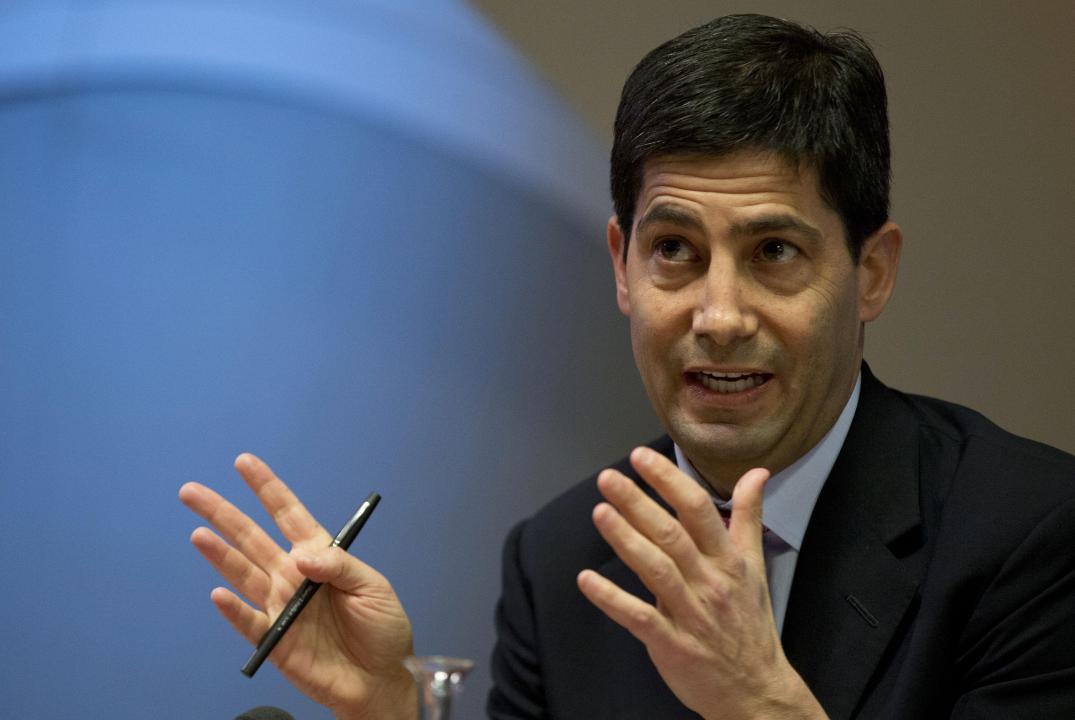
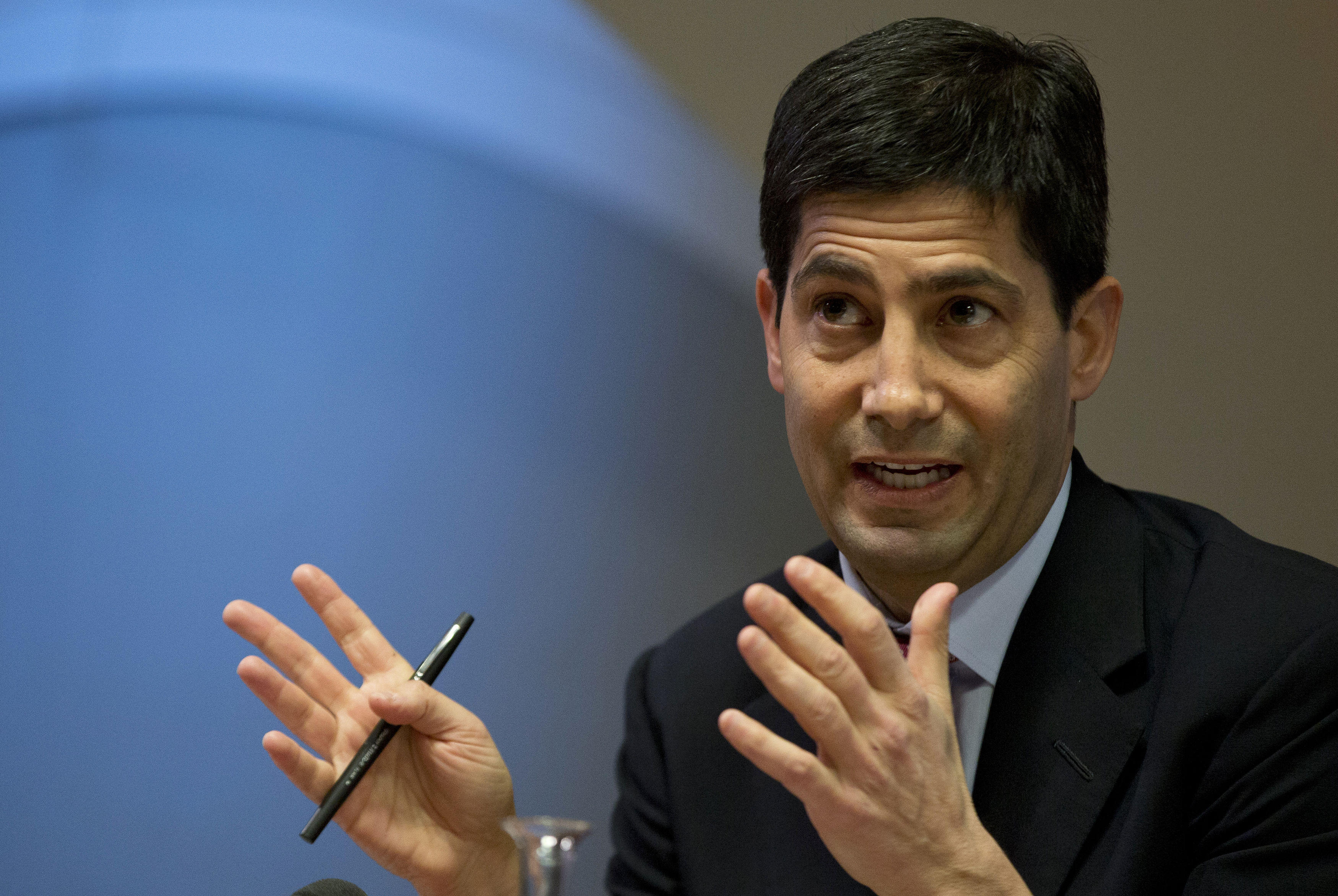
The news broke this morning that Donald Trump has, after considerable deliberation, settled on Kevin Warsh as his nominee to replace Jerome Powell as chairman of the Federal Reserve.
“I have known Kevin for a long period of time,” said Trump, on Truth Social. “There’s no doubt that he will go down as one of the GREAT Fed Chairmen, maybe the best.”
“On top of everything else,” added the Commander-in-Chief, “he is ‘central casting’ and he will never let you down.” The use of the phrase “central casting” shows Trump’s reality TV brain at work. The President likes people in major government positions who look the part on screen.
Inevitably, senior Democrats are attacking Warsh’s nomination as Trump’s “latest attempt to seize control of the Fed.”
“Donald Trump said anybody who disagrees with him will never be Fed chairman,” said Elizabeth Warren, the ranking member of the Senate banking, housing, and urban affairs committee. “Former Fed governor Kevin Warsh – who cared more about helping Wall Street after the 2008 crash than millions of unemployed Americans – has apparently passed the loyalty test.” Warren also insisted that “no Republican purporting to care about Fed independence should agree to move forward with this nomination until Trump drops his witch hunts of the current chairman.”
Jerome Powell is the subject of a Department of Justice investigation, led by the US attorney and small-screen celebrity Jeanine Pirro (that casting, again), into allegations that he misled Congress over the scope and costs of a $2.5 billion renovation project for the Fed’s headquarters in Washington, DC. Powell and others say that the case against him is a political “pretext” for pressuring the Fed to lower interest rates, which he has been reluctant to do.

But Warsh – who, if confirmed by the Senate, will replace Powell in May – is not your typical Trumpian mouthpiece. As the US President was at pains to point out, Warsh is a long-standing member of the financial elite who served under George W. Bush and Barack Obama. In 2014, he wrote a report about “transparency” for the Bank of England’s Monetary Policy Committee, which spelt out how the bank could improve its accountability and legitimacy without exposing all its internal workings to public scrutiny. Warsh was asked to write the report by none other than Mark Carney – then the governor of the Bank of England, now the Trump-critical Prime Minister of Canada.
Politics may change, but the financial establishment always prevails. US Treasury Secretary Scott Bessent, a billionaire and arguably the most important figure in Trump’s cabinet, played the key role in helping Trump choose Warsh. Bessent and Warsh have long-standing ties to the investor Stanley Druckenmiller (another billionaire) and in recent years, both men have been increasingly critical of the Federal Reserve’s mission creep, arguing that Powell and others have expanded the role of the Fed into areas which ought to be the preserve of other government bodies. Bessent has criticized the Federal Reserve for excessive quantitative easing and blurring “the lines between monetary and fiscal policy,” thus distorting markets since the financial crash of 2008.
There’s always a paradox at the heart of the “Fed independence” debate. Criticizing the “politicization” of the board is itself a political tactic – one Powell has employed repeatedly in recent weeks. The more fundamental struggle is to maintain the illusion that monetary policy can ever be entirely divorced from whoever happens to be in the White House.
Warsh, formerly labeled as a monetary hawk, has shifted his position in recent months. Since last year, he has called for the Fed to lower short-term interest rates while reducing its $7 trillion balance sheet through quantitative tightening. In other words, with Bessent in the Treasury and Warsh leading the Fed, Trump’s economic agenda could be turbocharged in time for the midterms in November. Whether or not the American public will feel good about the financial picture by then will be another intensely political debate.
This article originally appeared in Freddy Gray’s Americano newsletter, which you can subscribe to here.


Comments