
A century ago, Britain had reason to despair. A generation had been lost to war, influenza was killing those who survived and revolution was sweeping across Europe. A strange new movement called the Blackshirts was marching on Rome just as Russia’s civil war was ending in Soviet victory. Yet Britons were out having fun.
The original Bright Young People cavorted across the country, holding scandalous parties. ‘Please wear a bathing suit and bring a bath towel and a bottle,’ read one invitation. The Metropolitan Police filled Bow Street’s cells with hundreds of nightclub revellers, mainly girls in fancy dress. Dancing, according to one clergyman, was a ‘very grave disease which is infecting the country’. This was the era of Evelyn Waugh’s Vile Bodies, a novel of £1,000 wagers and orgies in 10 Downing Street. The old world was dying and the new one had yet to crawl out of bed.
Our era is almost as frail as the 1920s but the champagne corks are no longer flying
The 1920s had seen a rapid growth in street bookmakers, catering mainly to the working classes, and there were reformers who wanted an end to it. We are going through a similar backlash today, as Rupert Hawksley explains. Ultimately, the puritans of that era were defeated, thanks in part to the sensibilities of Spectator readers. ‘You cannot possibly stop betting,’ one wrote in a letter published a century ago this week. ‘Everyday life is in many respects a gamble in itself.’
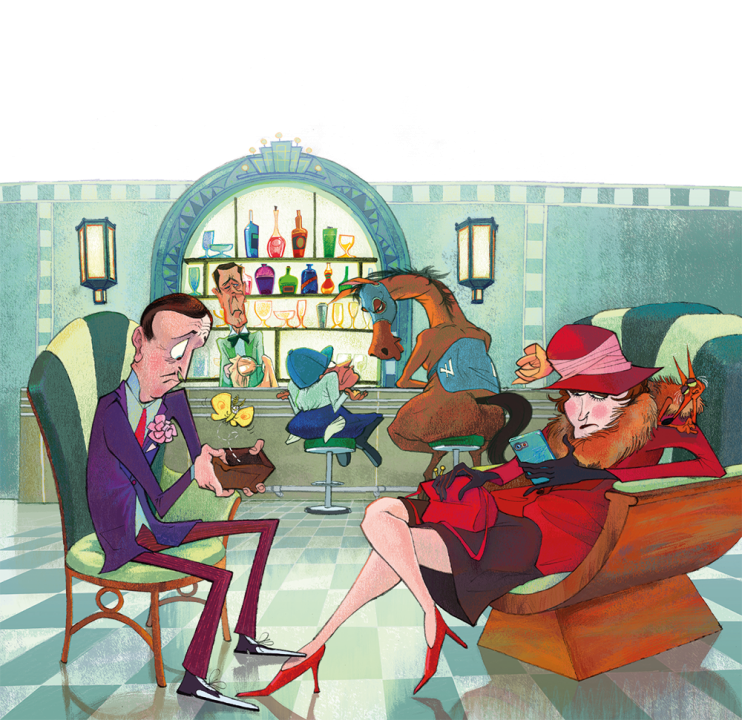
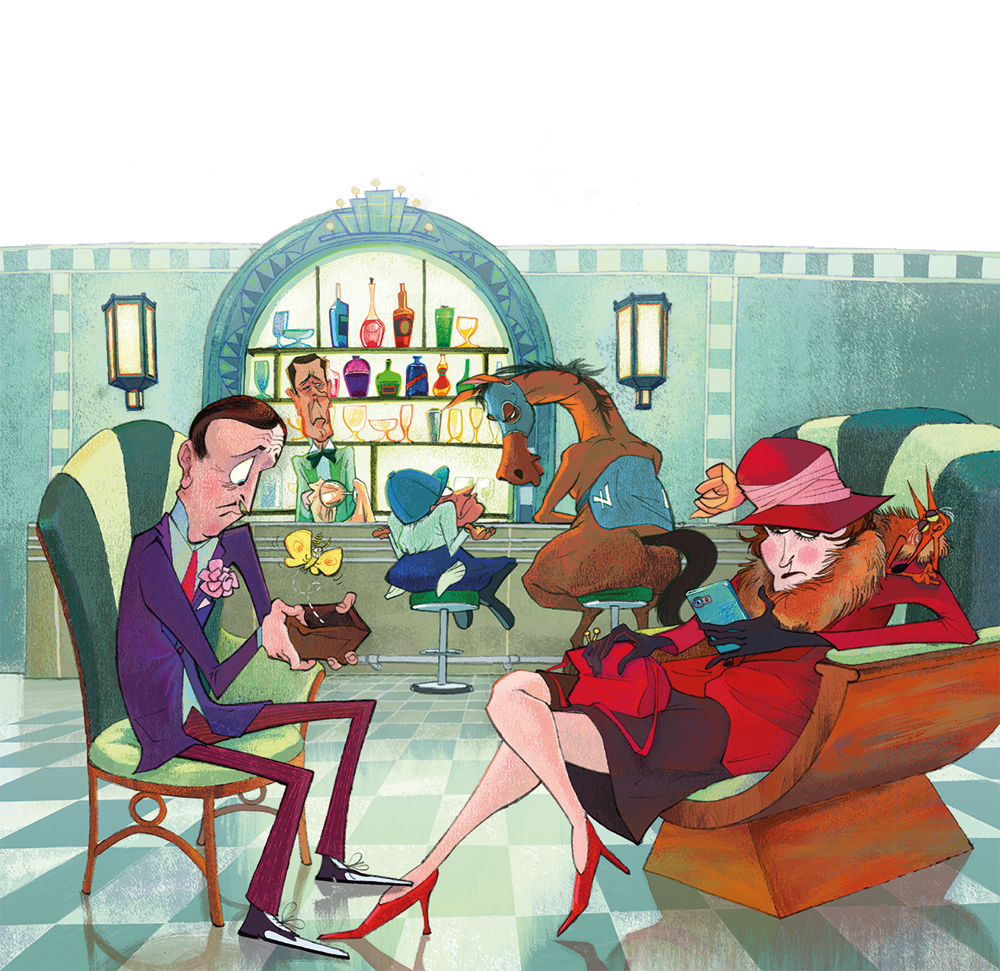
If only we took the same approach today. Instead, taxes on booze are up, smoking is to be outlawed and good British fun is going the way of the flappers. Our era is almost as frail as the 1920s but the champagne corks are no longer flying. We are living through the Boring Twenties.
In 2005, Britons spent nearly an hour and a half a day socialising. Today, it’s half an hour. Once you adjust for inflation, every income group from richest to poorest has cut back on hotel and restaurant spending since the turn of the decade. It’s a similar story when it comes to cinema, theatre, concerts and sports events. The culprits are clear: government, bureaucratic safetyism and faceless capital. The first taxes the sources of fun, the second attempts to regulate it out of existence and the third flattens what remains.
‘I will support the great British pub,’ Rachel Reeves said at the Budget as she introduced a massive tax hike on pubs. Business rates for the Ship Inn at Brimscombe, Gloucestershire, will go from £8,000 to £31,750. Pandemic relief is coming to an end and four out of five pubs will see their rates spike in April. Over Christmas, multiple Labour MPs moaned to the newspapers that furious landlords had barred them.
There has been talk of a pub strike this year, given the pressure landlords are under. Many still have outstanding Covid loans and all have seen their energy bills rise dramatically. The problem with the business rates changes is not just the severity but the lack of information. Thanks to the joys of bureaucracy, few can work out exactly how much they’re going to be paying in April. ‘They’ve made a right old hash of it,’ Wes Birch, the landlord of the Ship Inn, told me. ‘It’s so complex and doesn’t make any sense with these multipliers and the reliefs. Nobody can understand what they’re going to be paying.’
Pubs aren’t just facing massive rises in business rates. The minimum wage is going up too, costing an extra £1,800 per employee affected. Strict rules are still in place for teenage workers: employers are banned from asking them to work past 7 p.m. or for more than two hours on a Sunday. One landlord told me he’d had to fire all of his teenage staff because they had become uneconomical. He’s stuck hiring older, more expensive workers while the teenagers go without pocket money and valuable life experience. Government taxation and safetyism are working hand-in-hand to make life more boring.
Under Labour, taxes are only getting worse. A third of the price of your pint already goes to the Exchequer but duties have been increased by another 3.6 per cent. The government has even brought in a glass tax, which adds a levy of 5p on a bottle of beer, 12p on wine and 18p on a bottle of spirits. The Office for Budget Responsibility said in its Budget analysis that Treasury receipts for booze are likely to fall for the next few years because we’re drinking less, partly because it has become so expensive. Labour’s solution? Tax pubs even more. Meanwhile, pubs are closing at a rate of more than one a day and 100,000 jobs have been lost in hospitality since April last year. Empty buildings, more people on the dole, and still taxes go up.
Then there is the effect of faceless capital, the endless drive towards market efficiency. Nearly a quarter of independent restaurants have shut since the pandemic, replaced by corporate chains. Go to a bar or diner in America and you’ll probably find the proprietor behind the counter. In Britain, our family-run establishments have been bought out by international conglomerates, partly because the bureaucratic tax regime is easier on them. While chains can employ specialist surveyors or lawyers to challenge their rates, family-run establishments simply can’t afford to fight. These market forces make our lives blander. Go for a meal anywhere from Land’s End to John o’Groats and you’ll find the same gastro burger and the same high-margin fish and chips, because it’s the same mega corps with the same supply chains.
British cooking is being homogenised out of existence. Gone are the traditional suet puddings, howtowdies, Beddgelert cawls and stargazy pies. More than half of the East End’s pie and mash shops have shut since the turn of the century; the place where I ate my first eels and liquor is now a designer glasses shop. British distinctiveness, and our distinctive pleasures, are on the way out.
There is a narrowing in people’s lives, a feeling that fun is out of reach and excitement frowned upon
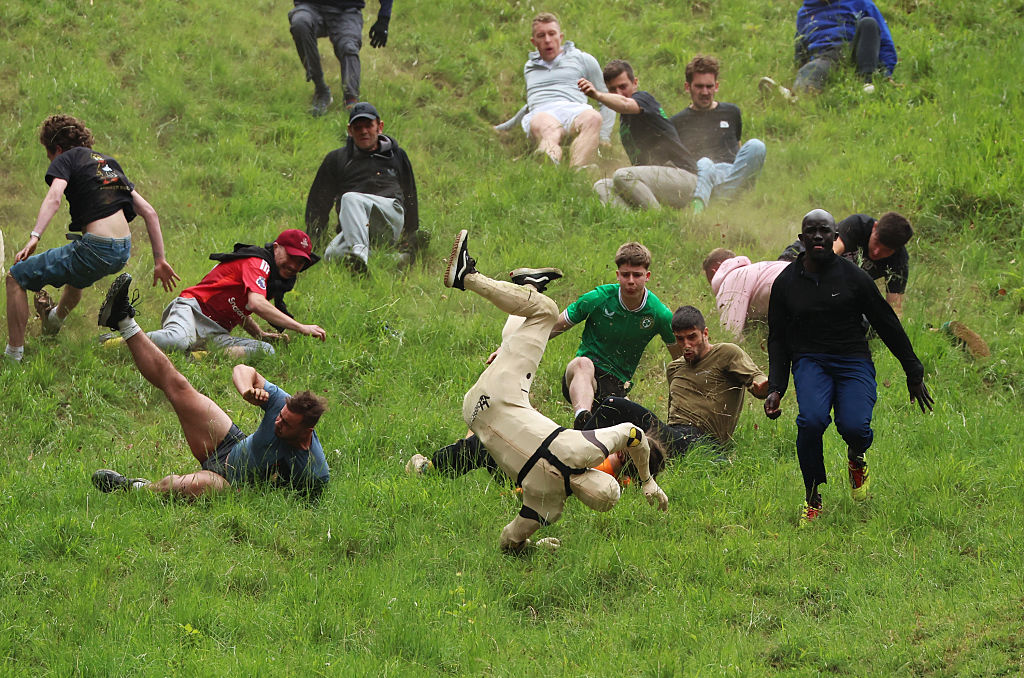
There’s a sense of narrowing in people’s lives, a feeling that fun is out of reach and excitement is frowned upon. Take cheese-rolling, Gloucestershire’s most famous tradition. Participants chase a wheel of cheese down Cooper’s Hill and the first to the bottom wins the cheese. The hill is so steep that there are often a few broken bones. Participants know this. West Country boys have been doing it on the last weekend of May for hundreds of years. Rather than celebrating this eccentricity, the authorities repeatedly try to shut it down. One year the police threatened the 86-year-old who made the cheeses with legal action if anyone got hurt. National Highways close the roads for miles around in an attempt to stop visitors. Health officials wouldn’t allow paramedics to attend, attempting to dissuade racers while making the event more dangerous. A multi-agency working group has declared the cheese–rolling ‘unsafe’, which is precisely the point. Officialdom’s hatred of the event feels emblematic. There’s a distrust of anything noisy, local and self-organised.
Paperwork has become almost as steep as the hill; new legislation demands that every event requires a designated organiser. Martyn’s Law, introduced following the Manchester Arena bombing, means everything from village fêtes to farmers’ markets must have an anti-terror plan. Even a beer festival in a pub garden, such as the one at the Bell and Bear in Emberton, Buckinghamshire, needs anti-terror paperwork. A folk festival on Allendale village green in Northumberland also, apparently, needs a terrorism mitigation strategy. It’s unlikely that a parish council planning document would do much to stop a nutter with a weapon. One publican told me he’d cancelled his summer beer festival because of the regulations. The only thing such bureaucracy does is frustrate civic life.
Once you’ve learned to spot the culprits – taxation, bureaucracy, safetyism – you’ll see them everywhere. A summer holiday in the UK, once considered the cheap and cheerful option, now costs an average of £2,765 for a family of four. Cornish fishing villages and Lake District hotels are filled with rich Chinese and American tourists, while Brits have to look for cheaper package options abroad. Expect prices to go even higher now the second-home council tax increases are hitting the market. International capital and rampant taxation mean we’re being priced out of our own country.
In theatre, the cost of the cheapest tickets has grown by almost 20 per cent above inflation. Here, too, is a sense of market-enforced blandness. A recent report by the British Theatre Consortium said: ‘There is compelling evidence that theatre programming has shifted emphasis towards shows with some already familiar element: adaptations and well-known plays, perhaps also big-name casting.’ Increasingly, ticket buyers are stuck with Harry Potter spin-offs and Paddington adaptations. Who can blame the theatres? They too face spiralling business rates, energy bills and wages. Artistic risks are harder when your bottom line is squeezed.
Around a third of nightclubs have shut since 2020, another victim of bureaucracy. Locals were empowered by New Labour’s planning reforms, then councillors were given greater powers to restrict nightclubs through the Tory Policing and Crime Act. These businesses were already threatened as security costs and insurance increased. Then came the pandemic, a nightmare for businesses that rely on sweaty proximity. The rates hike is likely to finish them off. These were cheap and dingy places where new forms of culture could be tried out. Now we’re left with cleaner, more controlled corporate spaces. It’s a loss, whether or not you care for the intricacies of psy-trance.
Unsurprisingly, Britons are choosing to stay indoors. The amount spent on at-home food delivery has almost doubled since 2019, and spending on streaming has increased by 50 per cent to around £50 a month. Where once a Friday night might have been spent having a few G&Ts with friends, now it’s spent in front of Netflix and a Deliveroo.
I’m reminded of Tocqueville’s observations of the overbearing state: ‘It does not tyrannise, it hinders, it represses, it enervates, it extinguishes, it stupefies, and finally it reduces each nation to being nothing more than a flock of timid and industrious animals, of which the government is the shepherd.’ In Britain today, you get the sense that this is precisely what politicians want: a population that goes to work, goes to the gym, then goes home. But it’s all so incredibly boring.


Comments