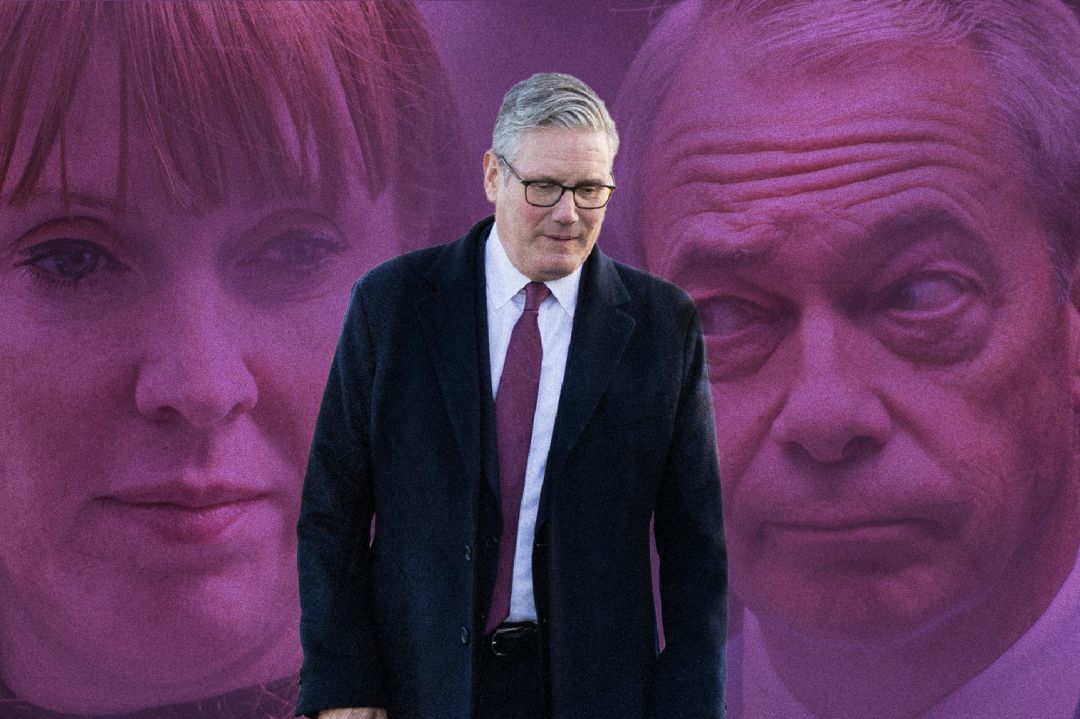


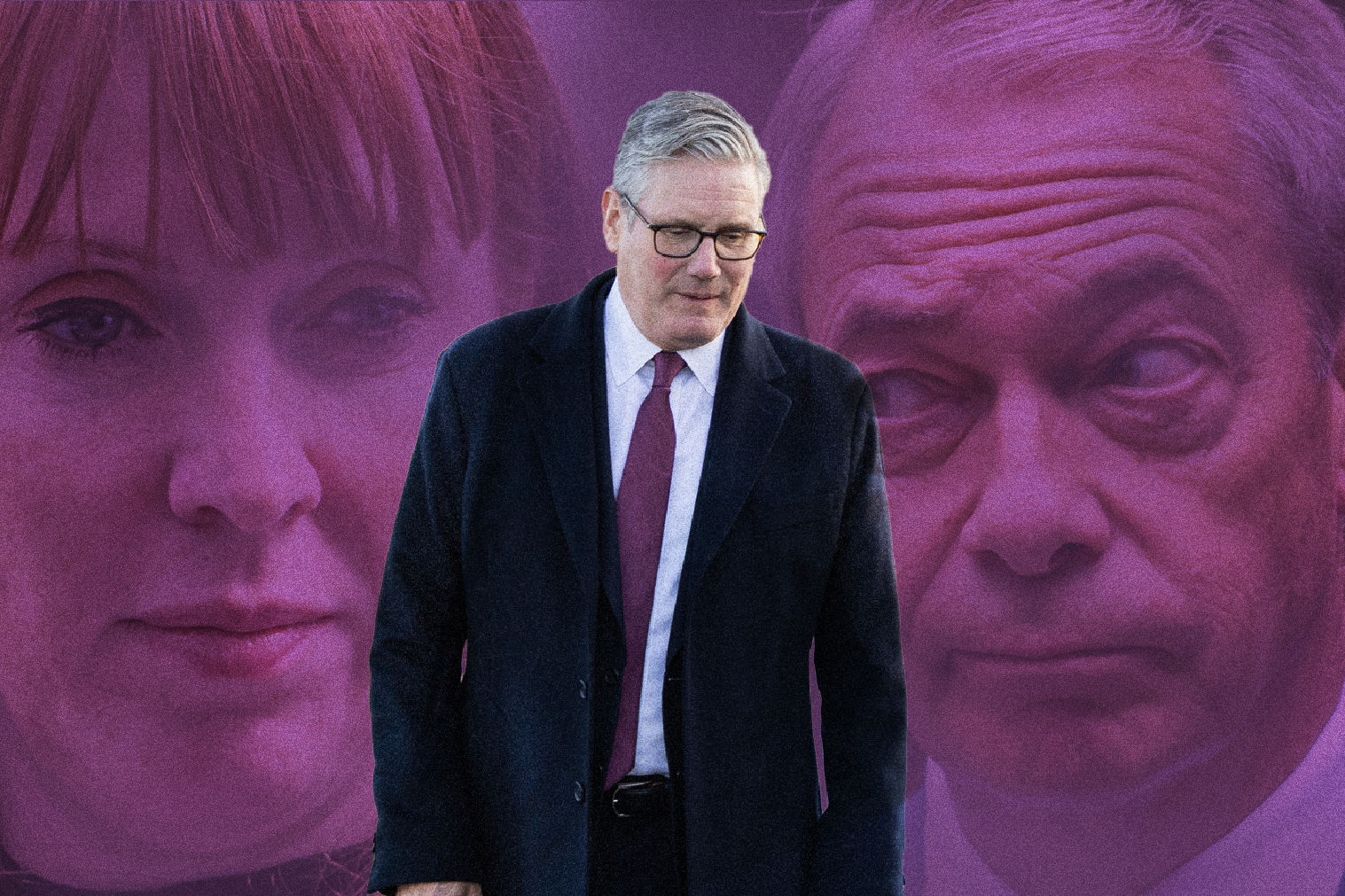
Contemplating a new year always raises questions. Was there a Third Protocol? What was wrong with Oral-A? Can Keir Starmer survive 2026 as prime minister? It is the biggest question in politics this year and the fact that it does not have an easy answer illustrates the mess Starmer has got himself into over the past 18 months.
A few days before Christmas, a senior figure in No. 10 outlined how Labour’s high command still believes the winds will change for the party in 2026: a ‘virtuous circle’ of falling interest rates and inflation, more investment, growth, and rising confidence in the government among the public and the Parliamentary Labour Party. Another Starmer loyalist noted the old adage: ‘It’s always darkest before the dawn.’
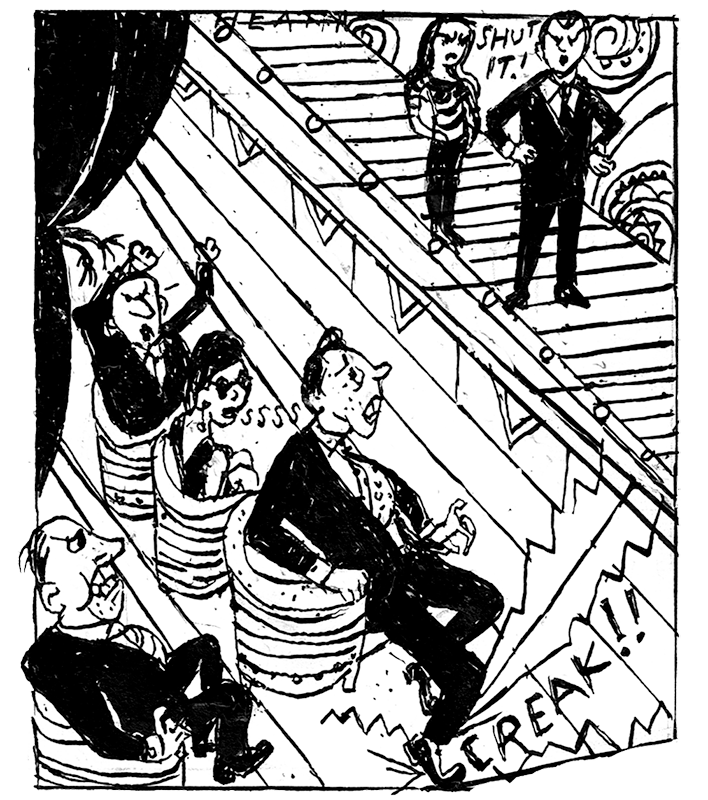
For a clear majority of Labour MPs and a significant proportion of the cabinet, the favourite adage of John McCain, the failed Republican presidential candidate, seems more appropriate: ‘As Chairman Mao used to say, it’s always darkest before it’s completely black.’
In Labour, there was a similar gallows humour in evidence at the news that Starmer’s chief of staff, Morgan McSweeney, had briefed the No. 10 team that 2026 would be the ‘year of delivery’ and the government has ‘turned the corner’. One veteran party strategist, convinced Starmer is a dud, remarked at a Christmas party: ‘If we have turned the corner, we have turned into a dark and forbidding street which looks pretty scary.’
Should Labour move on from their bland, uncharismatic, politics-free leader? Most Labour people I speak to think so. But that doesn’t mean it will happen. Labour has a poor track record of ousting leaders. A challenge would require 80 MPs to break cover and back a named candidate, unlike the drip-drip of anonymous discontent that unseats Conservative leaders.
‘If we have turned the corner, we have turned into a dark and forbidding street which looks pretty scary’
Then there are the questions about who might replace Starmer. Can Andy Burnham win a by-election and return to lead? Possibly, but the campaign would be a circus. George Galloway and Reform both fancy their chances of dethroning the King in the North. Is Wes Streeting ready to lead and does he have enough backing from Labour’s soft left? One of those who wants him to lead Labour at the next general election says: ‘I hope Keir can hang on for another year so Wes is better organised.’
Does Ed Miliband want the job? I don’t think so, but one who would like that says: ‘He’d do it if people went to him and said: “It’s yours.”’ The response to which is a line of George Osborne’s: ‘Power has to be seized, it is not given.’ Either way, Miliband’s political agenda is in the ascendant. ‘Keir Starmer is Ed Miliband without the rizz,’ comments one former No. 10 aide.
The pressure for a woman leader would also be strong. Shabana Mahmood, arguably the most able cabinet minister, will try to build the case that she has the best chance of delivering in power, but the Home Secretary’s confession to a friend that ‘no one with this face’ would ever lead Labour shows she knows it is an uphill struggle. Has enough time passed for Angela Rayner to return? The consensus is yes – and she would be the one to beat.
The second big question is: can Nigel Farage build on Reform’s success in 2025 and emerge as a credible alternative government? Again, this is a question built on several sub questions. Can Reform continue to attract defectors from other parties and, if so, are they the kind of politicians who will help the party’s chances? While Nadine Dorries, Jake Berry, Andrea Jenkyns and Jonathan Gullis all brought government experience, it was the arrival of Tory intellectual Danny Kruger as head of Reform’s preparations for government which excited Farage last year. When I interviewed the Reform leader last month, he said: ‘There are a couple of the new intake we are very interested in.’
These include Jack Rankin, the MP for Windsor who even Farage regards as ‘very right-wing’, and Katie Lam, who has just won an 8,000 majority in Reform-friendly Kent. ‘Those are the two we want,’ another source confides. Rankin has been openly critical of Kemi Badenoch. Lam is being told by power-brokers that she could be the next leader of the Tories; if she were to jump ship it would be another emblematic moment.
Was the Caerphilly by-election in October, in which tactical voting for Plaid Cymru denied Reform a seat they had expected to win, a sign of things to come? May’s local elections will give us part of the answer. Can Kruger and others devise a credible plan for a radical Reform government? Possibly, but it is telling that McSweeney, Dominic Cummings and former cabinet secretary Simon Case all basically agree on what is wrong with the state (a lack of central power, overmighty quangos and judges and an underperforming civil service), but no one has yet drawn up a coherent blueprint for reform.
Linked to both big questions is the third – will the Tories basically cease to exist as a major party in 2026? Badenoch’s problem is she is not the architect of her own fate. If Farage builds on his success, it will almost certainly be at the expense of the Tories. Despite Badenoch’s better performances at PMQs, many Tory MPs think her future depends on whether Labour tries to unseat Starmer. ‘If they’re removing a sitting prime minister, we would be well advised to keep our heads down and not interrupt them,’ says one.
Other questions are simpler to answer. Will the SNP again triumph in the Scottish elections? Yes. Will the Greens eclipse the pushmi-pullyu Corbyn-Sultana concoction of Your Party and emerge as the dominant power on the left? Almost certainly. Will the Lib Dems tread water in the national polls but continue to perform well locally? That’s my expectation. Ed Davey has failed to turn general election success into surging poll numbers and has been eclipsed by Zack Polanski. However, last year the Lib Dems won 105 council by-elections, one more than Reform, with the Tories trailing on 45, Labour on 36 and 24 for the Greens. I found it telling when I saw Farage that he regarded beating the Lib Dems as the ultimate challenge.
If you’re keeping track, that’s 14 questions about British politics. The answers will determine not just the course of events in 2026, but also the outcome of the general election in 2029.


Comments