Campaigning against screens in schools has been quite the voyage, and finding like minds has fuelled the way. Arlene Carruthers, a mother at my daughter’s school, approached me three years ago to see if she could help. Inside this slim whippet of a woman seems to be an army of revolutionaries – she has organised events in parliament with educators, neurologists and academics and she’s started a global movement called Close Screens Open Minds with Hugh Grant as patron. She’s used her own savings to make things happen and never wants any credit – only change. Well, here’s some credit, dear Arlene.
A lovely little acting job springs up in the dense forest of campaignery. The joy of being picked up in a warm car, draped by the costume designer, made to look kempt and well-slept by the make-up team and ushered on set by a cheery runner to deliver lines written by someone else – every moment feels so spoiling. It feels equally luxurious to be someone else for a change; having been campaigning relentlessly for a long time, I have missed the therapeutic hit of sliding into another skin.
I meet up with the handsome and serene William Clouston (former leader of the SDP) in Fleet Street to brave the memorial service of Rod Liddle. I learned things I’d never known about this brightest of stars – he was expelled from nursery (who apart from Rod would achieve that feat?), he called his mother a ‘lice-ridden whore’ when he was ten to see what her reaction would be (predictably violent) and he downright refused to partake in any school activity he thought pointless. Rod was clearly a revolutionary thinker from toddlerhood. The addresses by his children and colleagues were pitch-perfect, as was the choral rendition of the Millwall anthem.

My friend Katharine Birbalsingh celebrates her book launch in Robin Birley’s club Loulou’s. I took Robin, the genius behind the world’s most beautiful members’ clubs, to Katharine’s school in Wembley a few years ago. He instantly grasped her pioneering brilliance, and a loving friendship was born – two tireless outliers, both the best at what they do. I rather wish they’d get married and breed a flock of artistic, organised mavericks. But it never quite works like that does it? Maybe their genes would conspire to cook up a couple of rude, lazy oafs. I’d love to see Katharine deal with that.
The following night I celebrate another brilliant friend. Harry Enfield’s one-man show at the Barbican is a tour de force, an unexpected patriotism perfuming the theatre as he lovingly skewers various English stereotypes, from Tim-Nice-But-Dim to Loadsamoney. I have been lucky enough to work with some true giants of comedy, but for pure bullseye hilarity – with no toxic edge or ego – Harry reigns supreme.
As Christmas draws near, it is fundraising time for the Big Issue. I film an advert for them and arrange to sell copies of the magazine with my daughters. Whenever I see someone lying in the street, hopeless and unloved, I feel keenly how easy it would be to slide into destitution without the ballast of a stable family. The homeless people I meet around Britain often emerge from broken homes or the care system. This tragic reality is something I would love to spend more time investigating in the future.
Some lovely news – my husband Freddie and I are announced as joint patrons of Future Talent, a charity started by his late aunt Katharine, Duchess of Kent, which funds private music lessons for state school children. At the concert in her memory, it is fascinating to watch awkward children shuffle on stage then transform, acorns into oaks, the minute they take to their cello, sitar or trumpet.
Talking of the power of music, I visit my beautiful friend Clemency Burton Hill in the Royal Free. Clemmie, a music broadcaster, was struck down by a brain haemorrhage in 2020, and it was her favourite piece of music – Richard Strauss’s ‘Morgen’ – which roused her from her coma. Clemmie’s bravery, her husband’s devotion and their sons’ courage are inspiring.
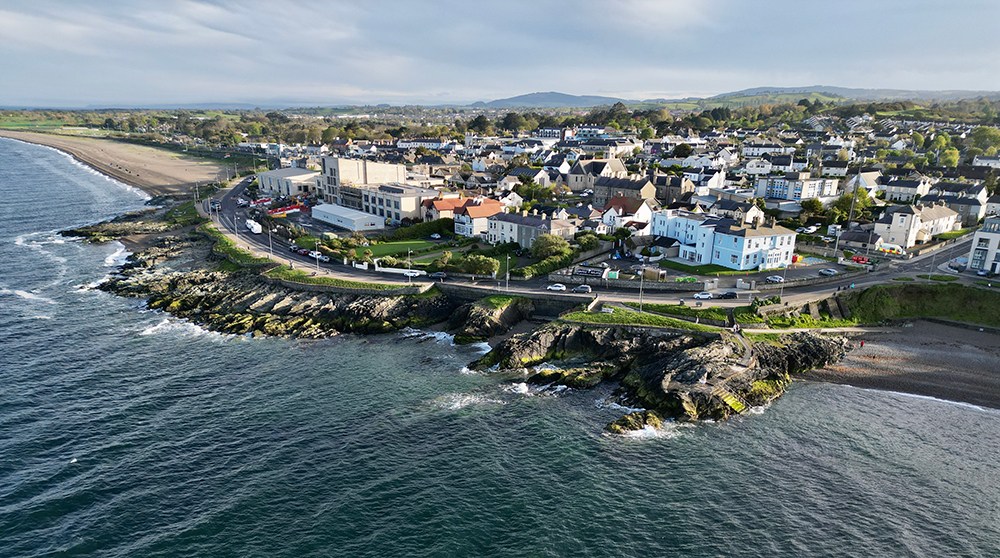
I finish the week in Ireland. The lush village of Greystones is legendary in my world of campaigning for its schools-led, village-wide pact not to give any of the children smartphones or screens. It is a profoundly moving experience – the children are luminous little fountains of enthusiasm, curiosity and exuberance, straight out of an Enid Blyton book. If anyone still thinks a screen-based childhood ‘has some benefits’, I would recommend they visit Greystones.




Comments