Reading

What’s happened to the trade paperback?

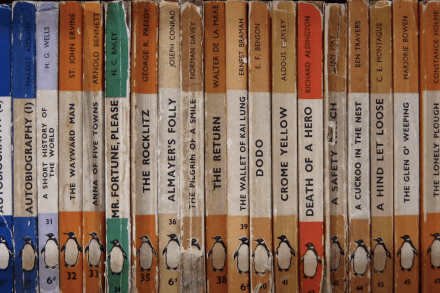
What’s happened to the trade paperback? To my thinking, it provides the most pleasurable reading experience in the world. And yet it’s virtually disappeared. Trade paperbacks are the paperback versions that became ubiquitous during the latter half of the 20th century. They’re typically larger than mass market paperbacks and publishers print them on nicer paper. There’s also something amenable about the way a trade paperback’s covers give that makes for an optimal reading experience. It’s not like my world falls apart if I have to read a hardcover – which would surely happen if I ever had to read an ebook – but I can avoid a book for a long time if it means I’ll eventually wind up with the trade paperback version to read. Hardbacks strike me as unforgiving.

How to make America read again

Christopher J. Scalia, in 13 Novels Conservatives Will Love (But Probably Haven’t Read) hopes not only to refresh “how conservatives talk about fiction,” but also to disabuse the left of the notion that “conservative thought is an oxymoron.” He’s set himself a difficult task, since, as he notes, nobody reads any more; whether this is truer of conservatives than of the left, I don’t know. Using the form of a book in order to attract people who don’t read might seem odd, but Scalia knows his audience and his light, avuncular style proves engaging throughout. He’s also chosen a structure that even the most TikTok-numbed zoomer might appreciate: the extended listicle.

Scalia

Books you should plan to read this fall

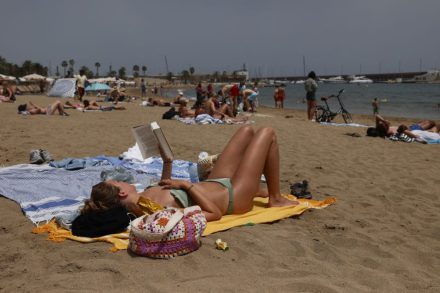
Summer has arrived in full force — at least here in southeastern Virginia, where the temperature has been creeping up towards 100 degrees — and so, too, have those lists of the best beach books, hottest summer reads, high temp tomes, etc. But fall is just around the corner, so why not take a peek at what’s in store? Here are a few forthcoming books that piqued my interest for one reason or another. This isn’t a list of the fall’s “biggest” books. Some of these might not be covered at all in the national press. But if you want a list like that, just wait. You’ll have 20 to choose from before long. Here is mine. Robert Crawford’s Eliot after The Waste Land (August 23, FSG), the second volume of his biography of T.S.

substack

Stop reading

Like you, I enjoy reading. I know, of course, because you are reading this. But perhaps you also share my interest in preventing others from reading. In case you are not yet enlisted in the Restricted Literacy Movement, allow me to point out our three basic claims. (Call it RLM, why don’t we: acronyms don’t have to be read, after all.) First, literacy beyond the rudimentary has become unnecessary. Most people can do their jobs and find fulfilling leisure without it. Second, attempting to produce literacy in the unwilling is an expensive, typically futile undertaking. Third, literacy is simply harmful to many who have acquired it. It engenders discontent, self-doubt and destructive impulses.

reading

Reading during a pandemic

The experience of having Covid is, by now, well-documented. You spend seven to ten days in your room or house feeling ill and sorry for yourself. The world outside becomes a distant dream, and one of the few pleasures of spending twenty-four hours a day in bed is the time to read. This winter, the Omicron bell tolled for me — as it seemed to do for half of the global population. I was very lucky with the virus: after two days of unbelievable complaining and texting everyone I knew to tell them I was either like Beth in Little Women or a fevered Marianne in Sense and Sensibility, I recovered from my gothic heroine-like swoon and set about ploughing through novels. At the outset, there were endless articles and tweets about what one should read during a pandemic.

The Spectator’s Books of the Year 2020

Our turkeys were stuffed and now we are too. Reclining helplessly in the recovery position, our thoughts turn to feasts future. What better way to show your friends and family that you love them, and also that you have impeccable taste, than sending them a book? In The Spectator’s stocking-stuffing December issue our staff, writers and friends make their seasonal suggestions for Books of the Year: stack upon stack of the most riotous reads, bibliographical beauties and pandemical page-turners. P.J. O’Rourke The Decline and Fall of the Roman Empire, Volume I, by Gibbon, because in this year of scourge and collapsing polity it seemed apposite. And only Volume I, due to reader fatigue after 582 pages and the shift in Volume II to the history of Byzantium.

books of the year 2020

Why men don’t read books anymore

When John F. Kennedy was dating Jacqueline Bouvier, he gave her two books. One was Pilgrim’s Way (1940) a memoir by the British spy and author John Buchan. The other was The Young Melbourne (1939) by Lord David Cecil, which describes the raffish exploits and political intrigues of a Whig aristocrat, and later prime minister, in the early 19th century. Quite what Jackie thought of this is unrecorded. Later President Kennedy told Life magazine what his favorite books were. Both of the titles above were in this proto-listicle, along with works about Byron, John C. Calhoun, Talleyrand and Gibbon’s The Decline and Fall of The Roman Empire.

read books