BBC1’s new ghost-story drama The Witch Farm certainly can’t be accused of lacking what’s known in the trade as ‘respect for the genre’. It began with a vicar walking through a field of crows to an isolated Welsh cottage, where he just had time to find a room covered in runic scribbles and cry out in fear before a caption appeared reading: ‘20 years later. June 1989’.
To prove it, the radio brought news from Tiananmen Square and played Transvision Vamp as a family of three from London drove to their new home in that very cottage. On arrival, teenage son Jonathan noted with alarm the absence of a TV aerial (for younger readers, the nightmarish equivalent of no wifi).To the parents Liz and Bill, though, it seemed like an idyll. But not for long. Their first night there – a dark and stormy one, naturally – featured things that really did go bump in the night; and that Bill really did ascribe to (presumably rather hefty) mice.

The following day, the family discovered that the grounds of their new property, which they apparently hadn’t explored before buying it, contained the ruins of a manor house. It was adorned with the same runic scribbles from scene one, which a suddenly appearing neighbour told them were to ward off evil spirits.
Although not, it seems, very successfully – because back at the cottage, stranger things were soon going on. When giving birth to her first child (Jonathan is her stepson), Lucy saw an old woman looking on from a chair. When bathing the baby, all the closed taps in the bathroom started spurting out water and couldn’t be turned off.
For a while, Bill stuck to his policy of deeply irrational rational explanations. (His one for the taps was ‘these things happen’.) Nonetheless, once he and Jonathan had seen the old woman too, he was forced to realise that simply saying ‘There’s no such thing as ghosts’ doesn’t make it so. As a recovering alcoholic who’d moved to rural Wales partly to escape London’s boozy temptations, he also realised that he may have picked the wrong house to quit drinking.
To its credit (I think), The Witch Farm plays all of this entirely straight. Both episodes so far have included captions telling us that it’s based on a true story – and nothing we’ve seen suggests the programme will go for any Bill-like explaining away of the supernatural.
But there’s another, less appealing way in which it’s respecting the genre – which is to say that it’s an extremely slow burn. In between the big moments I’ve mentioned, there are plenty of longueurs in which either spooky music takes the place of any actual action, or the same spooky stuff takes place again and again without any real forward momentum. (And, as a rule, anything genuinely horrifying turns out to be a dream.)
In fact, the second episode did end with a twist that should mean we’re in for a properly thrilling time in the remaining two. If so, however, we surely earned it.
We should be in for a properly thrilling time in episode two. If so, however, we surely earned it
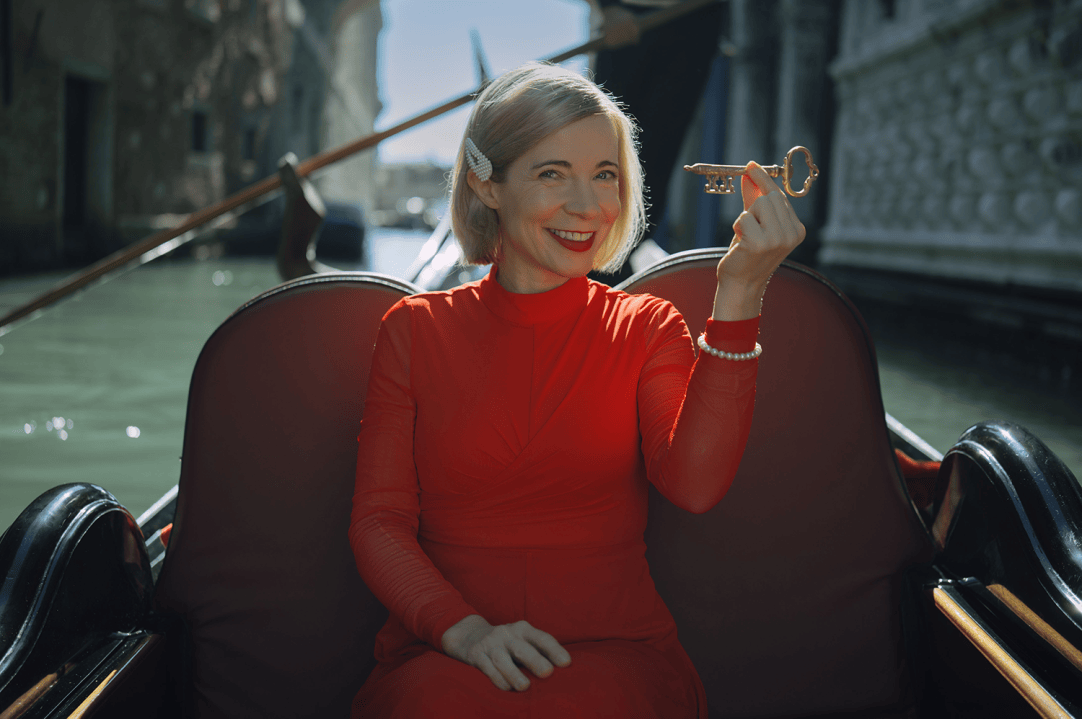
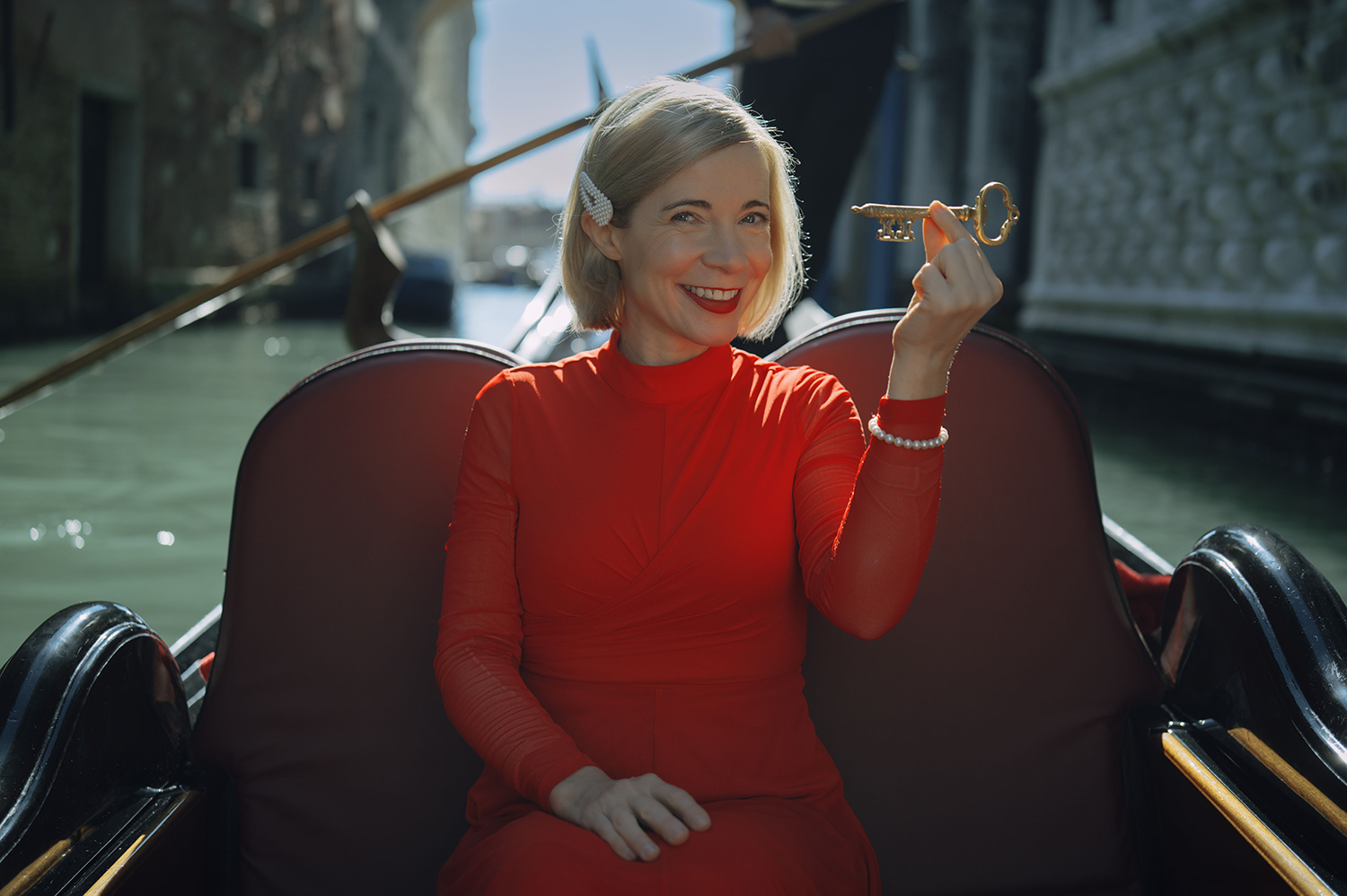
The premise of Lucy Worsley’s Keys to the Castle is that, thanks to her impressive contacts book, Lucy can gain access to the parts of great buildings closed to the rest of us. Not that the keys are merely metaphorical. Visiting the Doge’s Palace for episode one, Lucy gushed over the set she was given with characteristic excitement (‘What a bunch! I love ’em! I love my clanking keys!’). She then used them to make her central point: that the Palace may look lovely but, in Venice’s pomp, it was the centre of a surveillance state which made sure its citizens didn’t step out of line. Unexpectedly – to me at least – it did the same to the Doge himself, who was not so much a ruler as a prisoner of his own bureaucrats.
So it was that Lucy’s beloved keys opened doors to the room where those bureaucrats read denunciations of blasphemers from other Venetians; to the torture chambers where suspects were interrogated; and to the dungeons where the lucky ones ended up. (The unlucky ones met horrible deaths that Lucy described with some relish.)
Through all this, she managed her usual trick of combining lots of interesting information with a whole-hearted commitment to the tropes of TV presenting. Which brings me to the one, somewhat unfair problem with the show. Because Cunk on Cinema is currently skewering these tropes so mercilessly, Lucy’s performance of them seems inescapably funny: the throwing out of the arms whenever she enters a room, for example; and, especially, the habit of following such ringing remarks as ‘the story’s really not as pretty as the building itself’ with the little self-satisfied smile and turning away from the camera of someone who clearly feels she’s completely nailed it.



Comments