You might remember ‘Object 101’ – the final item to feature in Neil MacGregor’s series A History of the World in 100 Objects when it wrapped up in 2020. It was an artwork called ‘Dark Water, Burning World’, by the Syrian-born, Cambridge-based artist Issam Kourbaj: a flotilla of tiny boats, made out of recycled bicycle mudguards, and filled with matchsticks. Some of the matches were half-burnt, some still had their sulphur tips. All were perilously stacked aboard.
The people-smugglers putting the boats to sea so overloaded were not pictured. The simplistic pathos of the work made it a huge draw for major institutions and spaces from the British Museum to King’s College Chapel to the Venice Biennale, where the boats sailed across the floor of the
Palazzo Papafava.
A charismatic communicator, the artist talks readily about the pain of exile, and his survivors’ guilt. He often uses repurposed materials – an aesthetic formed, he says, when as a child in Suweida, he ate with a spoon fashioned from metal his uncle had salvaged from defused bombs. His training in theatre design at Wimbledon School of Art also informs his small-scale world-building, seen in his cardboard-box cityscape installation ‘Another Day Lost’, which toured UK churches and venues under the banner of the UN refugee agency, raising money for Médécins Sans Frontières, and travelling to New York, Philadelphia, Dubai, and Budapest. In 2017 his miniature boats were displayed in the Fitzwilliam Museum as an ‘intervention’, beside 5th-century BC votive lead boats from the Syrian port of Tartus.
He has now made a fresh ‘intervention’, which opened earlier this month across two venues in Cambridge, the Museum of Archaeology and Anthropology (where there are just a few items and a film, confined to a corner of the third floor) and the Heong Gallery at Downing College (where there is a full show). The concept is ‘No Provenance’: nothing will have a plaque on it. A rebellion against the habits of classification and definition that have made the host institutions great. The objects, some made by the artist, others simply chosen by him, are presented ‘stripped of information concerning origin, material and date’. The disorientation will be good for us, he asserts. Make us feel rather than think, ‘pause before certainty, look before knowing’.
At times the strategy works quite well. I found myself peeping, kneeling and adopting other strange attitudes, in an attempt to ‘get’ what it was I was looking at. Almost prone on the floor, I finally saw that the half-open box marked ‘First Aid’ contained the words ‘blood… stains’. Not sure how well that one works. But I gasped when, peering for the third time at a morass of classical carved white statuary, I noticed it had a beautiful profile, and realised it was in fact the detached head of some goddess or other. The silver material hanging over her I could identify more easily as a modern rescue blanket. A poetic juxtaposition, but the impossibility of decoding all the other objects was too much for me.
I resorted to asking the friendly curator at the Heong Gallery what the brass thing was – a photographer’s flash? No, he said, a heat lamp. The tent I had imagined as a refugee’s shelter was actually from an Antarctic exhibition. Genuine tokens on loan from the Foundling Museum at Coram’s Fields were displayed alongside some improvised modern versions – endlessly touching to those in the know, but I saw some younger visitors pass quickly by, unaware. Presenting items with ‘no provenance’, I started to feel, carried more risks than benefits.
Where documentation fails, disorder hurts. Accuracy is precious
My curiosity was often piqued but then tailed away as I failed to find answers. There were, perhaps, too many themes: seeds (represented by dried grasses), global boundaries (represented by a vast, inverted world map made from jigsaw pieces, the English Channel elided to almost nothing, but the Irish Sea oddly wide), chance (represented by an occult dice), polar exploration, tide-washed Lego, displayed together with some pebbles. And finally, a long line-up of negatives of Polaroids of the backs of people’s heads, all clearly too afraid to show their faces, or counselled against it. It was haunting, as was the idea that an organisation intended to help had enacted this disordered documentation, putting people in limbo. The tall wall of typewriters is, I think, meant to signify impregnable bureaucracy, but others might see them as beautiful engines of order.
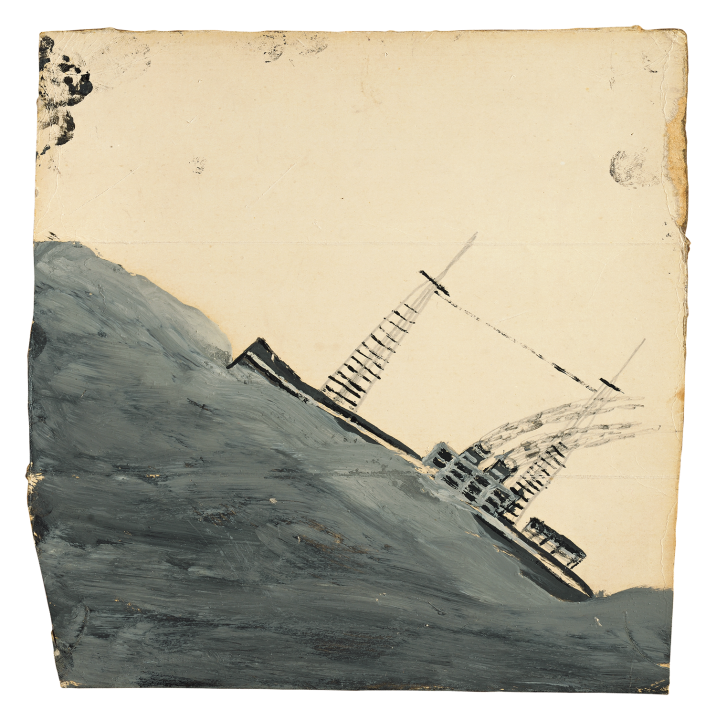
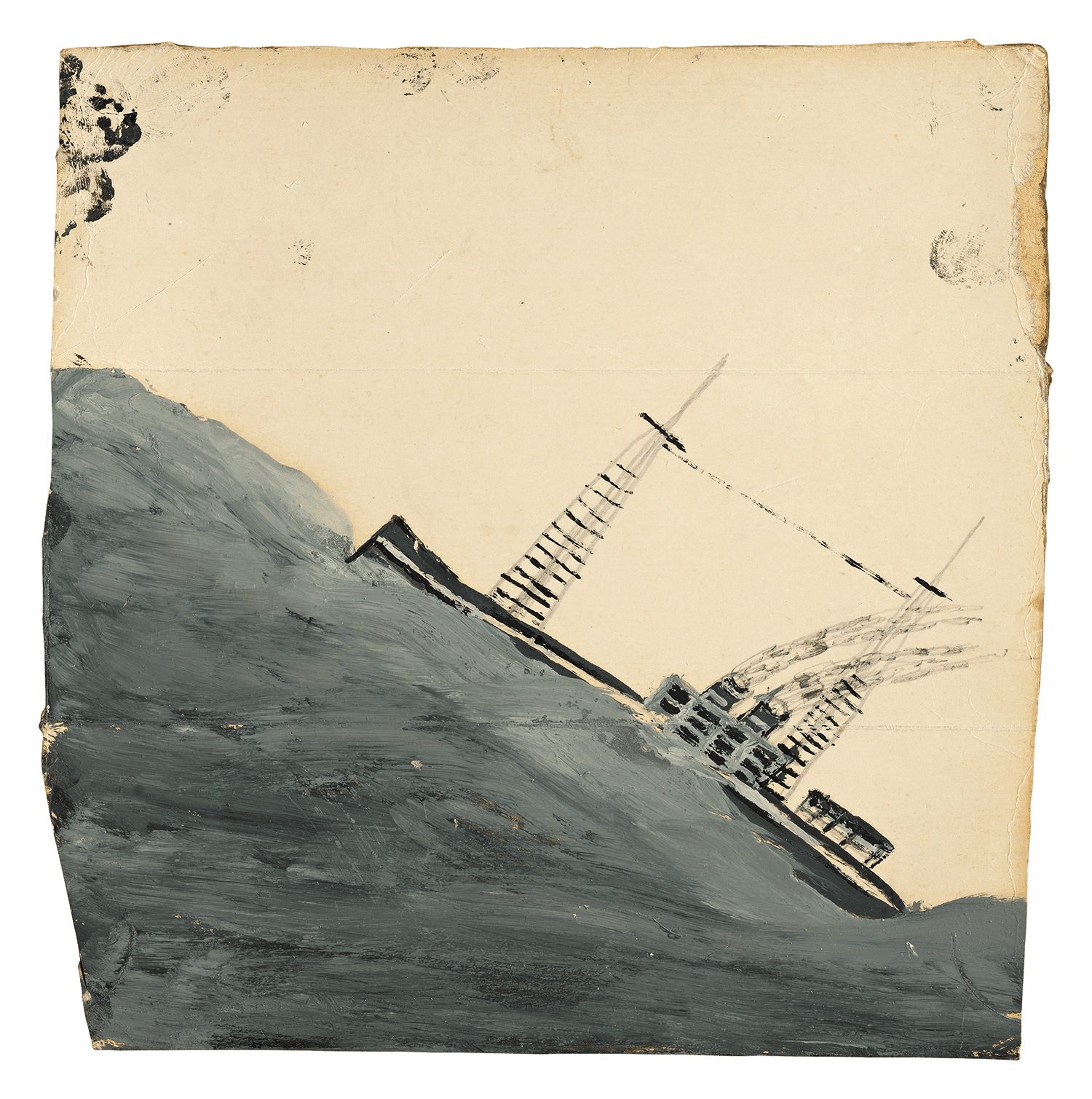
Seeking clarification on the artist’s Instagram, I found a list of the show’s participants, which included the naturalist Alfred Russel Wallace, but I think this is a mistake: Kettle’s Yard has loaned two works by Alfred Wallis, the Cornish artist. Where documentation fails, disorder hurts. Accuracy is precious. This show was, in the end, a powerful example of how much labelling matters. And perhaps this was the point: one of the artist’s aims, set out in his rubric, was to speak up for those ‘left beyond the record’.





Comments