By Christmas we should know if Labour has transitioned into a government or whether it is determined to remain a student-level activist group. So far, the signs are not promising. In an interview given in the dying embers of the COP31 climate summit, energy secretary Miatta Fahnbulleh gave the strongest hint yet that she is preparing to reject permission for the development of the Rosebank oil and gas field off the Shetlands. She repeated the endlessly-parroted claim that Rosebank was not really worthwhile because it won’t take a penny off the bill of UK energy consumers: the oil would simply “be sold into global fossil fuel markets”.
The conference broke up without agreement because for once oil-producing countries brought a rare honesty to the proceedings
There are several things wrong with this line of argument. Firstly, Rosebank won’t just produce oil. Around 10 per cent of production will be gas which will be fed directly into the UK gas grid. Contrary to what Ed Miliband and the anti-fossil fuel brigade keep trying to tell us, there is no global price for gas. Wholesale prices are highly regional, with European prices around three times as much as the US. The idea that it might be hived off and sold on global markets is absurd. Why would you want to sell it at a much lower price elsewhere rather than feed it into British homes and power stations? Gas from Rosebank won’t have a huge effect on prices. According to Ithaca Energy, one of the companies hoping to develop the field, it will produce only enough to satisfy a city the size of Aberdeen. Nevertheless, that is extra gas fed in a market which is currently constrained. That will help to exert downwards pressure on prices.

North Sea oil, it is true, is quoted as a global commodity and much of the fuel extracted from Rosebank will be exported: last year, 27 million tonnes of the 31 million tonnes of oil produced in the North Sea was sold abroad. But most of it is not going far: most oil exported from the North Sea goes to oil refineries in the Netherlands, from where we in turn re-import some of it in the form of refined products. Again, additional oil fed into European markets will help to exert downwards pressure on prices, and improve our energy security by making us a little less reliant on what Miliband likes to call ‘fossil fuel dictators’. Had we not reduced our refining capacity to four major sites, no doubt more oil from Rosebank would stay in Britain.
But so what if much of the oil from Rosebank is sold abroad? You might as well argue that we should close our car factories because many of the cars produced in them are exported. Rosebank would bring tax revenues to the UK government’s desperately-empty coffers, as well as creating 1,600 jobs at its peak. According to Equinor, another company developing Rosebank, the field will bring £24.1 billion of overall benefits to the UK economy over its lifetime.
To deprive ourselves of this makes no sense, economically or environmentally. As Fahnbulleh has recognised, Britain and the world will remain dependent on oil and gas for decades to come, even in the best scenario that we reach net zero by 2050 (and there is a vanishingly small chance of that). The alternative to North Sea production is importing it, which will inevitably mean higher carbon emissions, especially in the case of gas as extra North Sea production would displace liquified natural gas.
As for the claim, made repeatedly by opponents both within and outside the Labour party, that blocking Rosebank will help to underline Britain’s leadership on global issues, it is fatally undermined by what has just happened at COP31.
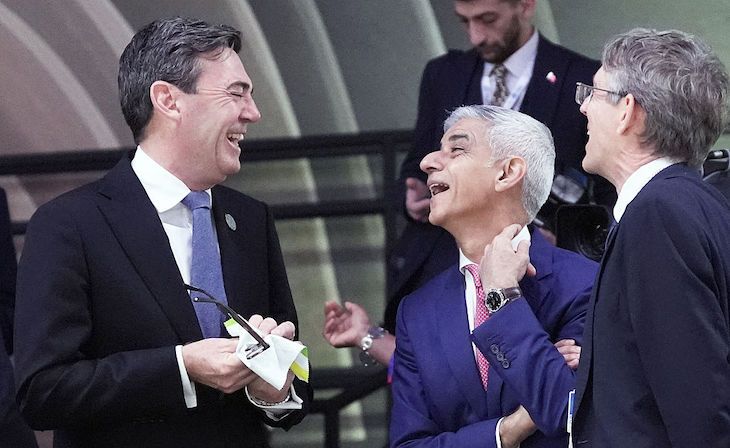
Much as Andy Burnham – who was the only G7 leader to bother to turn up to the beanfeast – might like to think he is influencing other world leaders, the rest of the world has just cocked him a very large snook. The conference broke up without agreement because for once oil-producing countries brought a rare honesty to the proceedings and refused to commit to winding down their fossil fuel industries. Normally, of course, their leaders go along with the platitudes, smile for the cameras and then go home and sign deals to expand their oil and gas industries. Not this time. And so Britain has been left jumping up and down in vain.






Comments