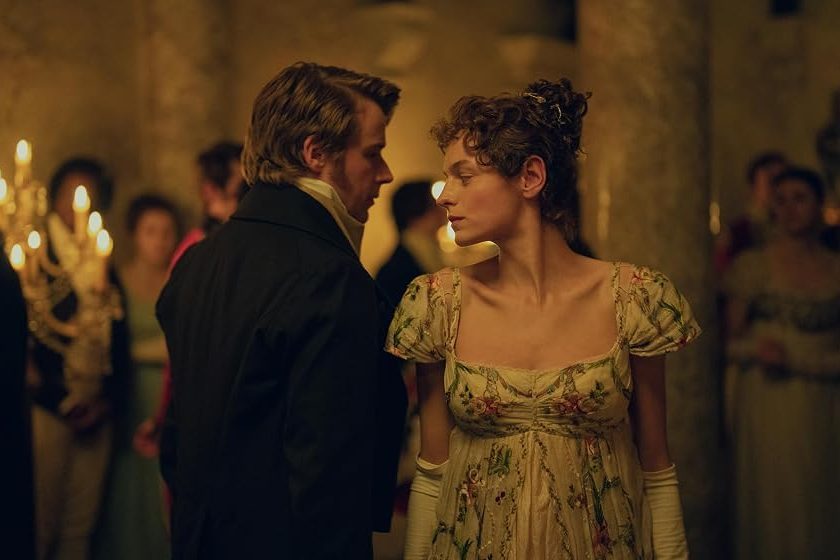
There’s a new trend in dating – or, rather, in not dating. The new trailer for the upcoming Pride and Prejudice shows Lizzie and Mr. Darcy looking longingly at each other in various contexts. This was a clear example of something that every Gen Zer recognizes: yearning. “The marketing team keep using the word yearning,” the director, Georgia Oakley, has said. Tinder has reported a 170 percent increase in the number of Australians using the term “yearn” in their profiles. A British news website claims we have just gone through the “Summer of Yearning” and Elle magazine recently enthused that “The yearn-aissance is far from over.” 2026 has been crammed with celebrations of yearning in film and TV, from Cathy’s longing for Heathcliff in Wuthering Heights to Rupert and Taggie’s agonizingly will-they-won’t-they in Rivals.
All of these stories are set in the past, before the arrival of dating apps – and users’ subsequent fatigue. Gen Z, having grown up in a digital age, are nostalgic for what they can never experience: a solely physical form of romance, from long conversations to flirtatious touching. Absence, our grandmothers told us, makes the heart grow fonder. But now we can reach anyone in the globe in less than a second. That’s what makes these older, pre-internet stories of love so appealing. Much is made in period dramas of the brush of a hand, with both characters obviously feeling a thrill. Looking at your crush’s Instagram just doesn’t trigger the same reaction.
The apps encourage both sexes to prioritize short-term connections and then each finds themselves feeling easily replaceable
The desire for yearning is a response to a burnt-out dating culture. The apps encourage both sexes to prioritize short-term connections and then each finds themselves feeling easily replaceable. Both sexes report feeling exhausted and disappointed with online dating, leaving singles to turn away from the apps. Ex-users consistently say they’re fed up with feeling commodified and, in turn, objectifying their romantic partners. Yet, real life offers fewer opportunities to find someone than ever before. Americans are having fewer parties, they have fewer friends and spend far less time with those they do have compared to even a few decades ago. It’s no surprise that the number of couples who meet through mutual friends has declined. The workplace used to be a way to meet potential partners, yet now only 16 percent of workers would consider dating a colleague.
The “yearn-aissance” is fundamentally a longing for an easier time, when romance was based on a slow courting and friendship. To want to yearn – and, of course, to be yearned for – is to want to be known, to be intrigued by someone and feel their curiosity returned. This necessarily involves a period of getting to know each other, building up feelings and then – ideally – finally getting together. It also implies a more serious relationship once you do finally admit your feelings, rather than being callously ghosted. In an age where singles feel frustrated by both the process of dating and the options on offer, the appeal of a slow burn, physical romance is obvious.

There is, however, a sadness to yearning. Gen Z and millennials are stressed and anxious; 69 percent of Gen Z report that their mental health is the biggest barrier to dating. While singles are turning away from the apps, they are also rejecting opportunities to meet people in person, often citing the risk of what might go wrong. By contrast, yearning is risk-free. A core part of yearning is that you never actually reveal your feelings to the other person. Unrequitedness is a central to the concept. Instead, it is a safe way to enjoy a crush without the messy rejections, discovering you’re incompatible, or getting the ick.
Perhaps the desire for yearning is actually a desire for distance. If you’re enjoying a good yearn for someone, the last thing you want is to have a proper conversation with them and risk learning about unsavory aspects of their character or, worse, seeing them do something fundamentally human like buy toilet paper – a gentle brush of a hand followed by agonizing over what it could mean is much more satisfying than actually finding out (usually nothing, I’m afraid).
Endlessly swiping on our phones has created the illusion that singles can be treated like products from a catalog. The “yearn-aissance” isn’t a celebration of finding actual, real love but instead an excuse to retreat from it. Rejecting dating apps is the first, easy step. Finding the courage to ask someone on a date is much harder. Yearning is just another way of avoiding that.






Comments