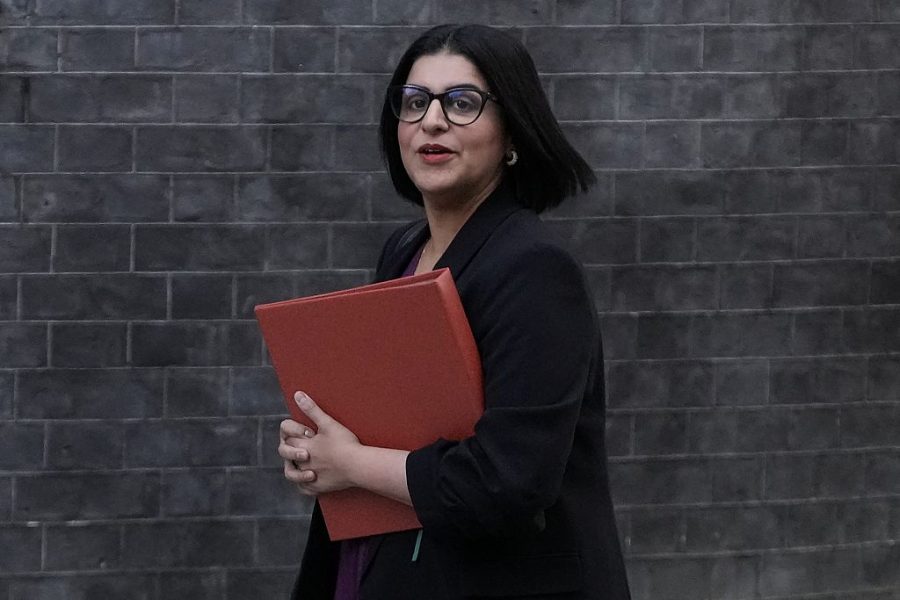
There is no doubt that yesterday’s announcement from Shabana Mahmood that she would be giving police forces guidance on eliminating two-tier policing was carefully calculated. Under Labour, the King’s peace has not been kept without fear or favour. Voters in Middle England know this perfectly well, and the government is well aware that on this issue it is electorally very vulnerable.
But credit must be given where credit is due. A clear steer from the Home Secretary away from the previous practice under which differential treatment was at least covertly encouraged may well do some good. It is certainly better than the previous wooden denials from the redoubtable Mr A. Spokesman that anything is wrong. The promise of an explicit commitment to police impartiality, to be promulgated by the College of Policing, is at the very least a good start.
Nevertheless, we should be cautious. This was, after all, not a major policy announcement but a judicious pre-leak of a fairly brief speech to be given later the same day to the NPCC, where the Home Secretary traditionally rounds off the annual gathering of the great and the good in the policing world.
There is a more fundamental difficulty lurking here
Furthermore, the speech itself is less radical than it looks at first glance. An ‘impartiality standard’ sounds grand, but in the hands of the police bureaucracy could well end up as just yet another fairly abstract code of good practice to add to the myriad of governmental instructions already bulking up the files on every chief constable’s desk. References to ‘misguided attempts at course correction’ (code for explicit racial or other preferences) and to the need for police to base decisions on professional judgment are right, but again hardly radical. Talk of a ‘growing perception of two-tier policing’, meanwhile, carries a subliminal suggestion that a lot of the problem lies in perception rather than reality.
Indeed, at least some of this guidance may, without intending to, actually encourage just the kind of partiality the Home Secretary deprecates. There is, for instance, a call for engagement with community groups such as residents’ associations, as opposed to contact with activist campaigners. But this is potentially a two-edged sword: it is very often the activist campaigners who make up the community groups in the first place. Far better would have been an insistence that everybody’s rights are to be upheld, whatever the position taken by some self-appointed group supposedly representing the community.
There is, however, a more fundamental difficulty lurking here. True, some of the problems of two-tier policing do indeed derive, as Mahmood suggests, from well-meaning but inadmissible discrimination or ‘course correction’. A classic example was the Henry Novak debacle, where concern at an alleged racial insult to a non-white aggressor seems to have trumped the obvious prior need to see to the fatal stab wounds of his white victim. The insistence that such reverse racism must not happen again is obviously right. But unfortunately the difficulties associated with partial policing go well beyond such relatively straightforward situations.
Take, for example, policing decisions made on the basis not of upholding rights but of avoiding offence to community susceptibilities. Think of the grooming gangs fiasco, where real victims who might otherwise have been supported were essentially abandoned to their fate in order to appease a particular ethnic community; or, more recently, the Met’s decision in January this year to ban a Christian march through Whitechapel because of the hostile feelings of a largely Muslim community. Again, there are plenty of instances of preference given to groups prepared to shout loud and use menaces: ask those members of the Campaign against Antisemitism peacefully displaying posters of Israeli hostages, who in October 2023 were summarily ordered to get away from a baying mob of aggressive pro-Palestinian demonstrators in London and stay away. All these are cases of plainly non-dispassionate policing. None were addressed by Shabana Mahmood.
Furthermore, a good deal of the problem reflects not so much high-level policy as lower-level management. Why are gangs of youths who intimidate innocent householders often quietly left unmolested while individuals find themselves arrested for fairly innocuous street preaching or tweets that happen to injure a few susceptibilities? This again is essentially a matter of differential policing, this time in the form of a preference of police managers for the easy over the problematic. Given a choice, it’s a natural – and unfortunately common – police instinct to chase the harmless individual rather than the aggressive ringleaders of a menacing mob. If a Home Secretary really wanted to make a difference to the lives of decent Middle Englanders, she might do well to take the uncomfortable option of reminding forces that in cases like this the easy option isn’t always the wisest.
Mahmood’s speech showed that she has many of the right instincts. Good for her: but she has a very long way to go before we get to anything like genuinely impartial policing without fear or favour.




Comments