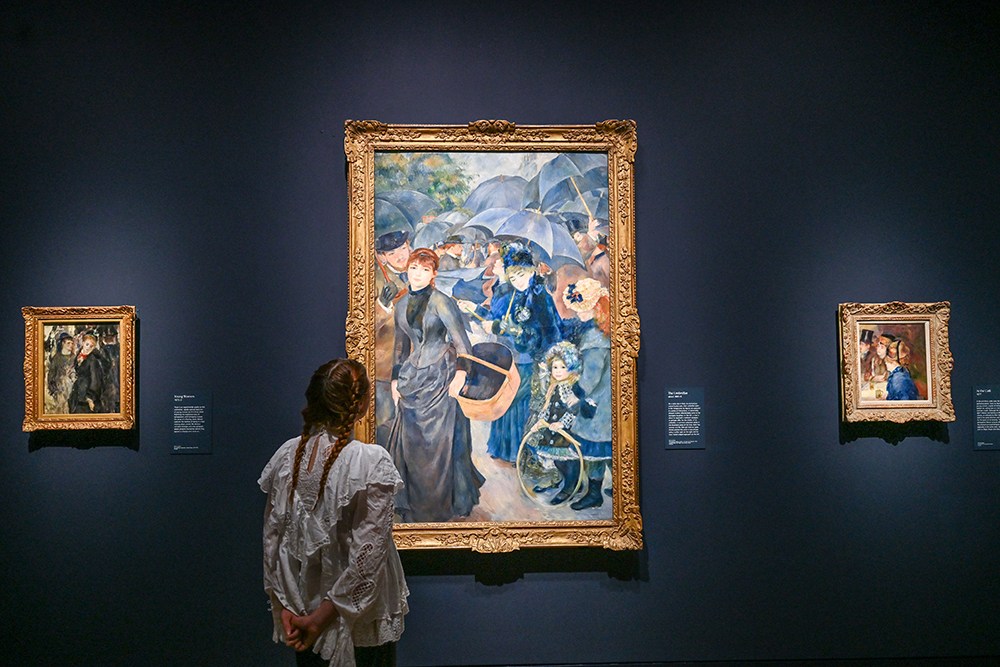


It started with the benches. When the National Gallery announced plans to auction off its red leather sofas last year – to be replaced with the sort of minimalist oak seating you might find at Euston station – it was obvious that this 200-year-old institution would be the next to fall in the long march towards ‘modernisation’.
The official explanation was fire safety and pest control: curators claimed the Chesterfield-style furniture could not be cleaned safely. Wadsworth Atheneum in Connecticut has had the last laugh: it snapped the furniture up for around £1,200 a piece and installed it in the museum. No art-eating woodworms or devastating fires so far.
Of course the real rot at the National Gallery set in earlier. A year before curators declared war on sofas, they condemned John Constable’s ‘The Hay Wain’, describing it as a ‘contested’ landscape in light of the painter’s ‘conservative’ attitudes and ‘privileged’ position as the son of a wealthy corn merchant.
So when the National Gallery’s ten-year plan was published last week, the direction taken by trustees came as no surprise. Directors have set themselves four strategic aims: ‘expand the collection’; ‘reimagine the Gallery to be the museum of the future’; ‘inspire audiences’; and ‘drive innovative research’.
They think ‘new audiences’ won’t like what the old gallery stood for: historic landscape art and beautiful pillars
These might sound like standard corporate buzz words. But Britain’s museums are slowly being felled by pledges such as these. I don’t want the National Gallery to be ‘the museum of the future’. In fact, I was under the impression that the whole point of it was to be a gallery of the past.
Around 20 years ago, after the opening of Tate Modern, the National Gallery agreed to a chronological collection boundary. The National Gallery would cover 1250 to 1900, at which point Tate Modern would pick up the baton. Visit Trafalgar Square for ‘The Arnolfini Portrait’. Cross the river if you want unmade beds or an installation assembled from household rubbish. Everyone was happy.
But in order to ‘broaden the story’ told, the National Gallery’s trustees have decided to abandon this agreement. They will go to war with the Tate to purchase ‘a world-class 20th- and 21st-century collection of paintings’, featuring ‘previously unrepresented artistic styles, movements and painters’.
No museum has ever ‘reimagined’ its collection and made it better. That word – ‘reimagined’ – is used by curators to prepare audiences for progressive ideology flooding exhibitions, plaques and acquisitions. The National Maritime Museum committed to ‘reimagining maritime’ just as busts of ‘migrant goddesses’ telling Lord Nelson to ‘move over’ and make room for ‘unsung heroes of the sea’ started appearing.

The Art Fund has a £1.2 million ‘Reimagine’ grant scheme that’s seen money meted out to the Horniman and Pitt Rivers Museum. Both have committed to ‘decolonising’ their collections, which seems mostly to involve taking artefacts off display.
Ploughing through the National Gallery’s plan, we move from the depressing to the absurd. As part of its proposals to ‘inspire audiences’, trustees have committed to ‘harnessing all the tools available to us, including artificial intelligence’ to ‘offer everyone an experience of the Gallery that is unique to them’.
The Gallery’s citizens’ assembly has recommended that the museum track visitors’ gestures and eye movements with AI ‘to take that level of personalisation further’ by guiding attendees through the gallery based on where their eyes linger and where they don’t.
Who is asking for any of this? The number of people crossing the gallery’s threshold still hasn’t recovered to pre-pandemic levels. This could be because most people aren’t terribly keen on Constable being condemned, or because the Sainsbury Wing was closed for redevelopment between 2023-25, so the vestibule columns could be replaced by an espresso bar. The decline in numbers has left trustees on the hunt for ‘new, diverse and loyal audiences’. And rather than wait for art lovers to discover the collection, or offering thoughtful programming to attract visitors, they seem to have concluded that these ‘new audiences’ won’t like anything the old gallery stood for: historic landscape art and beautiful pillars. Instead, they must be seduced with modernism and AI.
Then there’s the money. Project Domani, launched last year and guiding much of the ten-year plan, will cost £750 million, of which £150 million comes from Crankstart, a San Francisco-based foundation which has given money to the Californian Black Freedom Fund and the American Civil Liberties Union. Its founder, Michael Moritz, is a major financial supporter of the Lincoln Project, the American political organisation established to fight Donald Trump.
Crankstart’s donation, one of the largest single donations to any museum in the world, doesn’t officially have any strings attached. But when a single donor contributes such an extraordinary sum to an institution embarking on the most ambitious redesign in its history, it’s worth asking how they were convinced to hand over the cash.

Maybe I’m just a snob. Perhaps the National Gallery’s director really is bringing the institution into the 21st century, and I should stand aside and make way for its new wing benefiting from ‘advances made in sustainability’ (but not aesthetics), ‘community engagement’ and attempts to address ‘gender imbalance’ in paintings (which due to the historic facts of western art necessitates post-1900 acquisitions).
But I make this promise to trustees: the new audiences you seek won’t come. They never do. This strategy didn’t work for Kew when it pledged to ‘decolonise’. And it isn’t working for the Imperial War Museum as it rushes to drop the ‘imperial’ from its title and cleared out Montgomery’s tank from the lobby.
Museums depend on the support of those who love them. The National Gallery is home to more than a thousand pre-1900 works. Its visitors are the sort of people who want to see a Titian or Caravaggio. Abandon them at your peril. Because no matter how many multi-million-pound redevelopments you launch, or citizens’ assemblies you consult, those longing for modern art, or concerned about the lack of social justice on display, will never be happy. They will always go elsewhere.





Comments