
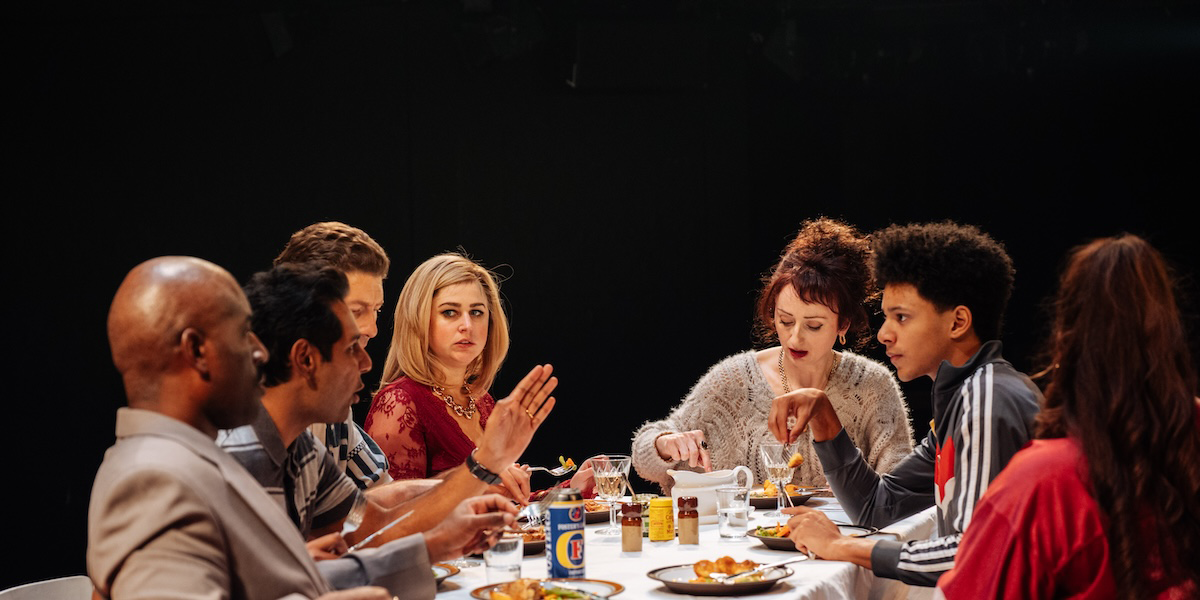
Ilford Boy is a family saga set in the London suburbs in the 1980s and 1990s. The Salvatores are a matriarchal clan who adopt a charming gay drifter, Uncle Pat, as a sort of cuddly mascot. Uncle Pat calls himself a ‘tap-dancing fairy’ and he lacks money or relatives so he’s glad to accept their hospitality.
Enthusiastic talk about homosexuality pervades family life. At suppertime, the Salvatores discuss their favourite gay TV performers like Larry Grayson, Kenny Everett and Michael Barrymore. And they impersonate Dick Emery’s camp TV characters. ‘I tried being gay once,’ admits Trevor, a moronic brother-in-law, ‘but it made my eyes water.’ Trevor is freakishly dull but he’s more attractive than the other male characters who are bullies, cheats and control freaks. Their loutishness is tolerated by the resilient Salvatore women who can’t seem to find a loyal, hard-working husband anywhere.
The show jogs along at an unhurried pace like a TV soap opera. Very little happens. Uncle Pat, the main figure, has no dramatic purpose and he lacks any personal flaws other than a weakness for mopey confessional speeches about his childhood. The playwright, Danny Lee Wynter, seems to view self-pitying monologues as a pinnacle of human achievement and he gives most of the characters a chance to offload their personal gripes on stage.
Two mysteries emerge in the second act. Uncle Pat likes to visit his gay friends in Aids hospices and he develops a strange illness whose main symptom is a wheezy chest. He calls this infection ‘diabetes’. No one can guess his secret.
The youngest member of the family, Ted, has a problem with bullies at school. What could Ted’s difficulty be? His best friend, Sabrina, loves films about showbusiness and they like watching musicals together. But no one can discover why Ted seems so nervous and secretive.
The show has a lovely, warm atmosphere and the engaging Craig Stein does fine work as Uncle Pat. The play’s message suits the current orthodoxy which states that men are either gay and harmless, like Uncle Pat and Ted, or straight and dangerous like the other male characters. Women, such as the Salvatores, have to act as shock-absorbers to reduce the evil inflicted on the world by violent, blinkered men.
This sermon went down well with the crowd who rose to applaud at the curtain call. Comparisons will be made with Till The Stars Come Down, by Beth Steel, which transferred from the National Theatre to the Haymarket last year. Could this life-affirming family comedy enjoy the same success? Maybe. But the scope is narrower and the script has fewer laughs.
The creators of Spring Awakening have been labouring for two decades on a musical about Nero. At press night, the writer, Steven Sater, announced the death of his friend and co-author, Duncan Sheik. ‘The world lost its Orpheus,’ said Sater.
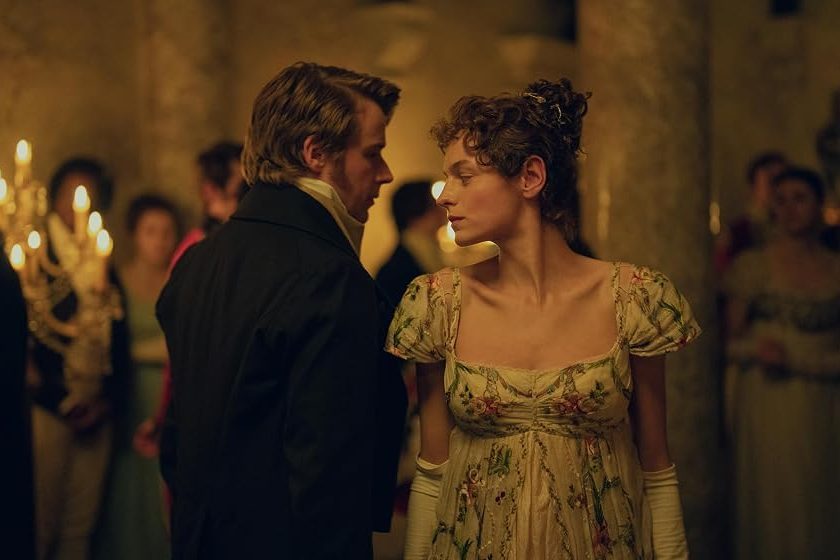
The show is a mishmash of historical facts and absurdist melodrama performed in a visual style that moves easily between the ancient and the modern. Some characters wear white togas, others appear in colourful nylon outfits with spangly Adidas trainers.
Nero was one of the most revolting characters ever to emerge in human history and this show treats his depravity as a major selling point. He starts off behaving like a petulant nincompoop and he develops into a camp, sex-mad narcissistic weirdo who murders his nearest and dearest for fun. Those around him copy his behaviour and the stage fills with baddies and psychos plotting to bump each other off. What the viewer needs is a simple, honest character at the heart of the story who provides a contrast with all the lunatics and killers. Without a moral anchor, the show becomes a tiresome parade of atrocities.
Sally Dexter is great as the scheming matriarch, Agrippina, who tries to steer her wayward son towards marriage and fatherhood. Rhianne-Louise McCaulsky does well as the doomed Poppea who suffers an unspeakably gruesome fate. Duncan Sheik’s music is a blend of Gothic ballads and soft-rock anthems. All are good, none is great. The best tune, ‘A Double Dip of Darkness’, has the makings of a hit.
Any show will succeed if it solves a problem for the audience. This isn’t a family musical. Too much swearing. It’s not ideal for a first date because of the constant groping, kissing and suggestive erotica. There’s even a sex scene between Nero and his mother. The show’s unflinching brutality will upset anyone with a delicate nature who can’t bear theatrical depictions of violence and child murder.
Who else might buy a ticket? Historians, psychiatrists, and those with a voyeuristic interest in moral squalor. That’s not a huge chunk of the population. Nero’s character is an insurmountable problem here. And why do we have to see every last outrage he committed? One might be enough. A dozen deadens the senses.




Comments