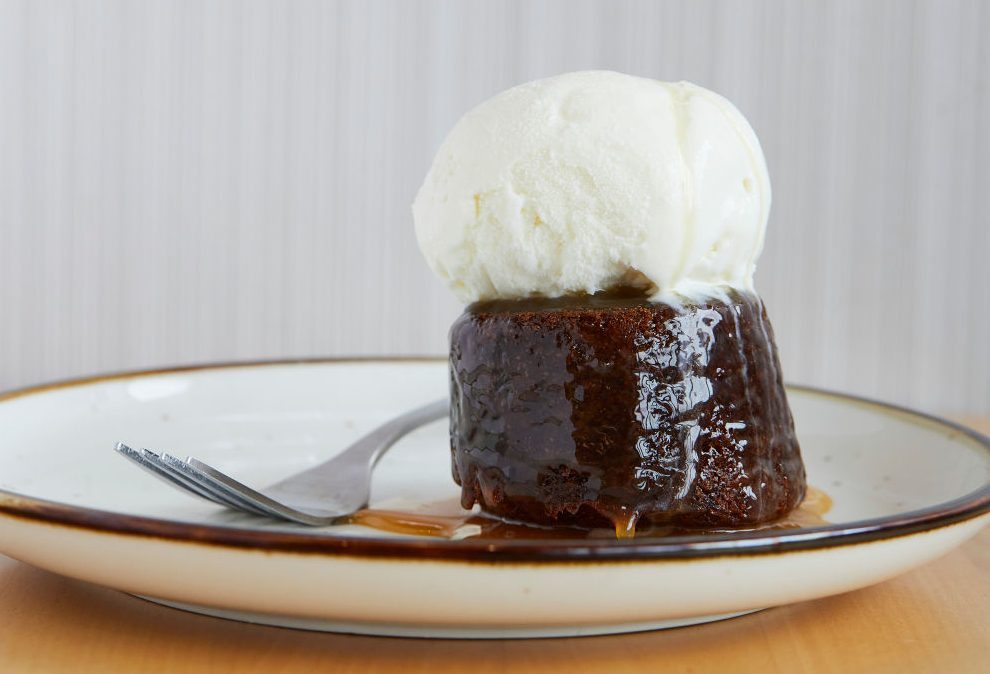
On the surface, the sweet treats industry has never had it so good. Instagram is awash with extravagant cakes, Dubai chocolate, stuffed croissants and donuts of every flavour under the sun. To thrive online, your post must be novel and photogenic enough to justify its existence. This is as true of people as it is of puddings.
Amid this sugar-coated arms race, according to the Times, it appears that the old-fashioned British pudding is back. Sticky toffee pudding, spotted dick, trifle, jam roly-poly, and apple crumble are finding favour with a generation that might once have considered them the preserve of their grandparents. The question is whether young people are returning to pudding, or whether pudding is returning to them. Both things could be true. If both are true, they might stem from the same underlying cause: basic economics.
Making a truly excellent dessert is a skill. Patisserie combines science, artistry, precision and time. A pastry chef can spend years perfecting the techniques required to produce a towering croquembouche or a delicate mille-feuille. Anyone who watches the BBC’s The Great British Menu will have seen otherwise brilliant chefs come unstuck when faced with the demands of a technically ambitious dessert. Chocolate refuses to temper, a mousse fails to set, and – just like at McDonald’s – the ice cream machine always malfunctions.
A dedicated pastry chef is thus an expensive proposition for any restaurant. The economics of hiring such a chef are worsened for an industry that is already struggling with the rising costs of National Minimum Wage, ingredients, energy bills, business rates, and alcohol duty. As the margins narrow, a specialist who spends hours producing an elaborate dessert may be harder to justify than another pair of hands on the savoury side who can whip up a classic tray-based pudding when they have a spare moment.

Restaurant owners also have to consider not only the cost of making a dish, but the number of customers willing to pay for it. Every sweet-toothed person knows the frustration of being the only diner at the table to order pudding. Your companions have pushed their plates away, declared themselves full and begun discussing the bill. You, meanwhile, are eyeing the treacle tart.
To order one dessert for the whole table is to prolong the meal, and this extra time has a price. That table could be turned around, ready to seat another hungry party. In a calorie-conscious age, when weight-loss drugs such as Ozempic have added another dimension to the conversation about appetite, the third course can look particularly expendable.
Why, then, should restaurants invest in elaborate patisserie when so many customers are content to stop after the main event? The answer may be that they shouldn’t.
Instead of offering a succession of intricate creations, restaurants turn to desserts that are relatively inexpensive, straightforward to prepare in advance, and easy to serve. A crumble can be assembled in batches, a trifle can be assembled and then chucked in the fridge, and a sticky toffee pudding can be reheated with sauce and ice cream added just before serving. These are dishes with more generous margins and little need for a chef to perform miracles at the pass.
Hearty, reliable and, crucially, cheap puddings come with an obvious catch. They are not much to look at. Novel name aside, spotted dick is not an obvious candidate for Instagram stardom and a bowl of rice pudding, however delicious, is unlikely to generate thousands of likes. Great British puddings are delicious but they are also beige. Gloriously and deliciously so.
Restaurants have spent years leveraging extraordinary-looking desserts as a marketing tool. A waiter pouring hot sauce over a perfectly tempered chocolate dome, which then collapses to reveal an elaborate construction within, gives diners something to film and share. Just like that, the pudding becomes an advertisement. The spectacle might have once persuaded customers to visit, and justify a price that would otherwise seem absurd for a few mouthfuls of chocolate. A crumble, on the other hand, cannot compete on those terms and must rely on being delicious.
We should resist the temptation to turn this recent culinary development into an epiphany about the social media generation. Young people may well be rediscovering British food heritage, but they may also just be ordering the sticky toffee pudding because it is the only dessert on the menu.
Thinking about their own economics, perhaps young people are returning to puddings because they want a treat, and ordering one is cheaper than a cocktail. There is something rather depressing about a generation learning to make its pleasures smaller because the bigger ones seem increasingly unattainable. It is the mirror image of the familiar argument that millennials could afford houses if only they stopped spending money on frivolities such as avocado toast.
The trouble with that theory has always been arithmetic. Forgoing a slice of treacle tart will not make a meaningful difference to my deposit in a housing market where house prices have risen significantly and wages have stagnated.
But the joke can be turned around. Our parents ate these puddings and managed to buy houses. Perhaps if we eat them too, we might inherit some of their luck. It is not a serious economic proposition, but it has a certain emotional appeal. If the material rewards of the past are unavailable, perhaps its comforts can be reclaimed. After all, we are a nation that likes to imagine itself in a permanent state of historical recurrence. In 2026, every day feels a little more like the 1970s. Why should this nostalgia not extend to the dessert list?
Puddings are apparently thriving amongst the young. The revival may be genuine, or it may be the consequence of a restaurant industry that can no longer afford the alternative. Most likely, it is a mixture of the two. As we try to unpack it, let us enjoy our sticky toffee pudding. It will not get us on the property ladder, but it may help us endure being kept off it.





Comments