
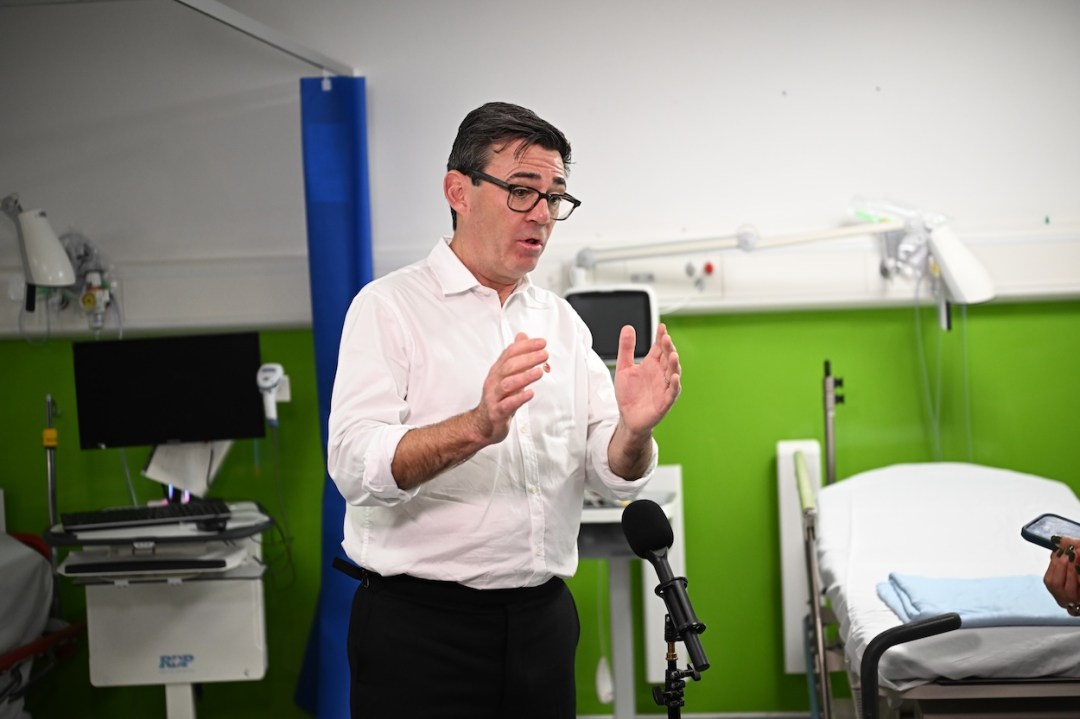
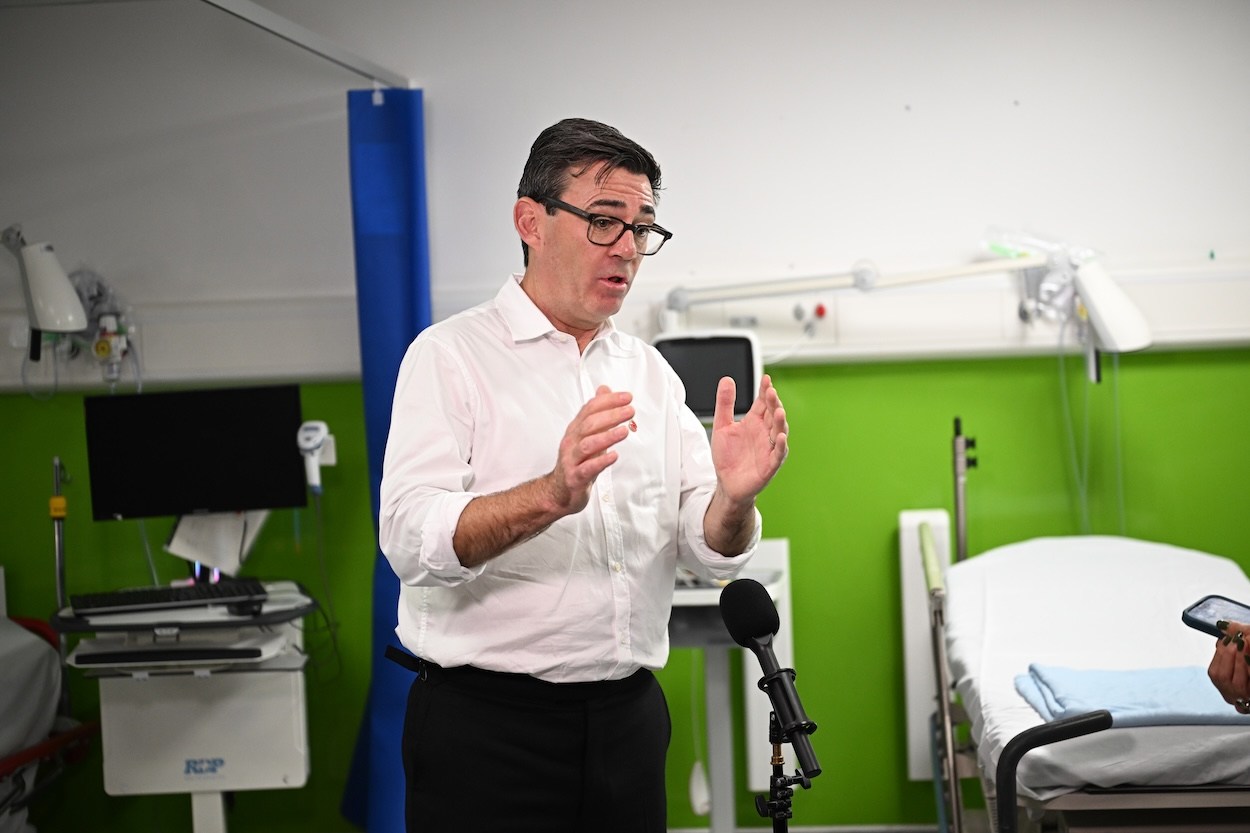
Andy Burnham has today completed another rite of passage for modern prime ministers: trying to persuade doctors not to go on strike. Consultants in England are due to walk out on 25 and 26 November in protest at the government’s failure to engage in ‘genuine negotiations’ on their pay, and the Prime Minister was asked about it during a hospital visit. He replied:
‘I would say it’s not a case of “dig in”; more a case of, “let’s get back around the table”. There’s always a conversation to be had about how we can address the concerns, but address them in other ways. I’m not saying the thing that politicians often say about there being no money, but it’s just a fact, we have eked out what we could at the budget for the NHS.’ He added that ‘It’s not a great time of year to be considering that prospect, but I’m always one who wants to talk things through and listen where people have genuine concerns.’
The complaint of the British Medical Association is that ministers have been moving at a ‘glacial’ pace with talks, and that consultants are getting three ‘sub-inflationary pay cuts’ in a row, which is ‘an insult to hardworking doctors and exhausted consultants’. The union also has in its official position statement on the industrial action a reminder of how important consultants are, and a demand that ‘consultants should be sitting top of the government’s agenda’. It’s a reminder, really, that alongside always having to deal with demands for more pay, justified or otherwise, politicians must always make sure that doctors feel properly valued and respected for the job that they are doing. Previous prime ministers and health secretaries have committed blunders which have deeply offended the doctors – or at least allowed the BMA to suggest that they don’t really value medics because they’ve made comments about the need for a contract to include a ‘sense of vocation and professionalism’, or that junior doctors are ‘doctors in training’. Those two lines came from Conservative health secretaries, but Labour ministers have had just the same struggle not to put their foot in it.
Doctors have always been highly sensitive about their status in politicians’ minds, but what has heightened this sensitivity in recent years has been the way in which the NHS has treated its staff. That line in the BMA position about ‘exhausted consultants’ is important: they are exhausted, and they were expected to move straight from the pressures of the pandemic into dealing with the waiting list backlog without so much as a break or breather. Instead, trusts gave them weird tokens to say thank you, or offered 9pm yoga classes to help them with their ‘resilience’, which is just insulting. Many doctors have still not had a proper break since the pandemic, even if the rest of society thinks it has moved on. They have felt undervalued, and in this context, are right to feel that way. This feeling of being expected to just keep going without the pause that the rest of us would demand is a significant driver in the industrial action.
The problem is that Burnham has come too late to be able to solve that feeling of resentment, and so long as it is bound up with the question of even more money for a comparatively well-paid section of the public sector, he doesn’t have much of a chance to make doctors feel they’re being valued financially, either. So he has to offer these kinds of formulations about wanting to address concerns in ‘other ways’, and hope that as someone with such a strong pedigree in health policy, he doesn’t fall into the trap of so many of his predecessors in actively insulting the doctors before they strike, too.



Comments