

Whenever I hear the phrase ‘national treasure’ I reach for my shotgun. Take David Attenborough. Yes, he may be impressively old – and modest and charming and sweet, so people claim – but he is also a menace who has probably done more to promote environmental hysteria, devious misinformation and spectacular misallocation of your scarce resources than Greta Thunberg, Al Gore and Prince William combined.
The most effective propaganda takes you unawares, when your guard is down. So where better than in the cosy 8 p.m. Sunday slot when you are slumped on a sofa, hypnotised with that familiar soothing voice, manipulated by a score (Hans Zimmer) so soupy it could put Heinz out of business, and mesmerised by some of the most visually arresting images you’re ever likely to see.
Blue Planet III is truly amazing to look at, possibly the best iteration of the brand so far
Blue Planet III is truly amazing to look at, possibly the best iteration of the brand so far. Thanks to newish technology like drones, it has managed to capture animal behaviour never observed or even known before, let alone caught on film. For example, it has found a very clever old female dolphin in northern Australia who has worked out that if she collects sponges and then uses them to block the hidey holes in coral that fish use to escape from her feeding sallies she’ll end up with a lot more easy meat.
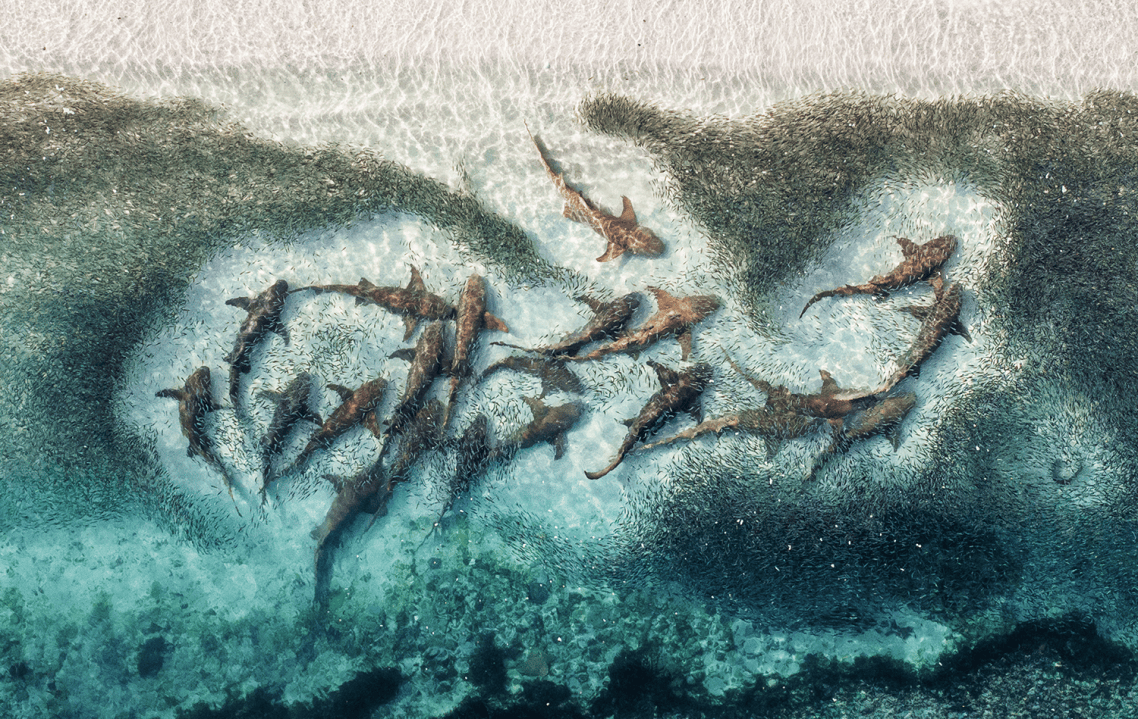
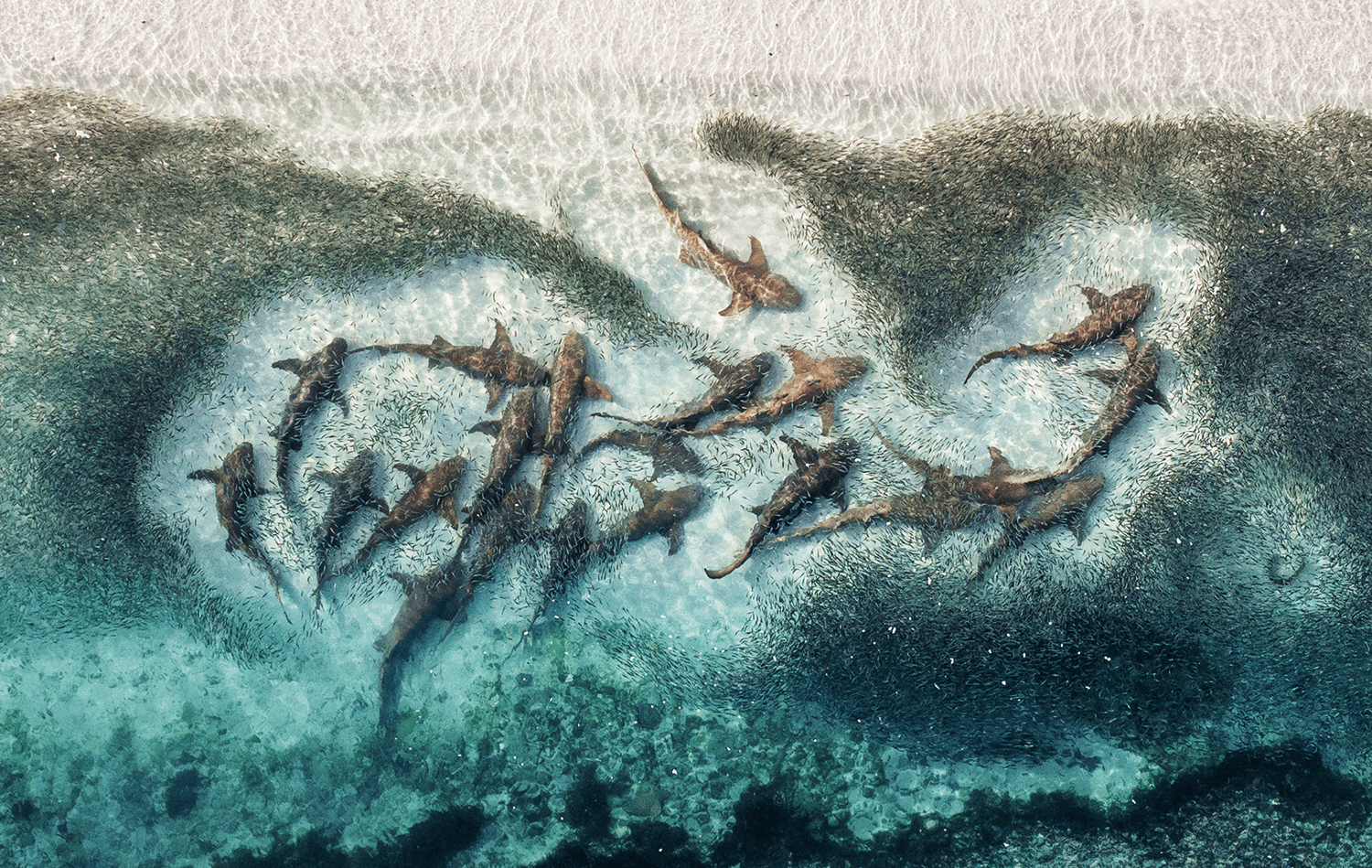
Elsewhere in the first episode, we see 40 or more placid, slow, dusky nurse sharks – presumably the inspiration for the unscary ones in Viz’s ‘Pathetic Sharks’ strip – collaborating to catch the shoals of fish that would otherwise elude them. They lie in a huddle for four hours, close to the beach, pretending to be asleep, so that the prey shoals all think, ‘These sharks are crap! No danger from this lot’ – and then suddenly, simultaneously, the not-so-pathetic-sharks strike in an orgy of gummy slaughter.

Some of it is so extraordinary that it almost defies credulity. There’s a species of fish in the Red Sea, for example, which with a shake of his head and wiggle of his fins can marshal two other species into doing his bidding. If he needs a sledgehammer, he’ll call in a six-foot Napoleon wrasse to bash the coral. If his prey has gone into deep cover, he’ll send in a moray eel slinkily to pry his quarry out of tunnels like a terrier down a hole. You knew that mammals were capable of such ingenuity. But fish? Really?
Remember, though, it’s not the whispery-voiced, gorilla-hugging Malthusian you have to thank for this jaw-dropping wondrousness. It’s a) God, who fashioned all these things creeping innumerable and beasts both small and great and b) the dedicated crews who spend months on end in inhospitable conditions, circled by ravening tiger sharks and such like, to capture these fleeting and miraculous moments on film.
I once had the good fortune to travel with one of these crews round the Svalbard archipelago looking for polar bears. We travelled for more than 100 miles through blizzards, in constant threat of being eaten or disappearing down a crevasse or being crushed by a rolling Skidoo. Whatever their views on ‘climate change’, these people are primarily filmmakers rather than environmental activists. The heavy-duty eco-propaganda is bolted on later, in the edit, in accordance with the approved, ubiquitous and inescapable narrative.
And that, unfortunately, is where the dreaded Attenborough comes in. Despite his reputation as a naturalist, his real purpose – a BBC apparatchik, through and through – is to push the green agenda. If this means deceiving the viewer by playing fast and loose with facts, well you can’t make an eco-fascist omelette without breaking a few eggs.
Possibly the worst case of this was the infamous scene in a 2019 Netflix documentary, Our Planet, which showed walruses in slow motion plunging over a cliff to their deaths. Attenborough’s voice fingered climate change as the culprit. But the naturalist Susan Crockford subsequently demonstrated, the most likely cause was a hunting party of polar bears. Footage and commentary, premièred at a special showing at the World Economic Forum in Davos, had been tailored to nudge public and policymaker opinion in the run up to the 2020 COP26 climate conference.
Despite his reputation as a naturalist, Attenborough’s real purpose is to push the green agenda
In Blue Planet III, at least so far, the messaging is more subtle – if probably more insidious. We meet a clown fish – and who doesn’t love Nemo? – desperately trying to protect its anemone from the effects of coral bleaching which, it is heavy-hinted, is a consequence of man-made global warming. If this goes on, Attenborough has the effrontery to suggest, coral reefs could be gone within 15 years.
This is unscientific rot. Though it’s certainly true that marine biologists in captured institutions – i.e., all of them – continue assiduously to push the notion that our oceans are doomed due to coral bleaching, ‘ocean acidification’, etc., this is not borne out by any real-world evidence. Rumours of the imminent death of the Great Barrier Reef continue to prove not merely exaggerated but absolute total bollocks.
‘These tiny fish helped to protect their home,’ murmurs Attenborough, wistfully, over the Nemo footage. ‘Imagine what we could achieve if we all worked together to protect ours.’ That sound you can hear in the background is a gazillion environment ministers, WWF and Greenpeace fundraisers, sustainability consultants and Net Zero campaigners going: kerching!





Comments