
Next week marks a major milestone for the Coalition of the Willing. Starting on Monday, its military arm, the Multinational Force Ukraine (MNF-U), will conduct its first ‘boots on the ground’ exercise – a fortnight-long event – in Poland. Britain and France, as co-leaders of the coalition, will also lead on the exercise, the purpose of which is to rehearse how allied troops might provide support to Ukraine and its military following the end of its war with Russia.
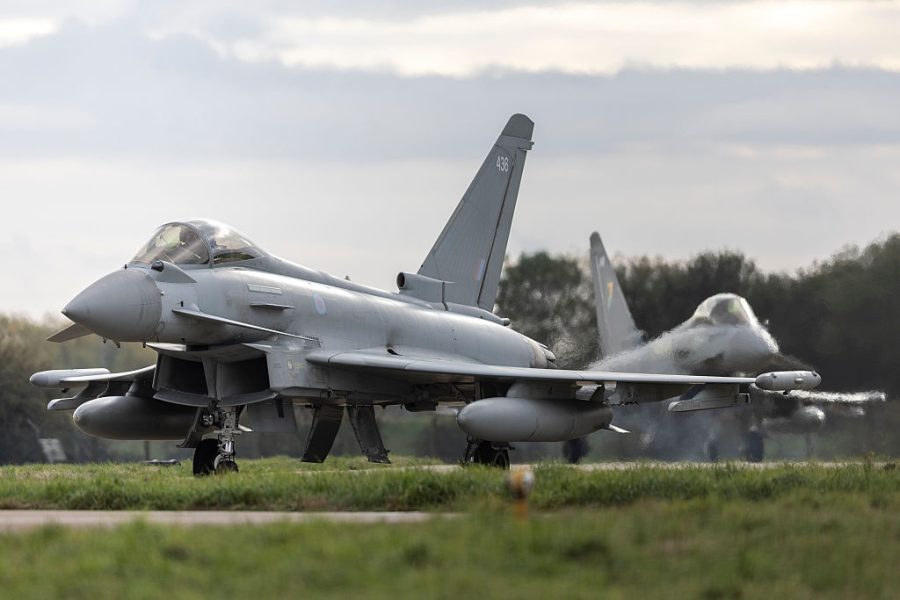
All in all, eleven European countries and 2,800 soldiers will take part in the land, air and sea exercise. Britain’s contribution will be made up of 300 troops as well as Voyager refuelling aircraft. Additionally, RAF jets will simulate protecting and reassuring commercial aircraft, preparing for the moment that Ukraine’s skies reopen.
Next week’s exercise remains exactly that: a hypothetical plan
Exercise Koalicja, as the rehearsal is known, will be a landmark moment for the Coalition of the Willing. The coalition was set up by former prime minister Keir Starmer along with French president Emmanuel Macron last year as a vehicle for allies of Ukraine to pledge defensive assistance and facilitate peace negotiations with Russia. It was, in part, a response to faltering support from America, following Donald Trump’s return to the White House and his attempts to force Kyiv into agreeing to a ceasefire with Moscow while refusing to provide concrete security guarantees to Ukraine in such an event.
At the time, Starmer pledged that the UK would back its commitment to Kyiv with ‘boots on the ground and planes in the air’. These comments were met with a mixture of alarm and ridicule, with critics raising valid questions about what kind of situation Starmer could potentially be drawing British troops into. With years of underfunding and a standing army of less than 75,000, it also appeared doubtful that the UK’s armed forces were sufficiently well-staffed to stretch to sending troops to Ukraine alongside other global commitments if needed.

Just over 18 months, a poorly-funded Defence Investment Plan and a change of leadership in No. 10 later, few of these questions have been adequately answered. The Ministry of Defence has insisted that MNF-U troops won’t act as peacekeepers or ceasefire monitors in Ukraine – leaving the full scope of duties or even how many troops will be needed to carry them out as yet undefined.
Neither has the government confirmed what would happen if Russia chooses to attack any MNF-U troops stationed in Ukraine and break the peace. Moscow has been quite clear that it considers the presence of MNF-U troops in Ukraine as a red line in any peace negotiations; last year, Putin said they would be ‘legitimate targets’. Would British troops, then, be allowed to fire back? Anonymous Western officials have suggested that they would be – but this has yet to be confirmed on the record.
The government has up to now refused to discuss these questions in any detail, in part to avoid ‘making Putin wiser’ – as John Healey claimed during his time as defence secretary. There is a sneaking suspicion in some quarters, however, that this is a convenient excuse put forward over a time period when successive Labour governments have, amongst other things, refused to lay out a definitive path to raising defence spending to 3 per cent of GDP by 2030 – as they have repeatedly pledged to do.
Nevertheless, Starmer is likely to feel vindicated that, with next week’s exercise, the Coalition of the Willing will prove that it is more than just a talking shop. In a statement today, defence secretary Wes Streeting appeared to hit back at critics, saying, ‘this isn’t a hypothetical plan, it’s a real force, ready to help Ukraine once the fighting stops.’
And yet, given there is little indication that a peace deal between Ukraine and Russia is in any way close to being struck – despite Donald Trump’s best efforts to the contrary – next week’s exercise remains exactly that: a hypothetical plan. Representatives of Ukraine, Russia and the US are due to meet in Abu Dhabi for two days of talks on ending the war from 10 November – but even if progress is made during this summit, the path to peace is likely to remain long. Whether next week’s MNF-U rehearsal turns out to be premature or not, only time will tell.






Comments