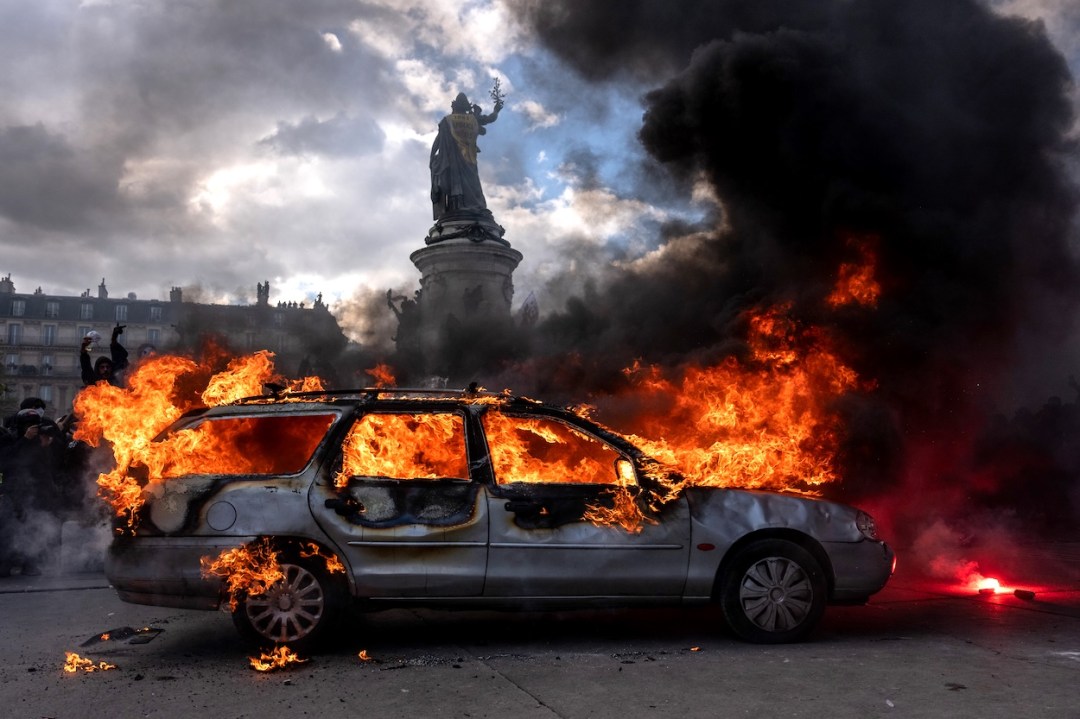
In the aftermath of the riots and pillaging in my home city, I have been thinking about Emily in Paris. How would she react to the scenes of violent looting in the City of Light?
I know the fictional Emily is still here, wearing her jaunty red beret and checked blazer with a chic Chanel flap bag. She’s back in her charming Left Bank flat after a brief romantic interlude in Rome. In the television series, the American ingénue never ventures into the rougher precinct of the French capital. After last week’s terrifying riots, would Emily be hastily packing her designer bags and racing frantically to Charles de Gaulle airport to board the first flight home to Chicago?
Perhaps a plot idea for the series’ finale. Meanwhile, thousands of Emily fans have followed her to Paris to live the dream and embrace French savoir vivre. Many are foodies, some are fashionistas. Others are self-designated ‘influencers’ who gushingly promote the postcard clichés of Paris with photos and videos of the city’s burnished boulevards, charming café terraces, cobbled market streets, and Eiffel Tower sparkling after nightfall.
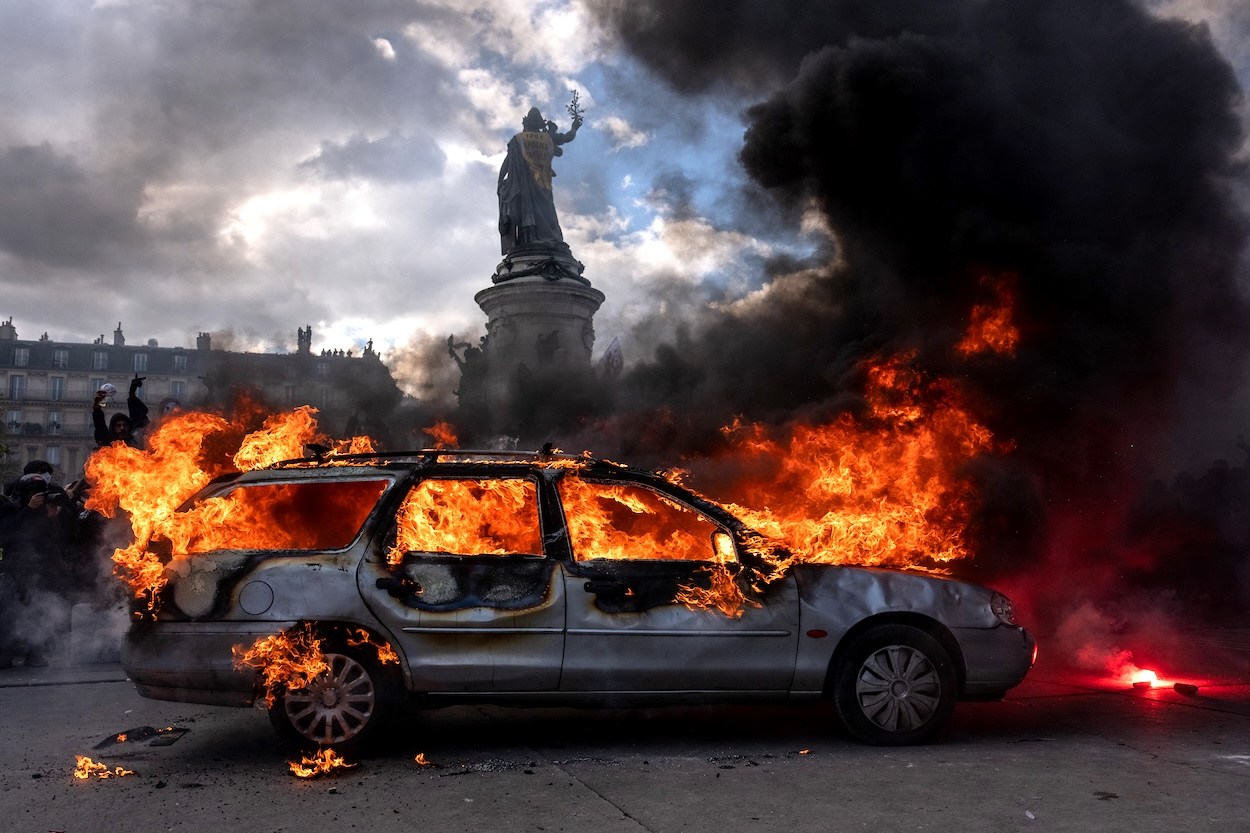
The violent street clashes, with hordes of masked thugs smashing up shops and torching cars, must be a shock to their nervous system. Suddenly, the soothing fantasy has succumbed to a horrifying nightmare. The soft-hued romantasy is over. Paris resembles a grim urban dystopia like the one portrayed in the film La Haine (Hatred) about alienated youths from the immigrant banlieue clashing with police in a bleak urban hellscape.
Perhaps we need an updated definition of ‘Paris Syndrome’, which describes the culture shock felt by Japanese tourists who visit Paris in search of the romantic vision. When they confront the blunt rudeness of Parisians, the sharp disconnect with the fantasy provokes psychological distress and panic attacks. Some are so traumatised that they require medical attention and urgent repatriation. Today, Paris Syndrome could be defined as the emotional shock inflicted on all visitors to the city.
I am an Anglo-Parisian who abandoned the fantasy long ago, shortly after I moved here as a young student in the 1980s. I witnessed student riots first hand and a decade ago I watched marauding thugs clash with police and torch vehicles right under my windows. Today’s riots are the latest act in a ceaseless dramaturgy of protest in France that stretches back to May 1968, indeed to the Paris Commune and French Revolution. Parisians have been living with urban warfare for generations.
And yet the Paris-as-paradise rêverie persists despite the sharp edges of reality. On social media where Emily fandom thrives and prospers, some confess that they feel shattered and heartbroken after the riots. Others have been shocked into denial, claiming that the violence is ‘not the real France’. One American expat urged her countrymen: ‘Don’t cancel your trip to France.’ She insisted that the country is ‘still a safe and wonderful place for visitors post-October 17th.’ Another who calls herself ‘Emily in France’ (she usually writes about cheese) came to the defence of rioters with astonishing naïveté. ‘While yes, it’s startling to see melted bikes and cars on my local high street, at least this generation knows what it’s fighting for… The masked young people raiding chain stores didn’t pose a threat to their fellow citizens. Many of those who had stolen from supermarket chains were passing sanitary napkins out to random women on the street. There’s almost a Robin Hood-esque thing going on.’
These deluded reactions are symptoms not of ‘Paris Syndrome’, but of the Paris Paradox. The city is simultaneously a comforting fantasy and a harsh reality. In happy times, the two worlds manage to co-exist, each with its own inhabitants, and rarely converge. True, expats in Paris encounter familiar hassles such as transit strikes and excessive bureaucracy. These are minor inconveniences that don’t diminish the appeal of the city’s enchantment. For them, Paris is an exhilarating sensory experience: the scent of warm baguettes in boulangeries, the visual delights of artisanal pastries displayed like finely cut jewels, the rich aromas of pungent cheeses, the fruity notes of splendid French wines, the limestone façades of Second Empire buildings with elegant black wrought-iron balconies. The mesmerising fantasy is so powerful that it filters out the deeper fractures in French society.
But the two worlds – fiction and fact – inevitably collide, sometimes in unexpected ways. The ultra-left black bloc radicals and banlieue thugs claim they are revolting against capitalism. Yet their pillaging rampages target Louis Vuitton and Hermès boutiques to get their hands on capitalism’s prized consumer trophies. They share Emily’s taste for luxury handbags and designer accessories, albeit with a different payment method.
On a deeper level, the dream and nightmare are two sides of the same coin. The appealing fantasy image of Paris – and France more broadly – attracts millions of visitors every year. Thousands arrive in the hope of living here permanently. Last year, more than 15,000 Americans moved to France and applied for residency permits – a 14 per cent increase over the previous year. In total, about 150,000 Americans reside in France (nearly as many as the 172,000 Brits). Most are here for the high quality of life. French residents enjoy long paid holidays, a short work week, free health care, low university tuition fees, gold-plated retirement pensions, and generous state subsidies for businesses small and large.
But paradise is costly to keep up. The French state, which accounts for 57 per cent of the country’s GDP, is burdened by a crushing debt. France’s deficit, more than 5 per cent of GDP, is well above the 3 per cent ceiling for EU member states. Total debt is nearly 120 per cent of GDP – double the EU limit. France’s borrowing hit 5 per cent for the first time in a quarter century. The French state has been living above its means for the past half century.
Profligate spending has spoilt the French
The profligate spending has spoilt the French with extravagant privileges that are admired worldwide – and enjoyed by the expats who have the good fortune to live here. But there is no more money to go around. Facing a crippling financial crisis, the French government must drastically cut expenditures. Yet the French continue to clamour for more government spending. Student protesters, for example, have called for an additional €10 billion (£8.4 billion) to remedy the challenges facing the country’s school system.
When these demands are not satisfied, it provokes social tensions and revolt. The government’s adversaries know it is paralysed as a presidential election approaches. This is why the far left is taking its belligerence to the streets to stoke unrest and incite upheaval. There will likely be more mass demonstrations, and perhaps even riots and looting by smash-and-grab mobs.
For the Emilies in Paris who are still promoting the dream, it will be another rude awakening and grim reminder that the fairy tale is over.






Comments