
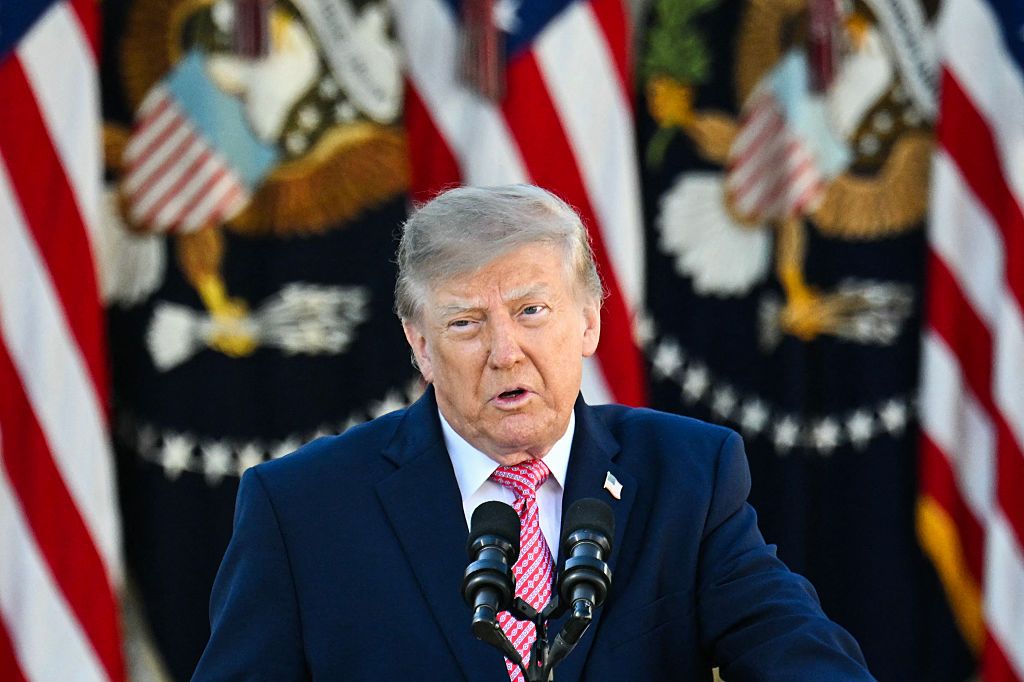
Donald Trump has staked a big chunk of his political credibility on finding peace in Ukraine – and by doing so in partnership with Vladimir Putin, and on the Kremlin’s terms. But is Putin ready to play ball and help save Trump’s backside, politically and economically?
The answer is yes: Putin will probably play along with small gestures like partial ceasefires and prisoner releases. But when it comes to the big stuff like actually stopping what Putin calls his “special military operation,” the Kremlin is likely to stick to its guns and ignore Trump’s special pleading while it continues pulverizing Ukraine’s cities.
A summit between China’s Xi Jinping, Putin and Trump in China is being planned to discuss the details of a Yalta-style carve-up of Ukraine, agreed over the heads of the Ukrainians themselves. The Kremlin has apparently suggested a trilateral summit in Shenzhen, during the Asia-Pacific Economic Cooperation summit in November. “I think there’s been talks of a meeting,” Marco Rubio told reporters Monday. “I don’t know everything’s been finalized.”
Underlying the Kremlin’s strategic thinking is the idea that Kyiv is just a few months away from military, political and economic collapse. Even though bloody advances by Russia in Donbas this year have been countered by Ukrainian recovery of territory in other sectors, Moscow’s escalating campaign against energy, logistics and transport infrastructure is well on its way to rendering many Ukrainian cities uninhabitable as winter approaches. The fundamental reason that the Kremlin refuses to budge on its main war aims – unchanged since 2022 – is the assumption inside Putin’s information bubble that victory is close.
Putin can also smell desperation in Washington. As Trump struggles in the run-up to the midterm elections, he needs one of two things – for the price of diesel to come down, or failing that, someone to blame when it doesn’t. Putin was all too happy to step in to help with the first after Trump de-sanctioned exports of Russian diesel onto world markets (though the volumes mentioned in the deal fall far short of market shifting numbers, and Russia may well not have capacity in any case because of continues Ukrainian long-range drone strikes.)
As for a scapegoat for high fuel prices and someone to blame for Trump’s likely coming bruising in the midterms, Volodymyr Zelensky has been put squarely in the frame. “Zelensky is using Diesel Refineries in Russia as a target, knowing that these attacks are seriously hurting the world diesel markets, including those in the United States,” blasted Trump in his latest broadside. “Zelensky doesn’t care, and frankly, with all of the money that Europe is famously giving him, and that Crooked Joe Biden gave him in the past, he doesn’t want to end this war, and probably never did.”
But making Zelensky the patsy for a fuel-price crisis actually caused by Trump’s war on Iran is the easy part. Actually forging peace in Ukraine requires buy-in from the Kremlin. That will be much more challenging, not least because Trump’s basic negotiation tactic has been to offer Putin ever greater economic carrots to end the war, with no stick to punish his continued refusal to compromise. More, Washington has made it brutally clear that it intends to pressure Kyiv into accepting whatever deal Putin finally deigns to sign. In a classic example of “show me the incentives and I’ll show you the behavior,” Trump has effectively rewarded Putin for his intransigence. On Sunday, for instance, Trump announced that he would be blocking a raft of increased sanctions measures on Russia passed by Congress because “[I] don’t want to do anything that will drive, foolishly, Russia away from the bargaining table… Great progress is being made.”
The outline of the deal that will end the war is already clear. Recent talks between Trump envoys Steve Witkoff and Jared Kushner with senior Ukrainian delegates in Miami focused on a raft of big economic deals that will supposedly integrate Russia, Europe and Ukraine into a peace-guaranteeing network of intersecting business ties – the latest iteration of the 28-point Peace Plan discussed earlier this year. Those economic measures include resumption of Russian energy supplies to Europe, the unfreezing of Russian state assets and the lifting of sanctions. Those talks ended in acrimony after US officials reportedly threatened to cut off US intelligence sharing unless Ukraine stopped attacking Russian refineries. But in the absence of any dialogue between Ukraine’s European allies and Russia, it’s the only peace plan currently on the table.
Trump’s latest declarations aligning himself with Putin will, in retrospect, likely be seen as a major turning point in the war. But even as the world seems to be going the Kremlin’s way, Putin can still mess things up with the same kind of arrogant overreach that got him into the quagmire of Ukraine in the first place. Signing a peace deal before all of Donbas is conquered would mean that Putin would have to back down from his maximalist line. Putin is unlikely to agree to shop short of what his generals tell him is an imminent a major victory in order to give Trump a little political uptick.
More probably, Putin will play for time. He could make a deal dialing back on Russian attacks on ships in the Black Sea (indeed that may be the exact reason that Russia has scaled up attacks in recent weeks in the first place). Trump specifically mentioned “current hostage negotiations” in his most recent post, so releasing a few unfortunate political prisoners would be an easy gesture for Putin to make. And Trump also claimed that “Russia is doing very little, if anything, to help the Islamic Republic of Iran, compared to what they could be doing, and I want to keep it that way.” That opens the door for the Kremlin to pretend to back off cooperation with Iran in some symbolic way, winning political points with Trump and buying a few more weeks and months during which Russia will continue to hammer Ukraine’s cities.
But one thing is totally clear about Trump’s latest moves on Russia and Ukraine. America has chosen Russia as the side on whose terms the war will end – and in so doing, have made it so.




Comments