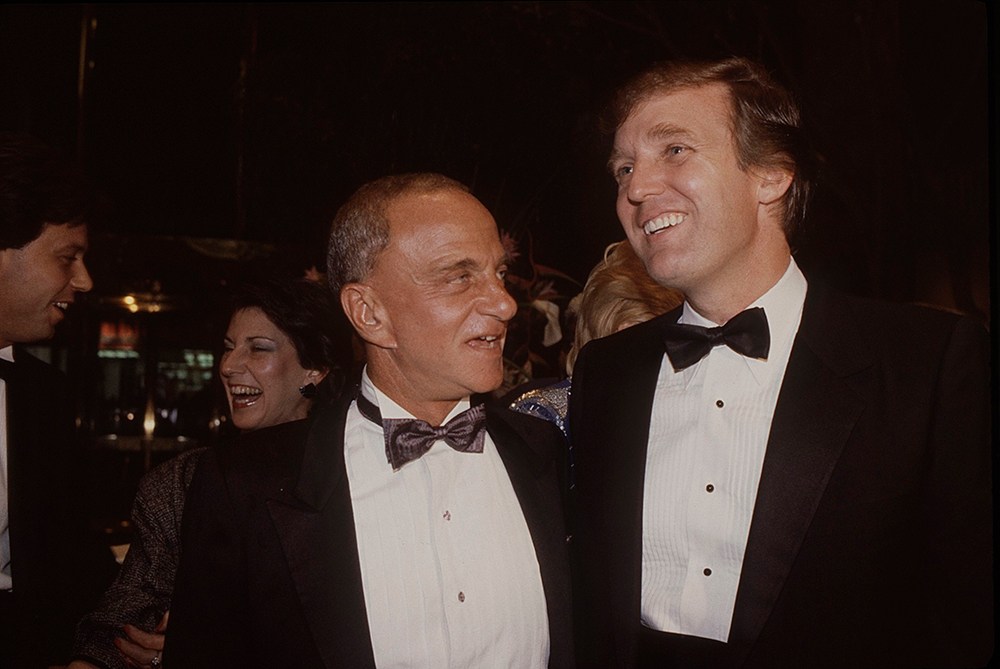
For several decades, Roy Cohn (1927-86) was the man you needed to know if you wanted to get to know the sort of people who knew Roy Cohn – in other words, all those prominent New York City-based gangsters, politicians, socialites and billionaires who enjoyed greasing one another’s wheels while making loads of money through whatever means necessary. From an early age, the well-connected Cohn proved adroit at utilising those connections, ranging from J. Edgar Hoover and Cardinal Spellman to Donald Trump, back when the future president was merely an up-and-coming Manhattan real-estate developer and would often refer to Cohn as his ‘mentor’.
Cohn’s mantra was: ‘Never waste time on regrets, never show any doubts and never, ever apologise’
As Kai Bird and Susan Goldmark describe in this enjoyably good biography of a genuinely awful person, Cohn was the son of a struggling Bronx lawyer who earned a judgeship by marrying Roy’s mother, an affluent woman who was called ‘mean, vicious, ugly, and foul-mouthed’ by those who knew her. The Cohns went on to become one of the first Jewish families allowed to rent on Park Avenue. For most of his young life Roy profited from one family connection after another – such as his first job as a United States attorney a year after he passed the bar exam and, at 23, his first partnership in a prominent Manhattan law firm.
Cohn didn’t know the law so much as how to get great publicity while practising it. (His friend Alan Dershowitz once said: ‘Roy only had two books in his office, neither of them law books. He had a chequebook and he had a Rolodex.’) In his early cases, Cohn didn’t go for the jugular but for the gossip columnists, such as Walter Winchell and George Sokolsky, both of whom he quickly befriended. And he didn’t seek ‘big’ convictions but rather front-page-worthy ones, including a contempt charge against the bestselling novelist Dashiell Hammett for refusing to name donors to the Communist party’s bail fund. It landed Hammett in a West Virginia federal penitentiary for five months cleaning toilets.
Like McCarthy, Cohn seemed to see reds under every bed. But when he couldn’t come up with evidence against government officials for being Russian agents, as in his case against William Remington, an FDR appointee, he would convict them of relatively minor crimes. These included perjury, for which Remington was sentenced to five years in prison, where he was soon stabbed to death by a commie-hating fellow inmate.
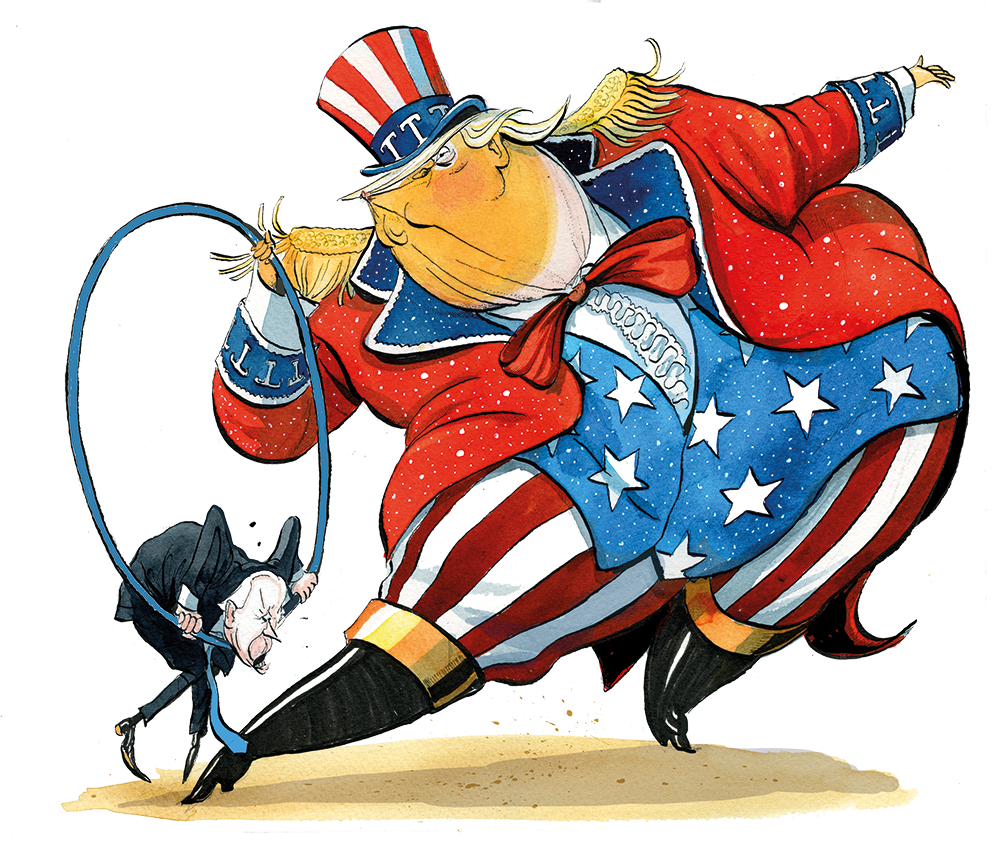
Cohn moved on from one front-page case to another, including Alger Hiss’s and Whittaker Chambers’s. But when he arranged to have Julius and Ethel Rosenberg sentenced to death by electrocution (according to Bird and Goldmark he wanted to force the Rosenbergs to implicate others, but they firmly refused to play along), he never apologised or backed down. Even when it grew increasingly clear that Ethel was innocent of the spying charges against her, Cohn said: ‘I have absolutely no misgivings about the execution of the Rosenbergs… I would have pulled the lever myself.’ As the authors note, that was a hallmark of Cohn’s strategy throughout his career, and one he would pass on to Trump: ‘Never waste time on regrets, never show any doubts and never, ever apologise. Introspection is overrated. Just move on.’
Cohn and McCarthy were destined to meet, and they worked together so well and for so long that the people they went after finally came after them. During what was probably the first televised American ‘show trial’, the two hoped to accuse the army (and, by implication, President Eisenhower) of poor security at one of its bases and possible communist infiltration – but then earned public contempt for the way they appeared on screen as bullying monsters. At the same time, Eisenhower’s people released information about how Cohn had misused political connections to get a close male friend (possibly Cohn’s lover) preferential treatment in the military. Within months of the hearings, McCarthy was censured by the US Senate and died a few years later. Cohn’s public political career was over as well, but he did not go as quietly.
He went on to make money at everything he did, including high-profile divorce settlements, and happily represented prominent mobsters, Manhattan businessmen and Catholic clergy while befriending some of Washington’s most extreme right-wing operators, such as Roger Stone and Rupert Murdoch. He also began openly escorting young men to the notorious Studio 54, where he often held birthday parties that were attended by a wide swathe of Manhattan’s glitterati. Yet he campaigned against gay rights, and was suspected of having a former lover murdered by friends in the Gambino crime family. Eventually, when he became one of the first people diagnosed with Aids, he never shared the fact with any of his lovers, and carried on living his intensive and wide-ranging sex life, dying in 1986 – by which time Trump had moved his various suits and counter-suits to another lawyer entirely.
But that didn’t mean Trump hadn’t learnt from his old friend, about whom the New York Times journalist Sam Roberts once said:
Roy was a master of situational immorality. He worked with a three-dimensional strategy, which was: 1. Never settle, never surrender. 2. Counterattack, counter-sue immediately. 3. No matter what happens, no matter how deeply into the muck you get, claim victory and never admit defeat.
As Bird (the Pulitzer prize-winning co-author of American Prometheus, filmed as Oppenheimer) writes in his Epilogue, Cohn may have designed and primed a monstrous bomb as well, but, unlike Oppenheimer’s, it was one that wouldn’t go off until long after his death.
Perhaps so. Only time will tell.




Comments