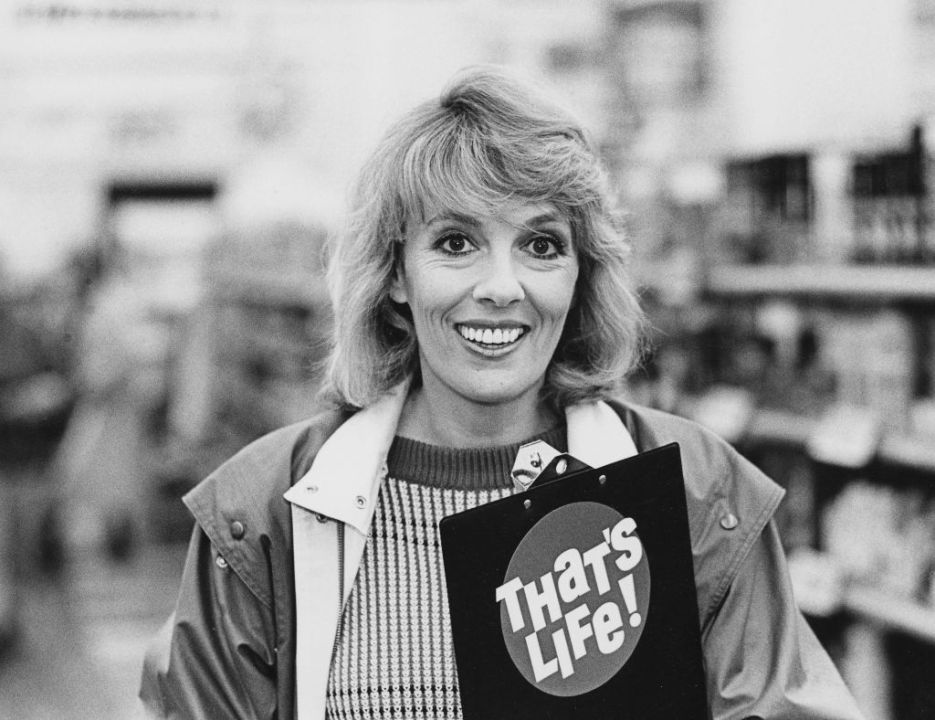
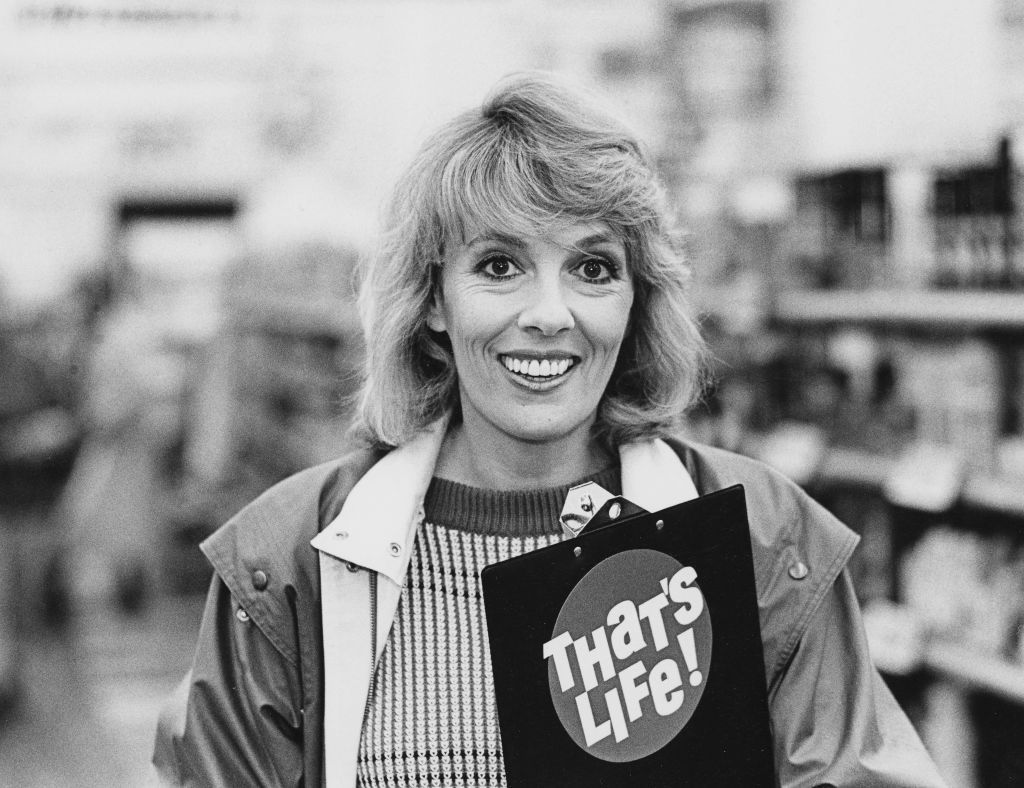
The late broadcaster and campaigner Esther Rantzen leaves behind a formidable legacy, from establishing Childline to fighting for better end-of-life care. But to many, Rantzen will always be associated with That’s Life!, the long-running magazine programme she hosted for 21 years and which remains the gold standard of the much-missed consumer-rights genre.
We haven’t run out of scams, rip-offs or miserable customer-service experiences
Regularly attracting audiences of up to 20 million, That’s Life! was a veritable smorgasbord of this, that and the other. Any given episode might feature phallic vegetables, saucy old ladies, performing pets and humorous typos, capped off with a heartrending piece about alpaca trafficking. Younger readers would do well to think of the programme as an analogue version of The One Show, or 45 minutes’ worth of Instagram reels all spliced together.
Some of the show’s most memorable moments – outside of Nicholas Winton surrounded by those he saved from the Holocaust, or a talking dog saying ‘sausages’ (how’s that for range?) – came from its surprisingly hard-hitting consumer-rights reports. Here That’s Life! tackled everything from faulty goods and dodgy traders to shoddy service and botched repairs.
Unkind eyes might view this commitment to championing consumer rights, whether through investigative reporting or long-running features like Heap of the Week (in which failing domestic appliances were destroyed in displays of poetic justice, much to their former owners’ delight), to be a form of moral high-handedness, dished out by well-paid media types for the sake of viewing figures. But this approach, famously parodied by sketch show Not the Nine O’Clock News (‘I’m sorry, this really has got nothing to do with us’) produced real results.

Relatively early in its run, That’s Life! was responsible for exposing a major fraud scheme involving double-glazing company Coach House Finance, resulting in the conviction of one of its executives. Later, the programme helped push for a cooling-off period for credit agreements, as well as securing safer playground surfaces after a spate of child injuries. Such was their commitment to the Great British consumer that, at the height of its powers, the That’s Life! production team received almost 15,000 letters a week. It was said to be joked in the corridors of Television Centre that Rantzen was the third most powerful woman in the country, after Margaret Thatcher and the Queen.
Recent tributes to Rantzen and her work on That’s Life! have served as a reminder of what TV schedules have lost. Consumer-rights programmes used to be an important part of the average viewer’s television diet. There was Braden’s Week, a direct precursor to That’s Life!, fronted by Canadian broadcaster Bernard Braden (until he was fired by Auntie Beeb for advertising Stork margarine); Watchdog, a more hard-edged and confrontational example of the form than That’s Life! ever was; and The Cook Report, presented by journalist Roger Cook, who died earlier this year, which featured him getting hit by golf clubs, fists and cars as he doorstepped unwilling interviewees.
These shows were brilliant. Funny, populist, occasionally furious and absolutely ruthless with dodgy companies and bad service. While there are still some consumer-rights programmes left on the airwaves – The Martin Lewis Money Show on ITV and the BBC’s daytime hit Rip-Off Britain, for instance – far fewer have been commissioned in recent years. Even Watchdog has been canned, relegated to the occasional item on the previously mentioned One Show.
No doubt the bureaucrats in charge of our broadcasters will have their usual flim-flam at the ready: ‘as a result of recent efficiency drives’, ‘in an increasingly fragmented digital marketplace’, ‘something something streaming services’, and so on. Nevertheless, it is bizarre that, amid a cost-of-living crisis, when consumers are routinely confronted by opaque terms and conditions, impenetrable complaints procedures and companies seemingly determined to make it as difficult as possible to speak to a human being, there is almost no prime-time consumer-rights programming.
Instead, it’s increasingly left to online content creators to uncover and challenge consumer grievances. Take TikTok star Zoë Bread, who made headlines last year over her long-running parking dispute with Liverpool City Council, and who has recently helped bring a local campaign against a controversial warehouse development in Wigan to wider public attention. She is hardly alone. Increasingly the internet has become a de facto advice bureau for everything from faulty boilers to cancelled flights.
Perhaps the real reason broadcasters have stepped away from this kind of programming is fear. Consumer journalism is often risky, legally fraught and liable to make enemies. Certainly, for all its success, That’s Life! generated plenty of trouble for the BBC. In 1989, the corporation reportedly had to pay substantial damages to a Barry Island holiday camp after one of the programme’s investigations described it as ‘it’s Barry awful, it’s Barry hell’. Similarly, in 1984, Sidney Gee, a Harley Street doctor, was awarded a £100,000 settlement after That’s Life! falsely accused him of prescribing unsuitable and dangerous drugs to help an obese patient lose weight. Yet after more than 2,500 investigations over 21 years, That’s Life! lost just three libel actions, and the programme was willing to take those risks.
Perhaps TikTok will occasionally fill the gap. But a consumer-rights movement that depends on going viral is no substitute for a broadcaster deciding, week after week, that sticking up for the little guy is worth the trouble. We haven’t run out of scams, rip-offs or miserable customer-service experiences. Not even close.





Comments