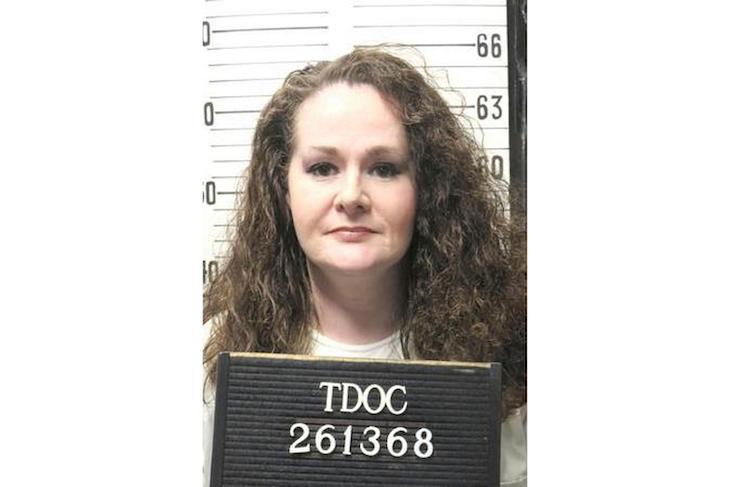
Christa Pike has been on death row for more than 30 years. This week, the state of Tennessee finally tried to kill her. It failed. Pike, who was sentenced to death in 1996 for the murder of Colleen Slemmer, remains critically ill. If Pike survives, should she face another execution attempt? Whether or not she does, what is to say that another attempt won’t also fail? I don’t see that doctors like me have any particular insights into the rights and wrongs of judicial killing; the question is political. But we are well placed to ask a different question: just why is America so bad at killing people?
The United States has tried to make execution look medical, and failed
Earlier this year, Tennessee also failed to execute Tony Carruthers, who was convicted of kidnapping and murdering three people in 1994, after bungled attempts to secure the necessary intravenous access. Getting a drip into someone’s vein reliably is a rite of passage for newly qualified doctors. For a year, I couldn’t sit on a bus without appraising veins on the hands and forearms of other passengers. As registrar for medicine or intensive care, I was the sort of junior doctor that others called on when they struggled. The trickiest patients were intravenous (IV) drug abusers, whose toxic self-injections had destroyed most of their veins, but they were also usually experts at advising you which ones still worked. A last resort would be a central line, a drip put not into the arm or leg but directly into one of the great vessels closer to the heart. With experience, perseverance, and an ultrasound probe to find what eye and fingertip couldn’t, I never failed.
Dr Mark Fowler, the Tennessee death-penalty physician, did. In the failed attempt with Carruthers, Fowler, a GP, attempted to place a central line. These are not for the uninitiated. He had already said he’d done about a dozen in his whole career, and none for more than a decade. No great surprise that he didn’t get it right.

Fowler also oversaw Wednesday’s execution, although it’s not clear what role he played. But Pike’s execution may also have failed from lack of good intravenous access. Witnesses report she said her arm felt about to burst, and asked if that was meant to happen. One obvious explanation is that the tip of the line wasn’t in a vein at all, and the drug was being pushed painfully into the soft tissues of her arm. Even those with no sympathy for Pike should see the problem: a drug pooling in the flesh gets absorbed more slowly, and can fail. Push enough syringes into drips and you learn the feel of back-pressure when they’re not in a vein. In Tennessee, the syringes were pushed from another room, by prison staff. It’s perhaps no surprise that things went awry.
The United States has tried to make execution look medical, and failed. Hanging is ugly and smacks of barbarism; firing squads look no more civilised. Electrocution was intended to be quick and humane but very obviously wasn’t. Suffocating people through hypoxia is authorised in some states, as is the use of lethal gas. But the vast majority of America’s executions are by lethal injection, which began as an improvisation, not a medically tested procedure. Subsequent research into the common three-drug protocols suggested the anaesthetic might not anaesthetise and the potassium might fail to stop the heart, meaning people may have died conscious that they were suffocating from the paralysing agent.
With the IV lines and the drugs, the procedure resembles medicine, but medicine’s involvement is reluctant and half-hearted at best: the American Medical Association’s ethical code forbids doctors to take part, and drug companies try to make their products unavailable. As a result, these killings have a complication rate that makes our NHS look competent. One historical survey by Austin Sarat, an Amherst professor, estimated seven per cent of executions by lethal injection in America had been botched. He opposes the death penalty, but he wasn’t inflating across the board. He reckoned not one of the executions by firing squad had gone wrong.
Hanging can be a horrible way to die. Albert Pierrepoint, the English hangman who executed hundreds of people, made it efficient, back in the day when Britain and efficiency were less often estranged. Pike’s lawyers asked for hanging; Tennessee’s objected that it was unpredictable and that the state lacked the expertise. America doesn’t want killing that looks like murder, only killing that looks like medicine. But currently it gets the appearance of medicine without its competence. If a state is going to kill its citizens, perhaps it should be open about the brutality.
Good medicine can seem brutal and yet be kind. I have stood by bedsides and pushed morphine into the veins of patients and seen their breathing stop. Under the doctrine of double effect, you are allowed to ease someone’s pain even if you foresee it hastening their end.
‘You wouldn’t treat a dog like that,’ many a family has said to me, worried about their spouse or their parent being left to die in pain, and I have always been able to reassure them that we don’t let people suffer either, or at least that we don’t have to. Pentobarbital, the drug Tennessee gave Christa Pike, is what a vet uses to put down a dog. A vet would have found a vein.






Comments