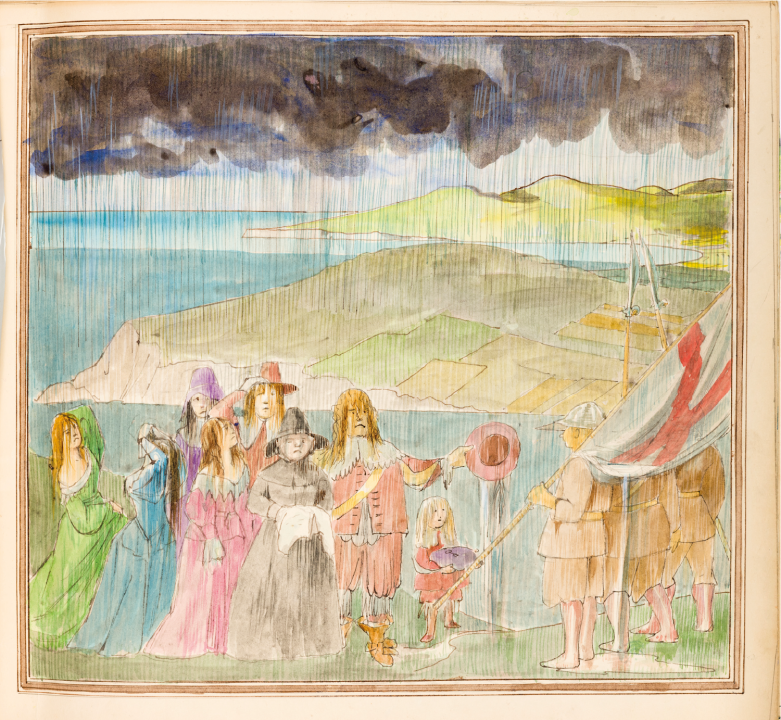
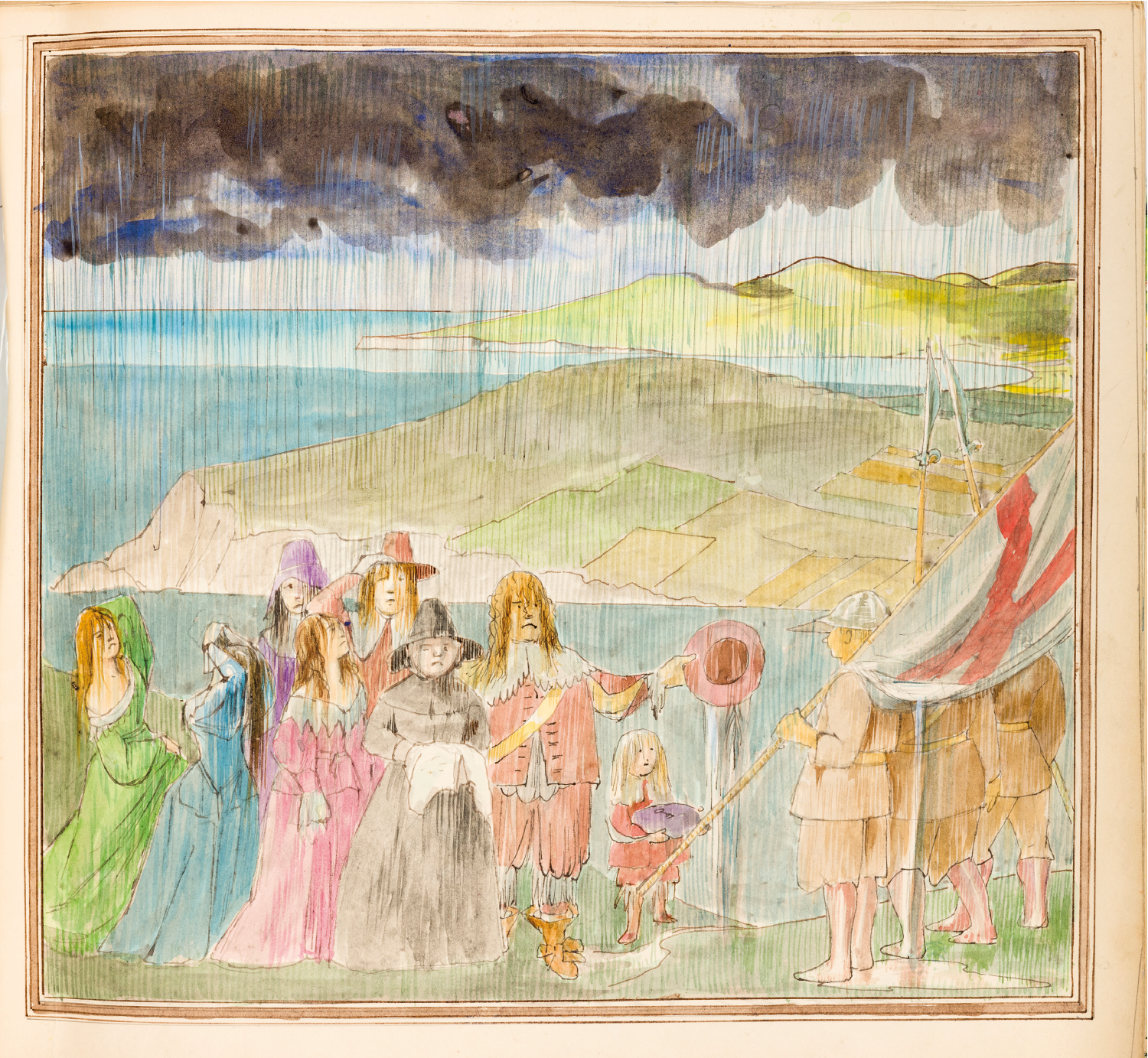
Every visitor to Charleston Farmhouse will know the work of Quentin Bell even if they don’t realise it. He made the distinctive clay colander lights there, and many of the zany sculptures and ceramics. The son of Vanessa Bell, he grew up at Charleston, and later, when he was of great age – and even greater beard – he led a campaign to ensure the place was properly preserved. But what was Bell’s work really like?

This exhibition gives us about 100 examples so that his singular vision emerges, and guess what, for all the progressive modernism of his background, he had a taste for Victoriana, fairground illusionism and the Belle Époque. His reliefs are dancers out of Degas, his figurines dressed like Manet’s bar attendant. He was fascinated by Maupassant, De Sade and ‘the darker currents of fin-de-siècle French culture’. There’s a memorably creepy sculpture of an ‘invisible’ clay man and woman, which are merely empty, rutting clothes.
Art was his way of life. Aged six, he was scooping blue clay out of the Charleston pond and baking it in the nursery fire. Soon he was adding sand to make the finished teacups stronger (two are on display). He loved to paint on clay but, as he got better at making pots and plates, his mother and Duncan Grant would often swipe them to decorate themselves. He and his aunt Virginia Woolf worked on in-house newspapers with the mischievous aim of ‘giving the utmost pain to everyone concerned’, his drawings paired with her distinctive handwriting. There’s also his childish sketch of a man who came to tea, which looks to be Lytton Strachey.
Scholars assumed Mondrian taught Moss, but their relationship has recently been reassessed as two-way
Quentin, deemed unfit for military service due to TB, spent the second world war digging vegetables and writing a fantasy novel The Upheaval, 2,000 pages long; the illustrations, though done in Biro, look wonderful. It could have become escapist literature like Peake’s or Tolkien’s, maybe, but David Garnett told him to give it up.
Alongside his teaching career, and his writing, he made beautiful birthday cards for his children, illustrated stories, and created 3-D ‘goggleboxes’, sort of toy theatres. When you peep into the one here, it reveals a saucy parody of a modern art gallery. He made about 17 of these during his lifetime, amusing and sui generis, for sure, but it’s not hard to see why relatively few survive. His biggest achievement is probably the lifesize levitating lady in fibreglass painted to look like bronze. There is one at Charleston by the pond, as well as at Leeds, where he was professor of fine art. But I prefer ‘Horseplay’, in which a terrible accident has befallen a smug Staffordshire couple familiar from the Victorian earthenware mantelpiece-topper. The horse is bolting, the lady’s legs are akimbo, and the gallant is manifestly failing to save her.
Marlow Moss (1889-1958) was the opposite of Bell. Her work was pure abstraction, mathematics guiding her practice, which was precise and ritualistic. She would paint her geometrical shapes seven times, letting each layer dry for seven days. Rejecting the haut-bourgeois Jewish Kilburn family she was born into, she swapped Marjorie for Marlow, and got an Eton crop and jodhpurs. She was hanging out with the cubists in Paris seeking rhythm in ‘pure geometric figures’ when she met Mondrian.
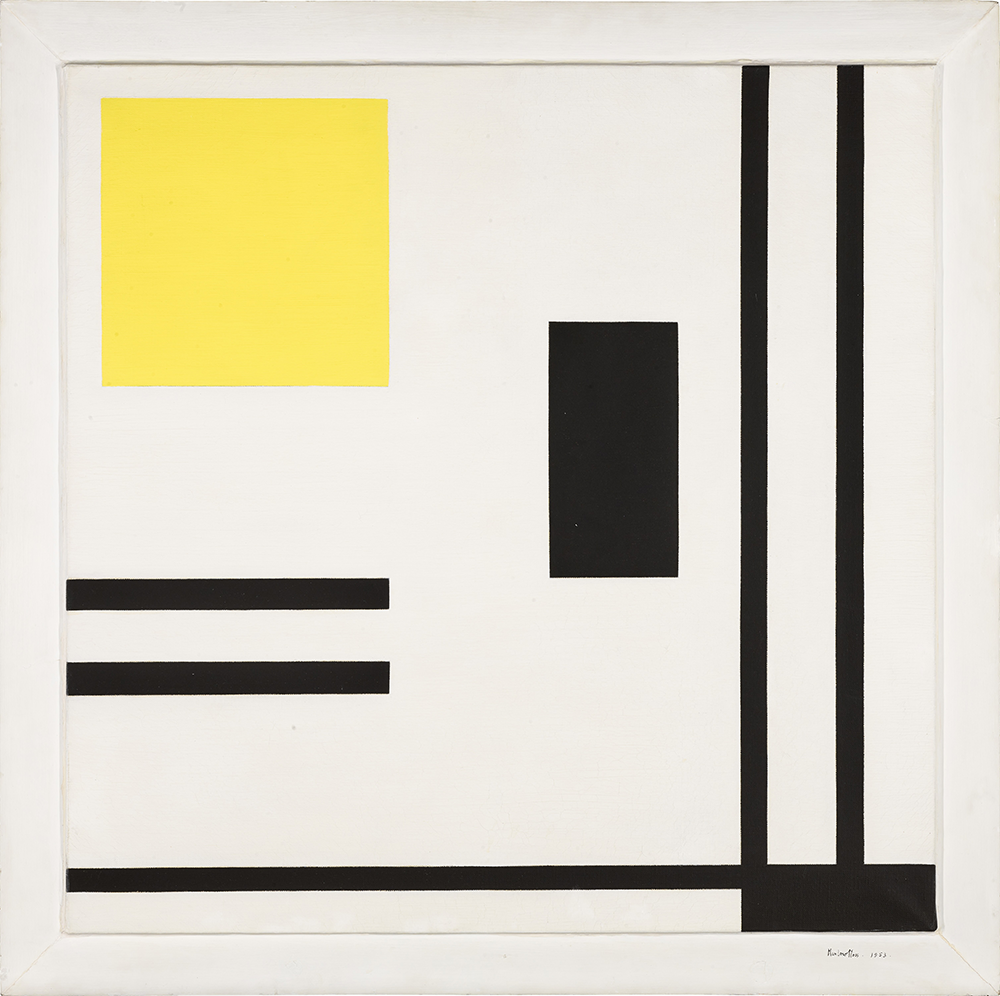
Scholars assumed he taught her, but their relationship has recently been reassessed as two-way. It is now believed that the neoplastic double-line – tram tracks running across the canvas – was her innovation, not his. Art-world fortunes are made of such distinctions. Moss’s ‘White, Yellow and Black’ (1953) sold for £1.2 million at Sotheby’s in June. You can see it, glowing and profound, at Ward Moretti, alongside a carefully curated show of 35 works.
Both Bell and Moss designed interiors for new ways of living. In 1937, at Evreux in Haute-Normandie, Moss and her partner Netty Nijhoff designed and created a modernist home of ‘unsurpassed cleanliness and harmony’, wrote the designer Max Bill. ‘Everything was bright, fresh, transparent.’ Moss had to escape to England by boat in 1940. She settled in Lamorna in Cornwall, but effectively had to begin again. Everything of that modernist paradise, including most of her pre-war work, was looted and went up in a Nazi firestorm.




Comments