Andy Burnham told the BBC’s Laura Kuenssberg yesterday that he’s ready to ‘rip the plaster off’ and introduce a new social care service, free at the point of use, for everyone in England.
‘Everyone contributes, everyone’s covered,’ the Prime Minister said – but how exactly they will contribute is a question he’s left to Baroness Casey to answer and for voters to endorse at the next general election. The Health Foundation has estimated that the cost a care system like Burnham suggests could be £18.5 billion a year in 2035. (He says it’s ‘not that high’ – but he didn’t offer an alternative.)
‘Everyone contributes, everyone’s covered,’ the Prime Minister said – but how exactly they will contribute is a question he’s left to Baroness Casey to answer
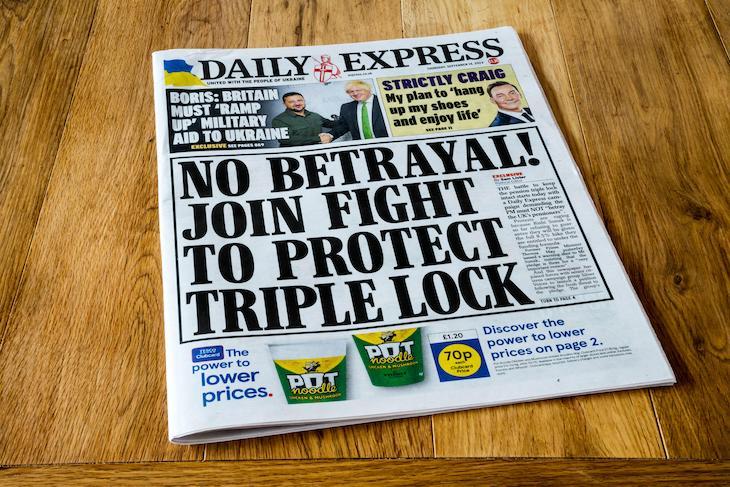
Some Labour figures think they already know how to pay for it: by scrapping the triple lock. Darren Jones said the guaranteed increase in pensions ‘is very expensive in the years ahead…if you’re reallocating money to help older people in the social care system, maybe there’s some reform that could be made there.’
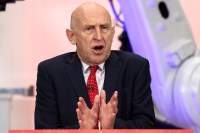
Lord Blunkett told the Daily Telegraph that Burnham shouldn’t keep the triple lock for the rest of this parliament, as he has pledged to do, but get rid of it more quickly, saving up to £22 billion by 2030. A Labour MP told the i paper that a care service would ‘sugar the pill’ of scrapping the triple lock.
The OBR (Office for Budget Responsibility) says the triple lock, which raises pensions by the highest of inflation, average earnings growth and 2.5 per cent, will cost around £15.5 billion a year by 2029-30, around three times more than was expected when it was introduced in 2011. Although that sounds like a perfectly sized pot for social care, it isn’t. Most of those rises have already happened and no-one is suggesting cutting pensions to what they would have been under another system of rises – only raising them more slowly in future. The savings only start from when increases are lower than they would otherwise be and they start off relatively small. The IFS (Institute for Fiscal Studies) calculated that the triple lock will cost an extra £600 million a year in 2029 compared with an earnings link alone from this year, a small fraction of what any universal care service would cost. By 2050, the triple lock’s extra costs might be between £5 billion and £40 billion. That could be enough to pay for Burnham’s care service – but two decades after he wants to introduce it. There would be a big bill to pay in the meantime.
There’s one other thing to note. Even if the triple lock was abandoned and the money spent on care, the country would still be living beyond its means. In the absence of policy changes, public debt is projected to rise from 95 per cent of GDP today to 300 per cent of GDP in the 2070s according to the OBR.
Swapping a pension guarantee for a care guarantee means spending one of the government’s big potential savings on a new commitment. Scrapping the triple lock may be necessary – but it won’t mean that free care is an expense the government can easily afford.



Comments