The berries on the elder are ripe, falling and staining both city streets and country fields alike with their purple-black juice; the last tomatoes are ripening while the plants let their leaves die off, putting all their energies into their final fruit. Dahlias and sedum – and Michaelmas daisies – flower in borders where half the pleasure comes from the russet and brown of decay. There are more hours of darkness than of light. ‘That strain again! It had a dying fall.’
Today, September 29, is Michaelmas, the Feast of St Michael and All Angels. Coming shortly after the autumn equinox, it is one of the quarter days inherited from the Middle Ages, dates which long ordered life. Lady Day in March, the Feast of the Annunciation, is gone from our cultural world, while Midsummer Day and Christmas Day are with us still.
Traditions do not preserve themselves
Tradition said Michaelmas was when the Archangel Michael cast Satan down from Heaven, the fallen angel landing arse-first in a blackberry bush. Past Michaelmas, it was considered bad luck to eat them – an injunction which, unlike Leviticus on pork and lobster, costs the observant nothing: by now most berries have lost their allure.
Rents fell due on quarter days, and by Michaelmas the geese, fattened on the stubble, were ready; tenants sweetened up their landlords with them, and the two customs made a third, that of the Michaelmas goose.
Konrad Lorenz told the story of Martina, a goose that had imprinted on him, seeing him first after hatching from her egg and adopting him as her parent. She followed him wherever she could, and slept each night on his bedroom floor. Frightened by her first experience of stairs, she had run, as geese do, towards the light of the staircase window, and ever afterwards she made a ritualised detour to the window as she ascended. Let in late one evening, she followed him up without remembering her detour, before realising what she’d done, freezing for a moment, crying in alarm, and then hastening to the bottom of the stairs to retrace her steps more correctly, and include the detour that she had become so superstitiously attached to.

I have been uncomfortable about eating geese ever since, despite finding them delicious. Morally muddled as I am, I eat one a year at most. Aged about twenty, I read Lorenz’s story in an Oxford University library copy of On Aggression which had belonged to, and was inscribed by Niko Tinbergen, his friend and fellow Nobel-winning ethologist.
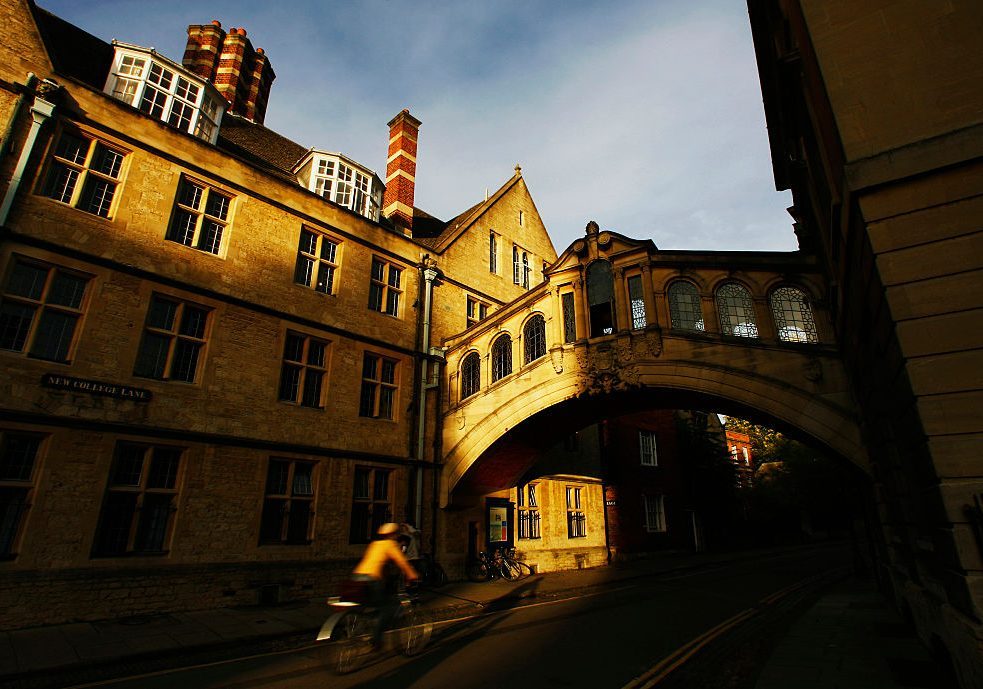
I knew the word as a teenager from Morse, those evocative two hours of ITV on a Wednesday evening, magisterial in their melancholy, which introduced me to Oxford’s Michaelmas term. The word seemed redolent of a richer world. One should be wary of romanticising the past, of looking back too fondly to days when literacy was rare and child mortality normal. But it still does.
The American writer Calvin Trillin said all families have their own vocabulary, private words or terms of description that mean something to them alone. Countries and cultures have the same. Michaelmas feels a stepping stone back to the Oxford chapters of Brideshead, and from there to a past more distant still. A few fields near my house, and one overlooked by the oddly sloping village cricket ground, undulate with ridges and furrows made by men who haven’t ploughed them for three hundred years.
My garden is scented with rot and cider; fallen apples have rolled into the borders and a few lie uncollected on the lawn, which is green again and needs a cut. The leaves of the cherry are yellow but the pots of basil that have done so well this year don’t seem to have realised that their days are closing. Perhaps because the rains came late, there seem to be more dragonflies around than usual. Those four-winged, darting, iridescent bodies have been around since before the dinosaurs. As underwater nymphs, they can live for years; on the wing, they have one summer, and none see out the autumn.
Today, September 29, is World Heart Day, courtesy of the World Heart Federation. ‘Don’t Miss a Beat’ is this year’s campaign theme. The United Nations has also made today the International Day of Awareness of Food Loss and Waste, one of over two hundred days the organisation suggests we observe. Hard to escape the feeling that our calendars are at once more crowded and more empty, although I confess a lingering fondness for Lost Sock Memorial Day.
Traditions do not preserve themselves. We have our attention, and can bestow it where we choose. Notice Michaelmas. Notice our seasons of beauty and loss, and that the days bequeathed to us will pass to others in turn; like the basil, sooner than we realise.
I keep words from that other country of the past for the same reason I plant flowers round the grave of someone who will never see them. Our traditions are richer and subtler than Martina’s, but perhaps not so different. This Michaelmas I shall roast a chicken.






Comments