The most insufferable person you know is a Podcast Person. They’re on the tube each morning, sat with a smug smile on their face, AirPods thrust into their earlobes and a performative Metro – it won’t be opened – on their lap. They’re probably tuning into The Rest is History, preparing to bore every colleague they meet at the tea station with a glowing review of Dominic Sandbrook and Tom Holland’s dissection of battles and monarchs of centuries past.‘I did a History degree at Durham, you know, and I’m still learning SO MUCH! SO MUCH!’, they’ll drone on, unknowingly intent on making you abandon your mug and jump out of the nearest window.
The podcast cultural monopoly is yet another component in modern society’s depressing obsession with ‘self-improvement’
By all accounts, I should be a podcast person. I’m a journalist. I love history (I read Classics, but close enough), celebrity interviews and politics. I read, most days, on my commute. I still listen to the radio – Radio 4 before work, 6 Music while cooking dinner, and Radio 2 on Sundays (only Sundays). I never grow tired of learning new things.
But I have a confession to make: I loathe the very idea of podcasts.‘Just read a book,’ I find myself inadvertently screaming every time a colleague recommends another six-part audio-series about the global bond market, American serial killers or Ariana Grande’s weight loss. Podcasts are tedious, ugly, unromantic things: education served up as a pre-dinner snack, to be mindlessly gorged upon rather than slowly consumed and absorbed.
The podcast-hating club is a lonely one to be a part of. Britain can’t get enough of them. Two years ago, Ofcom found that just over 20 per cent of UK adults – around 11.7 million people – now listen to at least one podcast a week.
Earlier this summer, The First Podcast Bar in London (yes, that is really what it’s called) opened in the City. Well, kind of. It’s actually hidden inside a falafel restaurant, Pilpel, which is so hilariously circa-2012 naff hipster the jokes almost write themselves. The idea of The First Podcast Bar in London is thus. After gulping down (probably) bad wine and (presumably) overpriced pints, punters can do what every drunk person has ever dreamed of doing – flop down on a high stool and record themselves talking about the manosphere, or that woman at work who has dropped four dress sizes in as many months yet pretends to have never heard of Mounjaro. Because nothing screams impending hungover anxiety quite like a permanent digital record of a pissed-up rant.
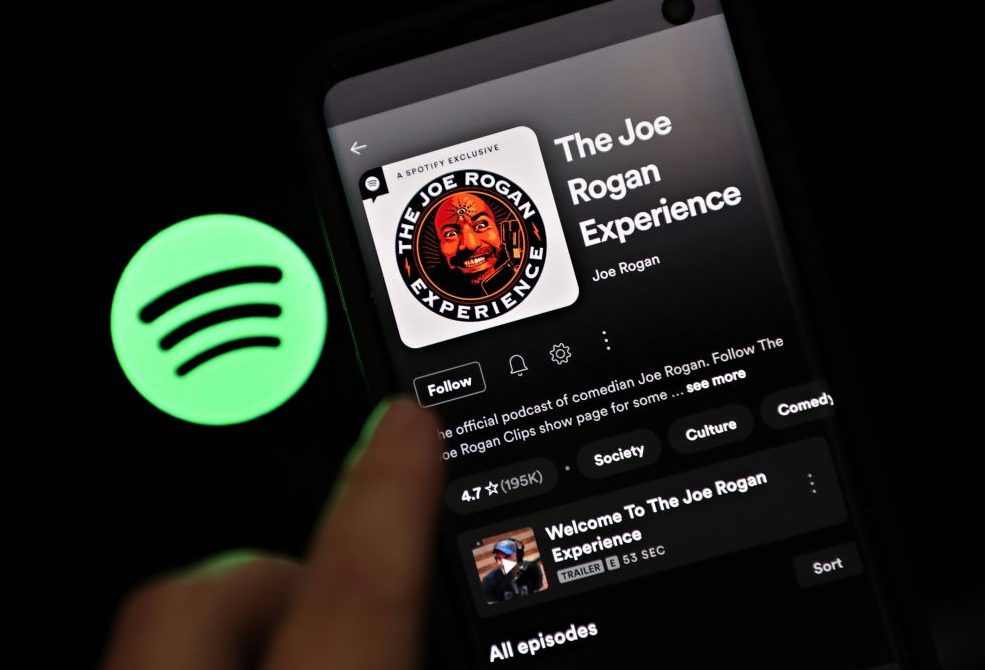
You can’t blame people for wanting to get in on such a lucrative market. The medium’s leading presenters, such as Joe Rogan, Steven Bartlett and Alex Cooper, have become multi-millionaires and global celebrities. Some even help choose Presidents: Rogan’s three-hour interview with Trump just days before the 2024 election was credited with boosting the Republican’s popularity amongst young men (since then, a video version of the interview has amassed 62 million views on YouTube).
As a result of podcasts’ popularity, many fascinating topics that would have previously been turned into doorstopper books or gripping documentaries suddenly become audio-visual torture devices. I have two main issues with this. As a millennial who spends an embarrassing amount of time glued to her phone – four and a half hours per day was last week’s average – the last thing I need is another tech addiction. I need to be weaned off technology, not pushed toward another quick fix.
Speaking of quick fixes. I can never shake the feeling that podcasts are the stupider alternative to books; a damning indictment of our dumbed-down, screen-addicted, short-attention-span society. (Last year, a YouGov poll found that 40 per cent of Britons hadn’t read a single book in the past 12 months.)
The podcast cultural monopoly is yet another component in modern society’s depressing obsession with ‘self-improvement’. No longer can a free evening be spent socialising over a glass of wine, or reading a novel, or sprawling in front of the TV. Everything must serve a higher purpose. Gyms are busier than pubs; more people clutch self-help books or dating guides on the tube than the latest Ishiguro or Barnes.
Podcasts pretend to be key tools in this economy – a free method of education, a way to expand your horizons. The Rest is History has 20 million monthly downloads; The Rest is Politics, hosted by Rory Stewart and Alastair Campbell – the most dreadfully dull-vibes duo in Westminster – has around eight million. The mind boggles. If I wanted to learn about the Crusades or Andy Burnham’s obsession with buses, I’d open a book or a newspaper. But maybe I’m a philistine, consigned to the dustbin of technological ineptitude.
Perhaps the worst part about our society’s obsession with podcasts is the creeping belief that they are a superior, intelligent art form. Even true-crime – a genre that has arguably done more to damage our collective sense of morality than any other – becomes easier to stomach in podcast-form: listening to hours of gory, minute detail about the ways men smash in women’s skulls or stalk them in the dark becomes valid entertainment if hosted by an overconfident shill with a PhD. Tell someone you spent your Friday night watching graphic videos of murders and you’d be labelled a freak. But in podcast form? Perfectly normal.
Then you have the dreaded celebrity interview. Again, a disclaimer: as a journalist, I yearn for the days of multi-page magazine spreads and unlimited access to Hollywood royalty and rock and roll stars; when writers could spend days, if not weeks, jetting around the world with Mick Jagger or Julia Roberts to craft a proper profile.
Today, that has largely been replaced by brainless soundbites gained from easy questioning on podcasts, hosted by either influencers trying their luck at pseudo-intellectualism or – even worse – former A-listers looking to make a quick buck. On the latter point, enter Matthew McConaughey, who has seemingly abandoned prestige cinema in favour of cheesy podcasts called things like ‘Modern Wisdom’ (hosted by an ex-Love Islander, Chris Williamson) and ‘The School of Greatness’. McConaughey, a literal Oscar winner, is now mostly found harking on about spirituality and hustle culture, using the sort of therapy speak that makes you want to retire to a nuclear bunker before the Russians have even got anywhere close to Nato land.
The podcast evangelists reading this will probably rush to the comments to tell me how wrong I am. Perhaps you’ll even give me some recommendations. But, respectfully, I’ve heard it all before. The Rest is History is really, really brilliant, I know. And I don’t believe you.





Comments