The problem with socialism is that eventually you run out of things to ban, so you find yourself trying to stop children eating ice cream.
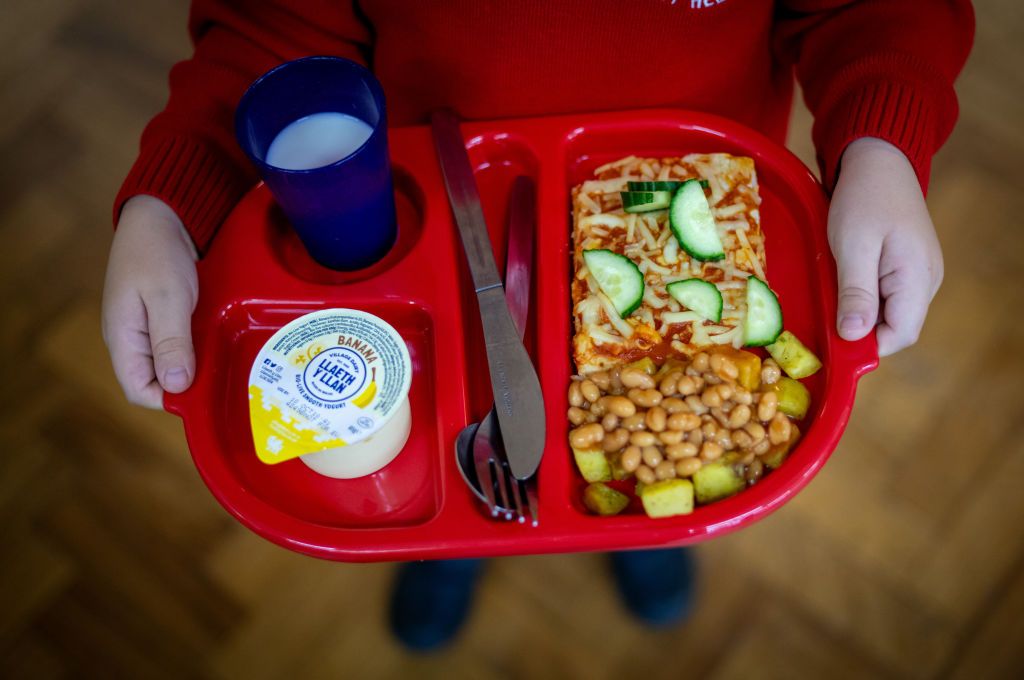
New school food rules announced today by the Department for Education will prescribe pulses, restrict deep-fried products and prevent children eating the food they actually like. Primary pupils are to encounter lentils, chickpeas or similar pulses at least once a week. Suggested desserts include custard with banana and orange slices. Each school will be expected to publish its menus and food policies online, nominate a food governor, with a small army of DfE tick-boxers then monitoring compliance. The measures have been welcomed by Prue Leith, who recently stepped down from a lucrative gig extolling the virtues of cake on the Great British Bake Off. Education Secretary Lucy Powell, meanwhile, taking time from her campaign to trash the national curriculum and destroy the academy system, has used this opportunity to proselytise about Labour’s work in ensuring ‘every child has access to the healthy meals we know [they] need to learn, grow and succeed.’
Lurking beneath all this is the assumption that too many parents – particularly those on lower incomes – cannot be trusted to raise their children properly
We have, of course, been here before. In the noughties Jamie Oliver – whose own Italian burger came in at over 1,000 calories – recoiled at what children were eating and launched a ‘Feed Me Better’ campaign. The crusade is best remembered for what it did to the unsuspecting Turkey Twizzler – a spiral-shaped concoction which was effectively chased out of school canteens.
Between 1995 and 2004 the average BMI of two- to 15-year-olds rose from 17.6 to 18.1 for boys, and 18 to 18.4 for girls, prompting fears of an obesity ‘epidemic’ and activating Westminster’s ‘something must be done’ reflex. The Blair government threw hundreds of millions of pounds at new nutritional standards though, in the immediate aftermath of the reforms, school meal take-up collapsed as parents retreated to packed lunches.
The state can regulate what appears on the canteen counter but short of force-feeding pupils, it cannot control what they put in their mouths. Nothing better illustrates this than a memorable scene in Morgan Spurlock’s 2004 Super Size Me in which a pupil, challenged over the nutritional quality of her lunch, contemptuously points to the French fries on her tray as a vegetable. The likely result of compulsory pulses is not a generation of miniature vegans – of the sort the Greens are hoping to create with their own war on meat – but millions of chickpeas travelling directly from the serving spoon to the bin.

It’s all so brazenly snobby. No fish and chips, no fried eggs. Britain already grows 224,000 hectares of pulses but these are predominantly field beans and peas. If the purpose is to get children eating more legumes, what exactly is wrong with our home-grown offering?
Lurking beneath all this is the assumption that too many parents – particularly those on lower incomes – cannot be trusted to raise their children properly. Since Labour came into power staff at schools and nurseries have been enlisted to brush children’s teeth. Bridget Phillipson brought in ‘free’ breakfast clubs to ‘give pupils the best start to the day’. Now, school lunches will be treated not merely as meals but an opportunity to correct apparently defective habits children acquire at home. Those who try to opt out by bringing their own packed lunch cannot escape the Food Police: a checklist for headteachers recommends banning sugary drinks, crisps and confectionery from lunchboxes.
There is a further conceit at the heart of modern public health: that if people persist in making the ‘wrong’ choices, it’s because the state has not yet intervened extensively enough. Over the past two decades the British government has introduced a ban on adverts for foods high in fat, sugar or salt (HFSS) during children’s TV programmes, a traffic light labelling system on food products, a tax on fizzy drinks, a food reformulation scheme, mandatory calorie labelling in restaurants, a ban on volume price discounts for HFSS food, a ban on where supermarkets can display HFSS products in their stores, and a total ban on HFSS food advertising online and on TV before 9 p.m. None of this has worked.
Part of the issue is that the insatiable neo-puritans appear much more interested in disciplining wicked Big Food than in how British childhood has changed dramatically. Historical dietary surveys do not reveal an enormous rise in reported calorie consumption by children. But other surveys show that children are much less likely to roam independently or spend their afternoons running around outside. The proportion of seven- and eight-year-olds allowed to travel to school without an adult collapsed between the 1970s and 1990s.
We can blame iPads and Xboxes, and screen time certainly matters. But society has also steadily constrained children’s independence: walking to school is now a safeguarding issue. A trip to the park which previous generations would have made alone now requires adult supervision.
For a public health establishment built around intervention, that is an inconvenient possibility. If children became heavier partly because they became less active and less free, the answer cannot simply be another round of bans, regulations and guidance.
I’m all for kids eating healthily. But caterers are already warning that the new standards will increase the pressures on school food budgets, whilst schools will be expected to do yet more monitoring and administration. And for what? Children who don’t want chickpeas will not eat chickpeas. Another expensive, feel-good intervention will have been introduced, everyone involved will be feeling mighty virtuous, and precious little will have changed.






Comments