What if the hiring of a PR expert became a PR disaster? That’s precisely what has happened in Poland. On 29 July, when Prime Minister Donald Tusk appointed Barbara Mróz-Gorgoń, a professor of marketing, as the government’s new plenipotentiary for promoting the Polish brand, this was thought to be a shrewd hire that would bolster the country’s image on the world stage.
Then someone read one of her reports.
Poland has managed to develop from a bankrupt communist state into one of the most successful economies in Europe
The Poles’ Self-Portrait, published last year by a think tank chaired by Mróz-Gorgoń, was supposed to give a thumbnail sketch of the Polish national character. In reality, it revealed the potential dangers of letting PowerPoint, AI, and marketing lingo write your book for you. There were geographical blunders, unclear statistics, and passages that somehow seemed acquainted with neither Polish nor English. We learned that 95 percent of young Poles speak fluent English. This is quite impressive, but it would also make Poland, by some stretch, the most linguistically accomplished country in Europe.
To get a feel of how ridiculous the report was, imagine an official government report on British society claiming that nearly all the teenagers in Leeds are fluent in French and quite a few of them speak some Cantonese. The report immediately became a sensation on social media, which is rarely a good sign. AI, of course, entered the story. AI had indeed been used in the process, according to Mróz-Gorgoń – for routine tasks such as transcription, summarizing, and editing.

What she overlooked here was the funniest part of the story. What matters isn’t whether the document was written by a professor, ChatGPT or a coffee maker. It’s whether anyone even read it before publication. Every academic will recognize this danger when it comes to reports and academic articles. Such texts are strange animals: commissioned at great expense, discussed at conferences, printed on expensive paper, and put in places where nobody will ever look at them again. This report had the terrible misfortune of acquiring readers.
In no time, Poland’s opposition parties demanded investigations, ministries clarified the details of state funding for such reports, and Poland enjoyed another scandal in which everyone suddenly became an expert in public procurement, academic methodology and footnotes by breakfast time. Mróz-Gorgoń resigned on 21 August, just 23 days after accepting the job. The personal abuse aimed at her has been inappropriate. But beneath the farce lies a very Polish fear. For years we have been trying to define our “national brand,” as if Poland were some sort of unsuccessful breakfast cereal in need of repackaging.
Successive Polish governments have commissioned all sorts of experts to try to accomplish this. Consultants reveal our “DNA”. Workshops identify “core values.” Someone puts down “dynamic,” “resilient” and “creative” on a flip chart. Eventually, a logo appears. Then comes an election, and the process starts anew. I’ve always been puzzled by this obsession, as Poland has managed to create a rather good brand for itself over the past 35 years, without much help from professional marketeers.
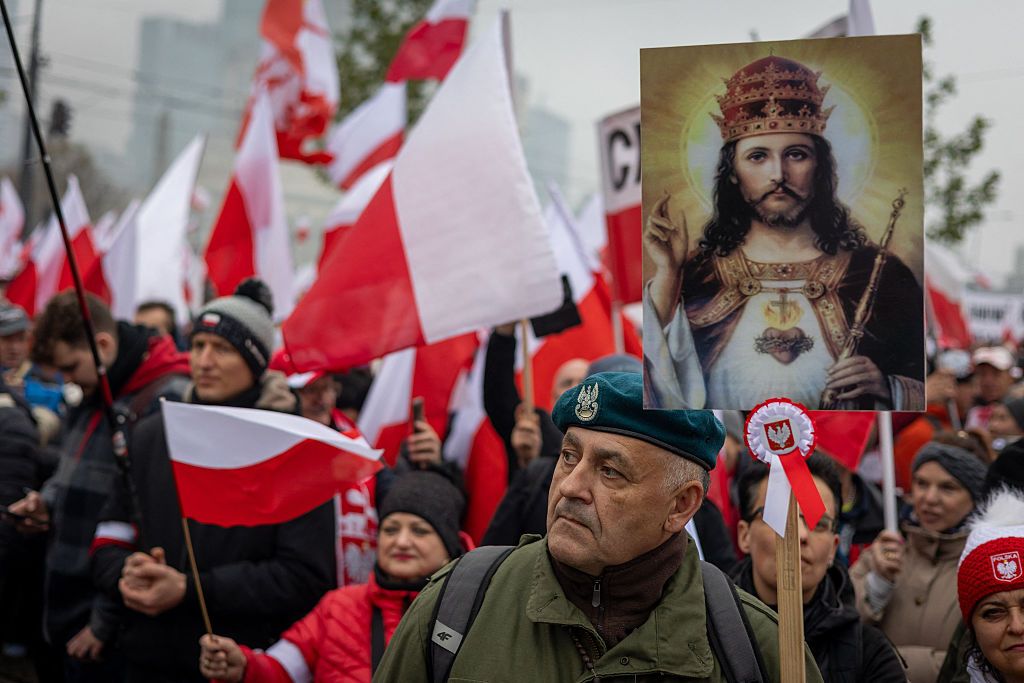
Poland has managed to develop from a bankrupt communist state into one of the most successful economies in Europe. Warsaw has become a rich and increasingly international city. Poland has become a bulwark of NATO, a country investing seriously in its defense and a major player in European politics. Our businesses operate abroad; millions of people visit Poland; hundreds of thousands have chosen to live here. This is usually how national brands are created.
Countries such as Britain didn’t become globally recognizable because some committee decided that its brand values were “heritage, creativity and resilience.” It had Shakespeare, James Bond, the Beatles, Oxford, the Premier League, the royal family, and even the occasional invasion of somebody else’s country. France has its wine, fashion, and the conviction that civilization ends somewhere near Calais. We have our pierogi, Chopin, Solidarity, excellent vodka, increasingly good trains and a national tendency to treat every achievement as insufficient. This last one might be our true national brand.
The irony is that Poland’s international image has never been as strong as it is today. The more success we manage to achieve, the more anxious we are to ask consultants about how we ought to present ourselves. A national reputation isn’t created by using the right adjective, but by doing things that other countries notice.
The 1979 Polish exhibition, also called The Poles’ Self-Portrait, ended with a mirror, inviting visitors to become part of the national story. Perhaps the next government-appointed expert responsible for defining Poland should start there.
And, before publishing the findings, ask someone to proofread them.



Comments