
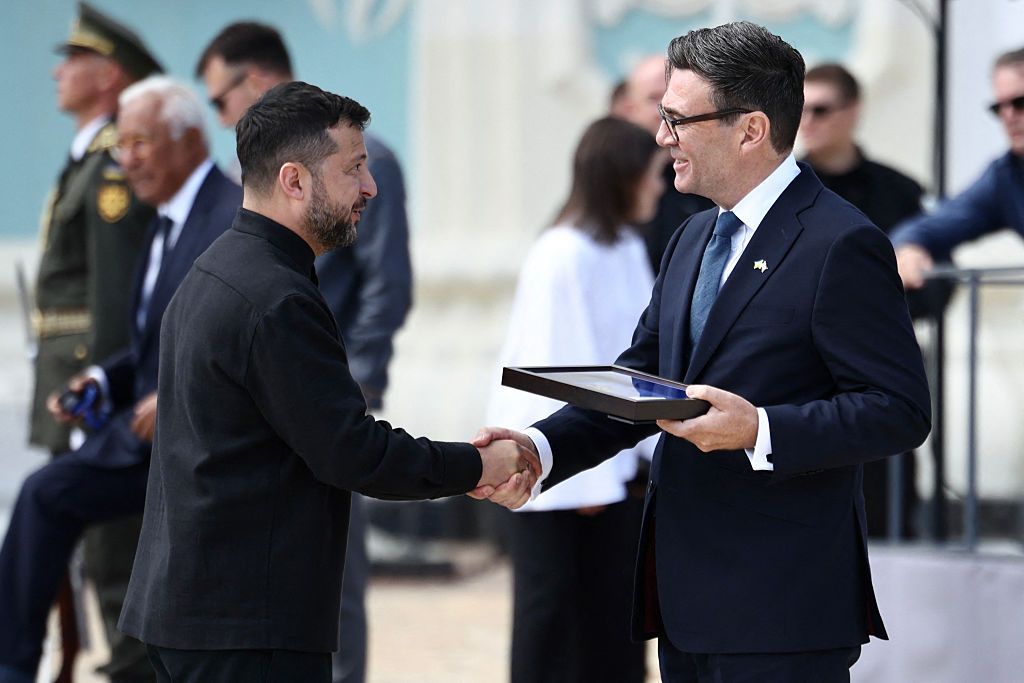
Andrew Burnham, in his first foray into international statesmanship, today appeared as guest of honour at Independence Day celebrations in Kyiv with a rousing message of support for Ukraine. ‘My nation kept the flame of European freedom alive in the 20th century, you hold that flame in the 21st,’ Burnham said in a speech in front of Kyiv’s ancient St Sophia cathedral. ‘Despite Russia’s outrageous threats to my country, we will continue our support for Ukraine.’ In addition to words, Burnham came bearing practical gifts in the form of blueprints that will allow the Ukrainians to assemble their own version of the UK/French Scalp-Storm Shadow ballistic missile.
Storm Shadows will be a welcome, if expensive, upgrade to Kyiv’s strike capabilities – but one for the next war, not for this one
Burnham’s promise is a follow-up to a pledge last month by French President Emmanuel Macron to help the Ukrainians set up their own Storm Shadow production lines. But though the air-launched Storm Shadows, with their 250 km range and 450 kg warhead, are sophisticated and accurate, the earliest the Ukrainian-assembled models could appear is 2027. What Zelensky really needs now is missiles for his US-provided Patriot interceptors, the only weapons system capable of stopping Russian ballistic missiles. Over the weekend Zelensky said that he was willing to accept 300 Patriots in lieu of part of a cash loan that the EU agreed earlier this year. But so far the holders of the biggest European stockpiles, Poland and Spain, have been reluctant to part with more than a handful. Instead, European allies such as Germany and the UK have offered other, less effective, interceptor systems as a stop-gap. And US President Donald Trump recently walked back on a pledge to licence Ukraine to build its own Patriots.
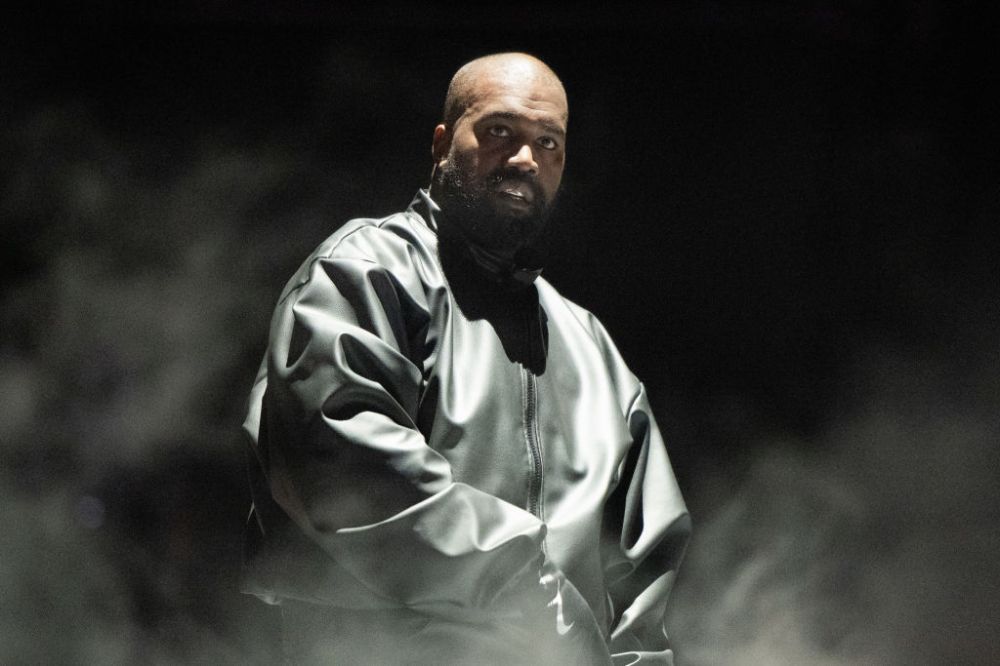
So far, Ukraine has been conducting its deep strike campaign against Russia with domestically produced missiles such as Fire Point’s FP-5 Flamingo, a large, heavy cruise missile reportedly capable of carrying a 1,150 kg payload over a range of up to 3,000 km. The FP-5 is ground-launched and costs around half a million pounds per unit – as opposed to the £2 million price tag for Storm Shadows. But by far the most effective weapons in Kyiv’s long-range arsenal are FP-1 and Liutyi long-range strike drones with a range exceeding 1,600 km, which cost under £50,000 and can be launched in saturation strikes of hundreds at a time, overwhelming Russia’s defences. Storm Shadows will be a welcome, if expensive, upgrade to Kyiv’s strike capabilities – but one for the next war, not for this one.
While the military impact on this conflict of Burnham’s Storm Shadow pledge lies far in the future, the political impact on relations between the UK and Russia has been immediate. Other Ukrainian allies such as Germany and the US have refused to allow their weaponry to be used on Russian territory. Britain has been an outlier in specifically authorising deep-strike use of donated Storm Shadows, and is now doubling down by enabling local assembly of the missiles.
Kremlin spokesperson Dmitry Peskov said last night that Britain was ‘a participant in the war’ and accused London of doing ‘everything it could’ to prevent progress towards an eventual peace deal. Last week the Russian Embassy had warned of ‘serious consequences’ against Britain if Downing Street continued with plans for arming Ukraine with deep-strike weapons. Moscow has now withdrawn its ambassador to the UK without naming a replacement, just a step away from breaking off diplomatic relations.
In words calculated to infuriate the Kremlin, Burnham also explicitly compared Ukraine’s struggle against Russia to the resistance to Hitler – a direct attack on Vladimir Putin’s narrative that Ukrainians are the Nazis and Russians the fighters against fascism.
Burnham and Zelensky also later dialled in to a conference call with other leading members of the 34-member ‘coalition of the willing’, including Macron and Germany’s chancellor Friedrich Merz, to discuss further support for Kyiv’s war effort.
The problem for Zelensky is that despite years of talk about giving Ukraine full support, Europe is still a major buyer of Russian liquefied natural gas, Greek ships continue to transport Russian oil, and Hungary and Slovakia have secured carve-outs that enable them to continue importing piped Russian crude oil. That makes Burnham’s pledge that ‘this is the moment to keep up the pressure on Russia, the moment to squeeze their ability to fund this illegal war’ a hollow one.
On the economic front, Ukraine is close to bankruptcy. Despite Europe’s loan of €90 billion over the next two years, Ukraine’s budget faces a critical shortfall of €20 billion by the end of 2026. And more urgently, the lack of Patriots mean that Russian ballistic missiles are free to wreak systematic destruction on Ukraine’s electricity, gas, water and transport infrastructure. Kyiv has been suffering spectacular attacks over recent weeks that have seen up to 70 Russian missiles penetrate air defences in a single night. On Friday a Russian attack on a busy shopping centre killed 16 people in Zelensky’s home town of Kryvyi Rih. And despite much hype that Ukrainian deep strike attacks against Russian refineries, logistics warehouses and shipping have turned the tide of the war, the reality is that the Kremlin’s troops continue to make gains on the ground in Donbas and the Russian economy is still far from collapse, despite gasoline rationing in Moscow. Worse, Putin appears intent on doubling down on his resolve to crush Kyiv’s resistance both militarily and politically.
Burnham’s visit to Kyiv is a symbolically important gesture of solidarity with Ukraine. Unfortunately, his pledge of Storm Shadows is also symbolic rather than immediately useful as Ukraine faces the most challenging winter of the war.




Comments