
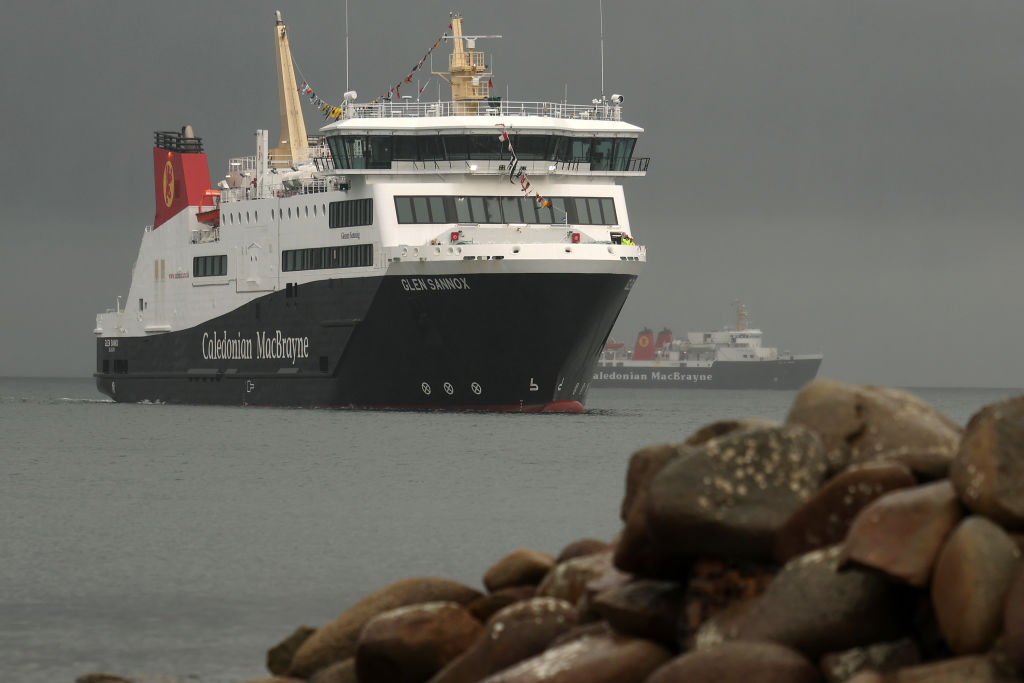
In news that will surprise almost no one, it has emerged that Scotland’s state-owned shipbuilder, Ferguson Marine, is to cut nearly a quarter of its workers.
The business, which has been at the centre of the SNP Scottish government’s ferries fiasco, will commence a voluntary redundancy programme aimed at cutting 70 employees from its currently near 250-strong workforce.
Since it was nationalised in 2019, Ferguson has delivered one massively delayed and overbudget ferry under Scottish government contract and is still working on a second ship that was originally scheduled to be in service eight years ago. The yard has become a black hole for taxpayer money and a political liability for an SNP administration that once boasted about reindustrialising the Clyde and returning the Glasgow area to its glory days of commercial shipbuilding.
The yard has become a black hole for taxpayer money and a political liability for an SNP administration that once boasted about reindustrialising the Clyde and returning the Glasgow area to its glory days of commercial shipbuilding
The yard has seen a number of chief executives come and go in recent years. Each has struggled to come up with a strategy to make the business commercially viable. The one boss who seemed most willing to face up to commercial reality was David Tydeman, Ferguson’s chief executive from February 2022 until March 2024. Speaking exclusively to The Spectator after the latest announcement, Tydeman said he’s disappointed to see the yard being dealt ‘a thousand cuts’ when bold action to save jobs could have been taken earlier. Specifically, there was an opportunity to relocate the second ferry, the Glen Rosa, to a different location for finishing after it was launched in April 2024. This would then have freed up space at the Ferguson yard for BAE Systems, which has a successful defence shipbuilding yard further along the Clyde, to move in and secure jobs.
Tydeman says: ‘The government had the opportunity to relocate the Glen Rosa to Inchgreen Quayside and complete the ship there using what was almost 65 per cent contractors anyway. Doing this would have vacated the Port Glasgow site and enabled interested parties to look at using the site as a satellite base for the Type 26 or Type 31 frigates – or other programmes. This would have retained, in my view, around 150 jobs, but not as a commercial independent shipyard.’

Under Tydeman, Ferguson secured a pilot project contract with BAE to build units for the Royal Navy’s Type 26 frigate. He was keen to expand on this, effectively allowing BAE to step in and secure employment for the workers at the yard. His plan, however, was rejected by Scottish government ministers and he was unceremoniously sacked.
It is not difficult to see why Scottish nationalist ministers disliked the plan. The optics of Britain’s main defence contractor moving in to save workers from SNP hubris would no doubt have been too much to bear.
John Swinney replaced Humza Yousaf as first minister in May 2024. At that time the SNP’s only focus was saving the party from its Sturgeon-era scandals and steadying the ship, so to speak, ahead of the next Holyrood elections.
Taking a bold decision in the best pragmatic interests of Ferguson’s workforce, the community of Inverclyde and ultimately of Scotland, was unlikely to happen. Instead, more money was bunged at the yard and the can kicked down the road until after the election.
In the build up to that Holyrood election, which the SNP won in May, the Scottish government announced its intention to directly award Ferguson contracts to build four small ships: two ferries for the government procurement body Caledonian Maritime Assets Limited (CMAL), plus a marine protection vessel and a fisheries research vessel for Scotland’s marine directorate. The then-economy secretary, Kate Forbes, said that a lot of the ‘upfront work’ had been done on awarding the contracts while also flagging the possibility that competition rules could get in the way.
Since that March announcement none of the contracts have been confirmed, with ministers citing ongoing ‘due diligence’ being carried out.
Graeme Thomson, Ferguson Marine’s chief executive, says the yard’s immediate priority now is the completion of the Glen Rosa. ‘As the vessel nears completion, we face an inevitable gap in workload while we work with the Scottish Government to make the relevant preparations to enable us to proceed with contract negotiations,’ he says.
‘As an independent shipyard, Ferguson will continue to need to be subsidised – either by clients paying a premium price or by the government writing cheques,’ says Tydeman.
The pretence that Ferguson Marine can become a viable standalone business is ongoing. But commercial realities remain the same.






Comments