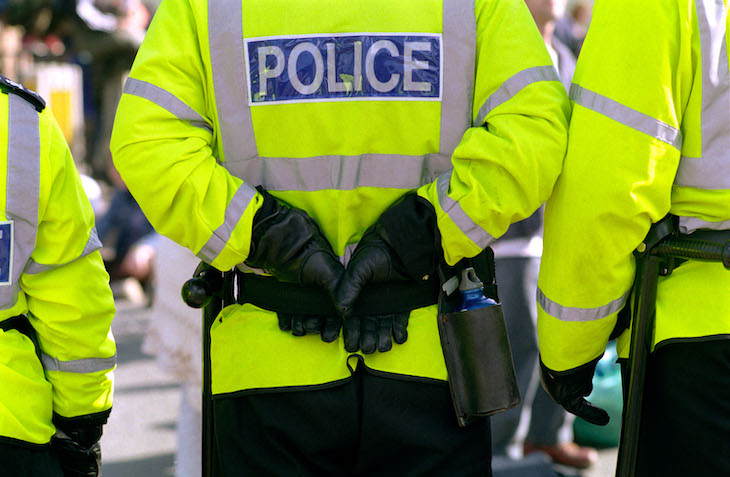
The police role in the Jason Arday case so far deserves rather more scrutiny than it has received. Certainly, the Metropolitan Police Commissioner, Sir Mark Rowley, has admitted that the force “dropped the ball”. It would appear the officers concerned were taken for fools by those looking to suppress the endeavours of a Times Higher Education journalist looking into Arday’s many fabulous claims. As with the tragic Henry Nowak case, it seems the police uncritically accepted the contentions of the first person they spoke with – in this case, Arday.
Cambridge University’s track record in providing effective assistance to police investigations is shaky
However, there may well be a legitimate role for the police to play here after all. Self-evidently, it is the job of the police to investigate potential crimes. On that front, the area deserving of Cambridgeshire Constabulary’s attention is as follows: what claims did Arday make to Cambridge University to secure his position at that institution – and were any of them knowingly false?
Criminal prosecutions where someone has secured a job by making assertions that have gone further than merely “gilding the lily” are unusual – but are by no means unheard of. The former Chief Constable of Northamptonshire Police, Nick Adderley, is awaiting trial for fraud and misconduct in a public office because of allegations that he made false claims about his military service and educational achievements when applying for roles in policing.
In relation to Arday, as is ever the case, proving the criminal threshold would be high.
Section two of the Fraud Act 2006 defines “Fraud by False Representation” as being where someone: “dishonestly makes a false representation, and intends, by making the representation to make a gain for himself or another, or to cause loss to another or to expose another to a risk of loss. A representation is false if it is untrue or misleading, and the person making it knows that it is, or might be, untrue or misleading”.

The Code for Crown Prosecutors requires that to charge someone prosecutors must be satisfied that there is a “realistic prospect of a conviction” and that the case is in the public interest to pursue. In this case, the public interest test could potentially be met. Arday’s post was prestigious and presumably well-renumerated. For him to have gained the position another accomplished academic may well have lost out.
To convict – having heard the evidence – a jury must be “sure” that the defendant committed the offence alleged.
It may be the case that even if a prosecution can get off the ground, a not guilty verdict would be the conclusion. No doubt any legal team put together by Arday and his supporters would seek to present a highly persuasive defence case. So far, the defence mounted by Arday’s outriders is that two universities have examined allegations of plagiarism and found them to be groundless. Kehinde Andrews, formerly a Professor of Black Studies at Birmingham City University, told BBC Radio 4’s Today Programme that Arday had been “harassed” because of “the idea that Black people, particularly at Cambridge, should not be there”. Showing that Arday knew his statements were false would be difficult; there is no evidence that he did and he has denied all allegations of plagiarism and fabrication.
Perhaps one of the other challenges in mounting a prosecution would be the risible performance of Cambridge University staff themselves. Policy Exchange has recently written about the wider failings in the Higher Education sector. In this case, various Cambridge academics – including the University’s Head of Faculty and Professor of Education Hilary Cremin alongside the Heads of various Cambridge colleges – have made statements, when appointing Arday or as part of the more recent public relations’ defence, which are, at the very least, remarkable. It is difficult to imagine that many of those who have so far been publicly involved would make satisfactory prosecution witnesses if called to give evidence in court.
Quite what a jury would make of it all is impossible to know. However, based on the information already in the public domain, there could be a prima facie case for the police to open an investigation into what Arday claimed to the University of Cambridge as part of his application to secure his post and what he honestly believed.
Cambridge University’s track record in providing effective assistance to police investigations is shaky at best – recall Trinity College’s lacklustre response to the damage caused by Palestine Action in March 2024 to the painting of Arthur Balfour. But Cambridge University’s embarrassment at how they were taken in by Arday – willingly or otherwise – is insufficient excuse for a failure to get to the bottom of what has happened here.
This episode has managed to tarnish the reputations of both British policing and Cambridge University. But, if this is a case that should end up in the criminal courts, then so be it: no one’s blushes must be spared when it comes to the rule of law.
David Spencer is the Head of Crime and Justice at Policy Exchange and a former Detective Chief Inspector with the Metropolitan Police






Comments