David Spencer

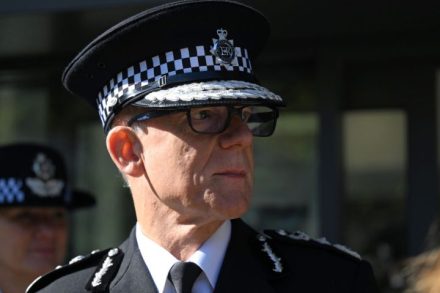
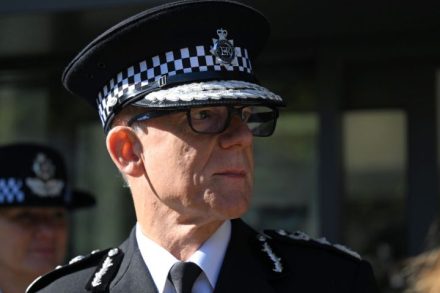
David Spencer is the Head of Crime and Justice for the think tank Policy Exchange. He is a former Detective Chief Inspector at the Metropolitan Police

West Midlands Police is rotten to the core

From our UK edition

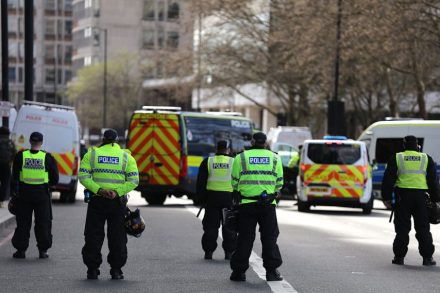
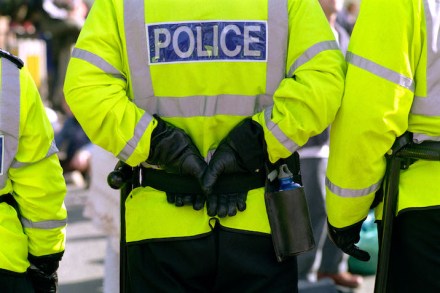
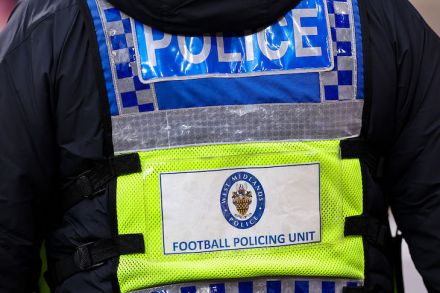
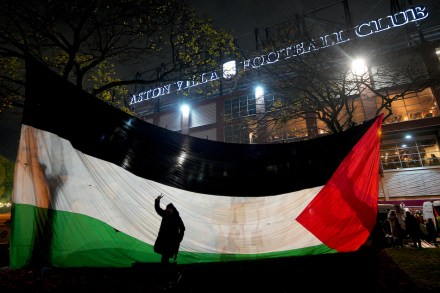
Each new revelation that has followed the banning of Israeli football fans from Birmingham shows that West Midlands Police is rotten to the core. As more evidence emerges, the case that the force responsible for policing our second city has been captured by sectional interests becomes stronger. The association between the police and Green Lane mosque is one which the mosque is keen to promote The most recent information released into the public domain shows just how deeply ingrained that infiltration has become – and how it goes to the very top.

The chief of West Midlands Police must resign

From our UK edition

The actions of West Midlands Police in the case of the Maccabi Tel Aviv football ban are perhaps the most dramatic demonstration in modern times of what happens when a police force no longer operates ‘without fear or favour’.  The information now in the public domain shows there was never sufficient justification to ban the Israeli fans. Yet West Midlands Police have consistently claimed a ban was necessary following consultation with the ‘community’. Yet who exactly are the ‘community’ here? Indeed, who defines what the ‘community’ is? The ‘community’ apparently included three organisations who had previously hosted Islamic preachers who promoted antisemitic conspiracy theories or called for the death of Jews.

Mark Rowley may have blown his chance to reform the Met

From our UK edition

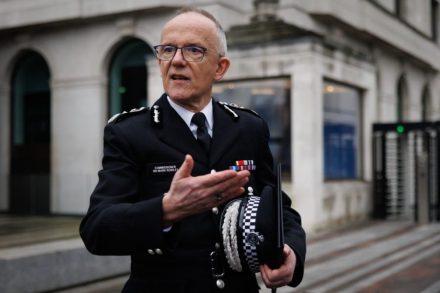
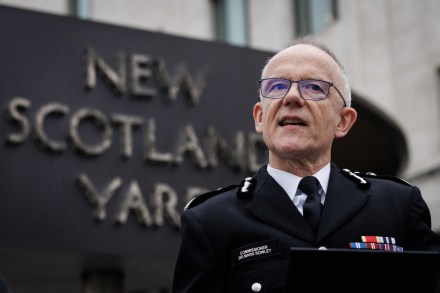
When the history books reflect on the commissionership of the Metropolitan Police Chief Sir Mark Rowley, there is a risk – with less than two years of his five-year term to go – that the headline will be 'an opportunity wasted'.  Appointed in the midst of too many crises to recount, late 2022 was the chance for the force’s new leadership team to turn the Met into a genuinely effective crime-fighting machine. But this isn’t what happened. Despite falls in knife crime offences this year compared to last, in the last full financial year the Met recorded far higher rates (per 100,000 of the population) of knife crime compared to other areas: 17.8 per cent higher than the West Midlands, 36.8 per cent higher than Greater Manchester, 44.

Police and Crime Commissioners failed to hold useless officers to account

From our UK edition

Few will mourn the loss of Police and Crime Commissioners following the news that the government intends their abolition in 2028. An unloved part of our democratic settlement, many of those elected as PCCs failed to capture the public’s interest in the way that was intended when Theresa May as Home Secretary legislated for their creation in 2011. PCCs were a valiant, but ultimately poorly implemented, attempt to hold Chief Constables to account for fighting crime But in the rush to celebrate their demise – and in building what replaces them – we should not forget their original purpose: to expose chief constables from behind the shroud of accountability which they operate, and to increase the democratic connection between police forces and the public they serve.

When will the prisons minister face up to the jail crisis?

From our UK edition

The latest episode in the rolling farce that is His Majesty’s Prison and Probation Service was this week revealed to be yet another foreign-born sex offender released in error. Brahim Kaddour-Cherif, an Algerian sex-offender, was let out by mistake from HMP Wandsworth over a week ago. He was only recaptured today after nine days on the run. What steps has the Prisons Minister, Lord Timpson, taken following this most recent incident? But now that one of the big questions in Westminster doesn’t concern the whereabouts of the latest pervert erroneously released by the Prison Service, attention is turning to what steps the Prisons Minister, Lord Timpson, has taken following this most recent incident?

The questions the Met must answer over the Graham Linehan debacle

From our UK edition

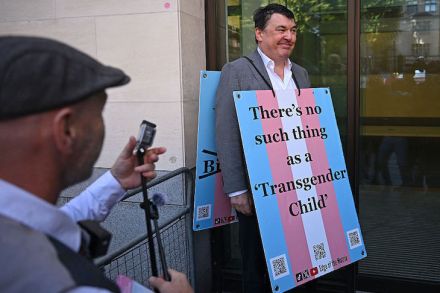
Is the Met on an inadvertent campaign to make Nigel Farage the Prime Minister? Politically he is the only winner from the arrest of the comedy writer Graham Linehan at Heathrow Airport on Monday, for a series of posts made on the social media platform X earlier this year. A senior police officer with a functioning brain cell should have reviewed the investigation and ended the fiasco The circumstances behind the arrest, by armed officers, are so bizarre that they almost beggar explanation. As a former Detective Chief Inspector in the Metropolitan Police I have a fairly good sense about what happened in this case – and how it could have been avoided. The three offending posts were made on the 19th and 20th April 2025.

The Met must fix London’s street crime crisis

From our UK edition

It’s a statement of the bleeding obvious: London is in the grip of a street crime epidemic. Between 2021 and 2024, knife crime in London increased by 58.5 per cent to 16,789 offences – the highest number ever recorded. Most, about 60 per cent, are robberies, and in a significant proportion of them the item stolen was a mobile phone. Over 81,000 mobile phones were reported stolen in London last year. What has gone wrong, who is responsible and what can be done about it? One of the key insights Policy Exchange reveal in its report today is that knife crime is highly geographically concentrated.

The Met deserves credit for its robust response to Palestine Action

From our UK edition

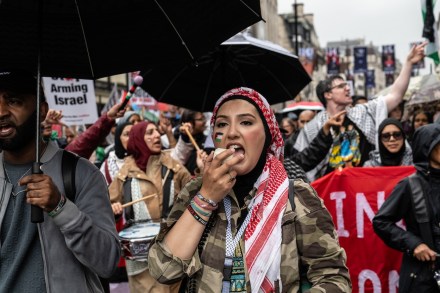
Palestine Action's attempt to defy a ban on their protest outside parliament yesterday was one of the most vital tests of Sir Mark Rowley’s five-year term as Commissioner of the Metropolitan Police. It was a test he passed and the Met should be applauded – but the police's robust response to this dangerous far-left extremist group must not be a one off. The police's robust response to this dangerous far-left extremist group must not be a one off For too long, members of the public, Parliamentarians and Parliamentary staff have been harassed, abused and intimidated at protests in Parliament Square. Too often, the authorities in Westminster have been timorous in their approach to disruptive protestors.

Why won’t the Met Police deal with Palestine protestors blocking parliament?

From our UK edition

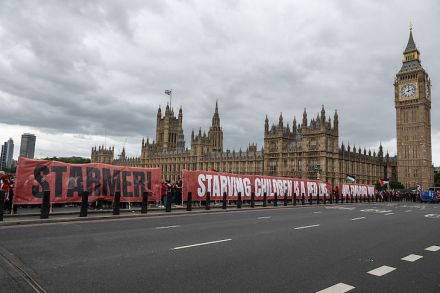
Does the Metropolitan Police have more respect for the rights of aggressive protestors than it does for Parliament itself? That's the unavoidable question after the Met handled the latest demonstrations outside the Palace of Westminster with the usual kid gloves. If the police were not aware of the protestors’ plans, how could such a failure of open-source intelligence occur? For several hours last Wednesday, many hundreds of Palestine Solidarity Campaign supporters gathered on the perimeter of the Palace of Westminster, effectively surrounding the Parliamentary Estate. As has become the norm at such events, the police appeared to be unwilling to enforce free and unobstructed access to Parliament so long as protest groups are able to mass sufficient numbers of individuals.

Two-tier justice is taking over the courts

From our UK edition

Two years ago, few had heard of the term 'two-tier justice'. Indeed, Ministers and leaders across the criminal justice system have spent much of that time vigorously denying its existence. Yet the examples of a justice system which is failing to deliver 'equality before the law' are numerous: the failures of the police and prosecutors to act when individuals chanted for ‘jihad’ at a political rally; the sexual abuse of many hundreds of children in Rotherham because professionals feared being accused of racism; the postcode lottery of how non-crime hate incidents are recorded depending on which police force area you live in.

Has Mark Rowley made London safer?

From our UK edition

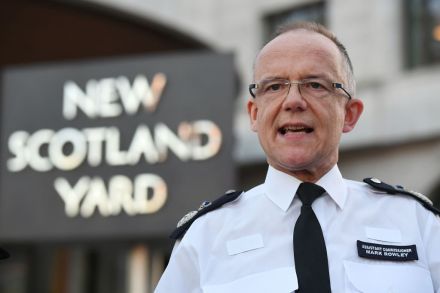
Today marks a year since Sir Mark Rowley became Commissioner of the Metropolitan Police. When Rowley took over, his predecessor Cressida Dick had been pushed out of office, the force had been placed into ‘special measures’ for the first time in its 200-year history, and public trust had cratered following the conviction of police officers for some of the most heinous crimes imaginable. So has Rowley managed to steady the ship? Over the past year there is no doubt that Rowley has made progress. He has restored stability – a feat that should not be underestimated. More wrong ‘uns in the force are now facing misconduct proceedings and criminal trials.

Mark Rowley is right to tell Met officers not to take the knee

From our UK edition

The Met Commissioner Sir Mark Rowley has hinted that the capital’s police officers are to be banned from activities such as wearing political badges on their uniforms, flying colourful flags from police stations and ‘taking the knee’ at protests. 'Once you start having environmental and other subjects there are lots of people in the organisation who will personally support those causes and that is OK, but the Metropolitan Police explicitly supporting them is quite tricky. I’m fairly narrow-minded on this. There are very few causes policing should be attached to,' he said. Some will dismiss this announcement as mere frippery, not worthy of the time of someone in as important a role as the commissioner. They are wrong.

Mark Rowley’s Met honeymoon is well and truly over

From our UK edition

Over the coming days we will see the Metropolitan Police at its very best. As the world descends on London for the coronation of King Charles, the force will execute a plan that has been decades in the making. As the past year has shown, there are few tasks the Met excels at more than protecting the public and dignitaries when the capital hosts huge occasions of state.  Meanwhile, the day-to-day policing of London goes on – and it is here that the Met’s difficulties start. It is now eight months since Sir Mark Rowley started his term of office as commissioner of the force. He has started to make progress on standards and conduct within it, unearthing more rotten apples along the way.

Has the Met learnt anything from the case of David Carrick?

From our UK edition

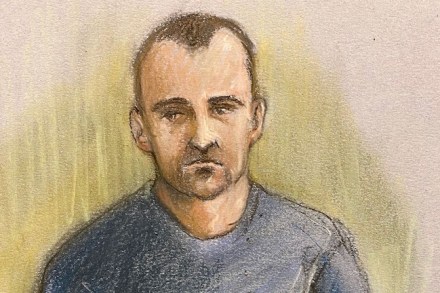
It’s another bad day for the Metropolitan police. The serial rapist former PC David Carrick has been given 36 life sentences and told he will not be released for at least 30 years. The details of the case are hard to believe: Carrick, known as 'Bastard Dave' to colleagues, has admitted using his status as a police officer to commit 48 rapes. The 48-year-old carried out a spree of dozens of offences against 12 women in a 17-year long campaign of depravity. The horrors of what Carrick did to his victims has led to another public examination of the inner workings of the Met. Once again, the force has been found wanting. That policing has had, for nearly two decades, one of the most prolific rapists in British legal history serving as an officer is shocking enough.