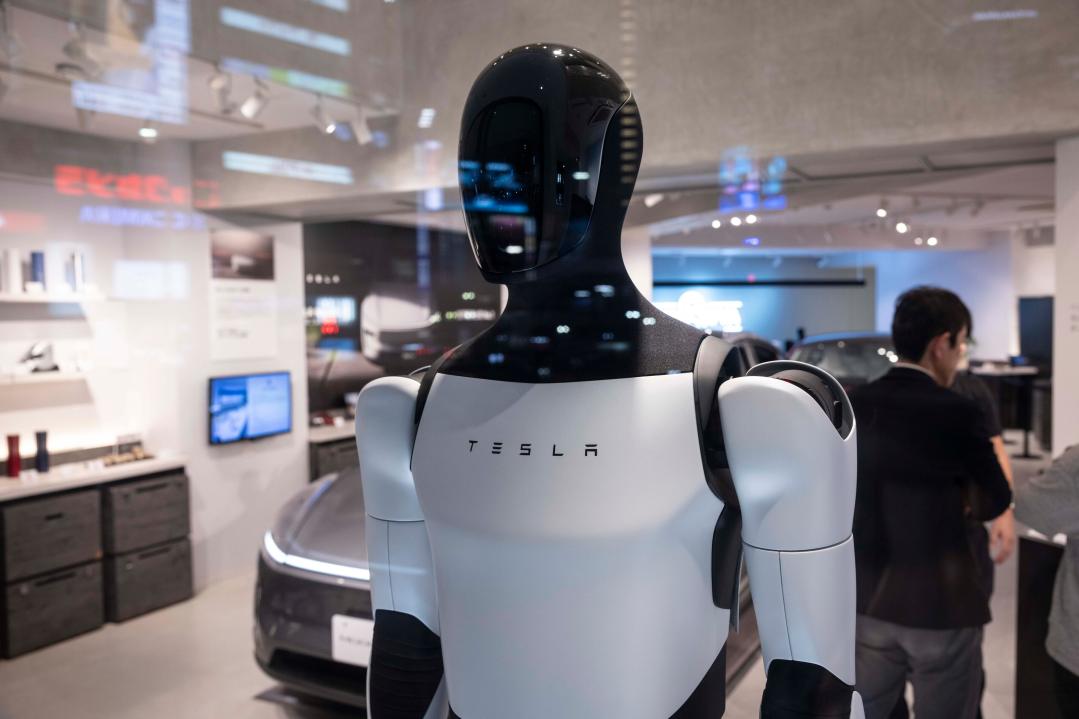
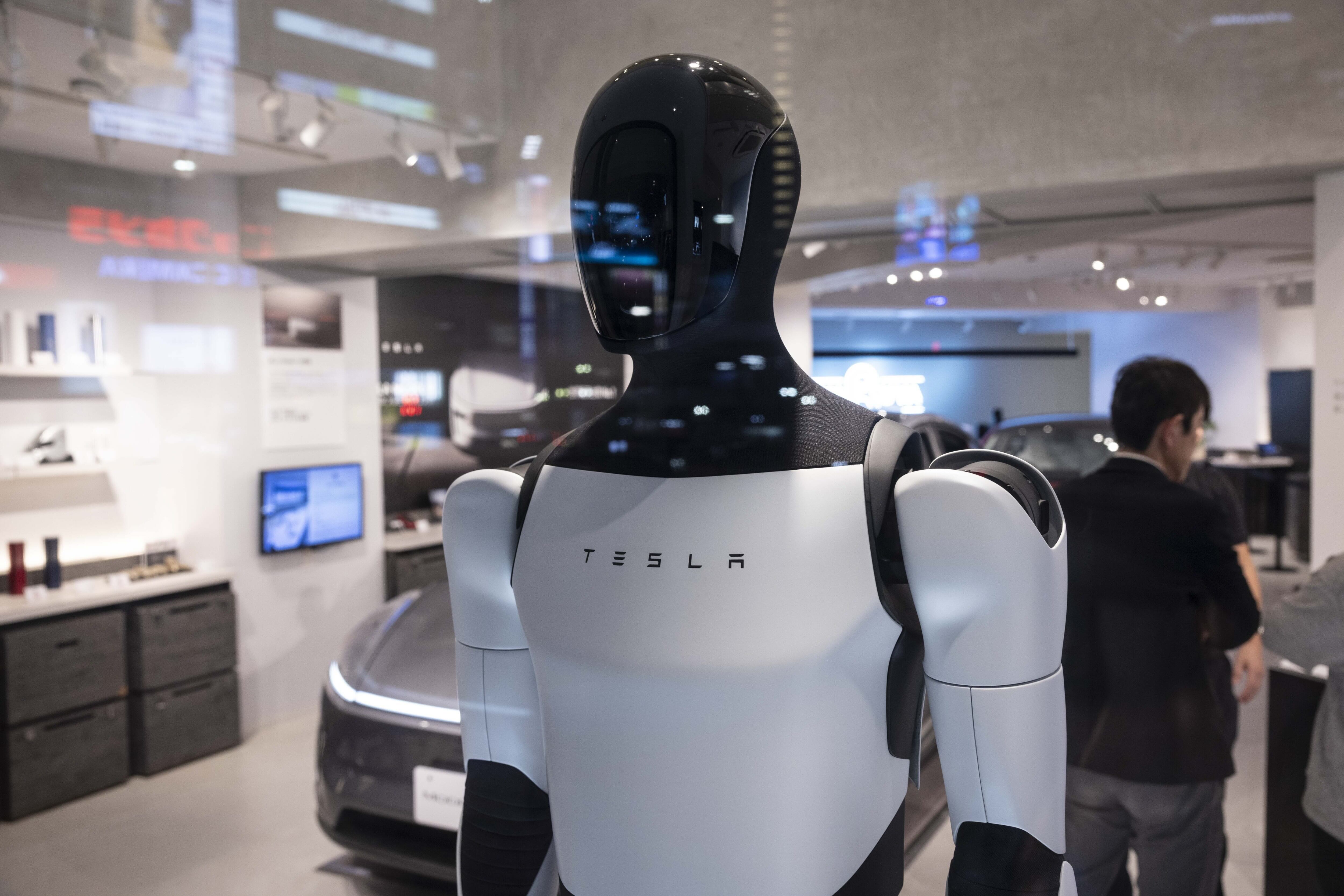
During the first half of this year, Chinese carmakers achieved a feat of hyper-production that sounds less like industrial manufacturing and more like a plague of locusts. In just six months, they unveiled 650 new models – an average of four brand-new cars every day. At the same time, on the other side of the Pacific, Elon Musk abandoned Tesla’s car assembly lines. He retooled the entire factory to mass-produce the Optimus humanoid robot.

What on earth is happening to the world’s car industry? These two bizarre developments seem to signal the end of the global automotive industry as we know it. The age of spanner-wielding, oily-fingered car worker emerging from under a jacked-up rolling chassis appears to have been vaporised. The world’s motoring companies are now run by software engineers who treat the car as a large, rapidly depreciating smartphone on wheels.
Back in the distant 20th century, buying a new car was a deliberate, tactile milestone. You spent weeks studying glossy brochures and motoring magazines, debating the merits of a 1.6-litre over a 2.0-litre, and haggling under plastic bunting with salesmen over the colour of velour upholstery. When you finally drove that Mondeo or Golf onto your drive, you did so with a sense that it would be polished, maintained and kept as part of your household for perhaps a decade.
Today, that relationship has gone. There’s a bizarre, schizophrenic paradox on the roads of Great Britain. Data from the Society of Motor Manufacturers and Traders shows the average age of British cars has crept up to a record high of 9.7 years. But, look closer, and you’ll find the concept of new private ownership is effectively dead.
Roughly 90 per cent of all new cars in Britain are now obtained through Personal Contract Purchase or leasing agreements. The modern British motorist no longer buys; they subscribe. At the end of the 36-month term, few meet ‘balloon payments’ to own the vehicle. They hand the keys back, upgrading immediately to the next iteration.
We have become a two-tier motoring nation: at the bottom, hard-pressed families nursing ageing petrol and diesel cars from economic necessity; at the affluent top, vehicles being treated like mobile phone upgrades – perfectly good cars discarded because dashboard screens have grown an inch wider.
The world’s motoring companies are now run by software engineers who treat the car as a large, rapidly depreciating smartphone on wheels
The rough dividing line is an income around £50,000 a year. Because of this economic barrier, way above the average wage, 79 per cent of all car transactions in the UK are for used vehicles. New vehicles have changed from standard middle-class staples to an exclusive tech streaming service for high earners.
To feed this modern appetite for the latest software refresh, European brands like Volkswagen, BMW and Stellantis have abandoned old rules of mechanical variety. Engineering unique cars is a dead art. Instead, they build unified, modular ‘platforms’ shared among marques and models. These are increasingly standardised battery-packs-with-wheels plus different branded metal shells on top.
At the same time, humans are being cleared off the factory floor. Forget robotised arms or automated painting devices, global makers like BMW and Hyundai have integrated thousands of functioning bipedal robots into their assembly lines. Crucially, car manufacturers are not merely buying these robotic workforces from Silicon Valley; they are fabricating them in-house. This is where the modern industrial age reveals itself.
To an AI developer, self-driving electric cars and humanoid robots are computationally identical. Both are examples of ‘Embodied AI’ – brains that perceive the physical world via cameras and sensors, calculate spatial geometry and make split-second adjustments to carry out tasks. The expensive neural networks and micro-motors developed to navigate an electric vehicle through a British roundabout are the same tools needed to guide a robot through hoovering your stairs.
Automakers have realised they are no longer in the transport business; they are in the autonomous machine business. That started with Tesla and now China’s BYD has declared humanoid robotics are its next core business. It is preparing to unveil its first public robots next month, which will be sold via its global network of dealerships.
As far as I can see, the manufacturers currently building human-like robots for their factories are: Tesla, Hyundai, BYD, XPeng, Xiaomi, Toyota, Chery, GAC and, recently announced, Mitsubishi. Meanwhile BMW, Mercedes-Benz, Nissan, General Motors, Nio and Geely are using bi-pedal robots to make cars in their factories.
They are all hurtling us rapidly toward a surreal finale. You may one day walk into a Toyota showroom to find the salesman is an AI-powered humanoid machine. You’re not there to choose a car. Instead, it sells you a personal AI robot manufactured by the former car company. It will do your gardening or laundry. It will slip into the passenger seat of your driverless pod. You will both then take the sterile, silent journey home.






Comments