The American political elite have developed a peculiar habit of styling themselves as outsiders. The closer they stand to power, the less likely they are to claim it as their own. In fact, power always seems to be in the hands of someone else, someone located just out of sight. So where exactly does it reside in this late-stage republic? Nobody seems quite certain.
Two new political memoirs, one seeking to clarify the past, the other aimed implicitly toward the future, share this bewilderment. Surprisingly, they also share a good deal else. There is a common obsession with European heritage, Jill Biden through her Italian roots, and J.D. Vance through his love of Great Britain and his adopted Roman Catholicism. In one scene, Jill takes the opportunity to contemplate her lineage while visiting a church in Sicily. In another, Vance worriedly ponders the absence of churchgoers – and the implications for western civilization – from the nave of a towering cathedral in Bordeaux. Both, by their own accounts, find refuge in prayer and family.
Jill’s View from the East Wing tells the story of the Biden White House, from the distant origins of Joe’s 2020 campaign through the elderly president’s graceless exit from the political arena midway through his 2024 reelection bid. She narrates from a partisan perspective, greeting events with a combination of confusion and detachment. She is also prone to oversharing. There are candid accounts of Joe’s urological issues (we learn he made seven trips to the bathroom in one night), her own battle with menopause and more in these pages.
Vance diagnoses a deeply sick country where status worship has betrayed the American family
“I didn’t want to waste too much energy looking back and asking how this could have happened,” Jill writes, referring to her husband Joe’s diagnosis, last spring, with Stage 4 prostate cancer just weeks out of his presidency. It is this incurious instinct that animates her book: the same treatment is applied to the entire feverish saga of the Biden-Harris administration.
In her brief telling, Jill seems to make the argument – sometimes inadvertently – that wherever power may have resided during the Biden presidency, it was not in her husband’s hands. Nor was it her own, despite many allegations. This is, at times, difficult to reconcile with her admissions of leaving sticky notes with foreign policy advice (“Net[anyahu] has to stop”) on her husband’s mirror before departing for her teaching job at Northern Virginia Community College. But the underlying passivity of the Bidens feels real. Instructions are passed along by mysterious staffers. A “harried aide” is as likely to be blamed for the improper storage of classified documents as he is to command Jill to sit for a magazine interview.
It seems that Jill did not always feel as if her family were in power. She even hints at a conspiracy against the Bidens, implying that one of Hunter’s drug “girlfriends,” who testified against him for immunity during his firearms trial may have been some kind of agent sent to compromise her son. Why, Jill asks, did the woman take “well-framed, well-lit pictures of the drug scale, of the drugs, of her and Hunter together with the drugs, almost as if she were filming a nature documentary”?
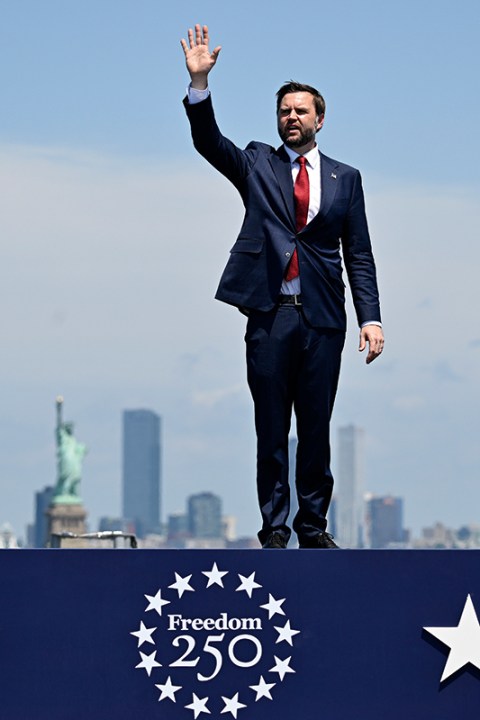
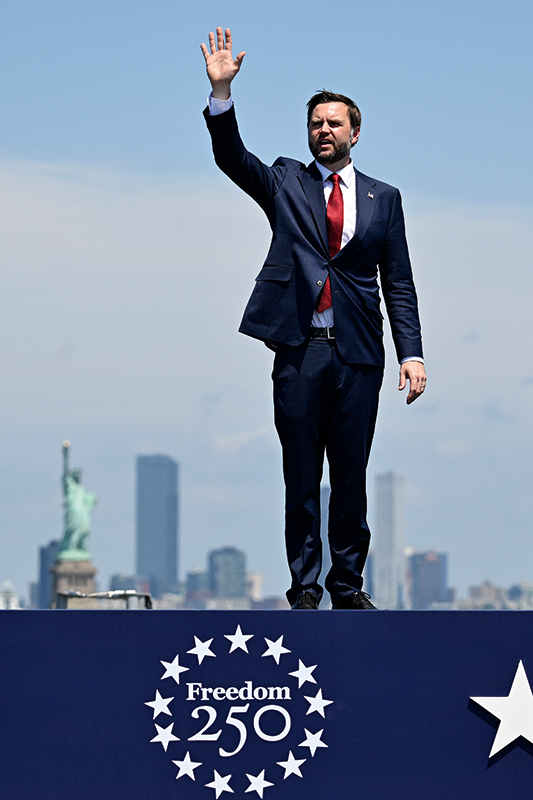
In J.D. Vance’s Communion, the incumbent Vice President tells the story of “how a guy like me, who was raised Christian but considered himself an atheist for a time, came back to the faith.” In narrating his conversion to Catholicism, he reveals a journey through a post-Christian America, a world in which status has replaced faith and moral virtue as the primary belief system and measurement of a good life.
In Vance’s tale, the underlying religiosity of a country first settled by religious separatists has not abated. Instead, Americans have channeled their fervor into their careers, at the expense of their families, communities and country. Vance himself, a poor kid “desperate to make it,” became obsessed with rising above others. During his ascent from enlisted Marine to Yale law student to venture capitalist to best-selling memoirist and politician, he recognizes that he “had become, without realizing it, a striver,” and that the accolades he earned were meaningless without loftier goals. “Yale had a way of turning real vice into perceived virtue,” he writes with the contempt of the deceived.
In recounting his ascent, Vance diagnoses a deeply sick country where status worship (he describes this in terms of René Girard’s mimetic desire, fused with Ayn Rand’s Objectivism) has betrayed the American family. This pathology has hit women the hardest. “For the first time in our history,” Vance warns, “women are having fewer children than they want.” His summary of the emptiness which drove him back to faith is brutal in its self-reflection:
We fought over jobs we didn’t actually want while pretending we weren’t fighting for them at all. Our prize for winning the meritocratic game was a desk job at an investment bank, preparing pitch decks, or at a law firm, billing hours, making just enough to buy our way into a sense of social superiority.
On his quest, he gets far closer to developing a theory of American power than Biden. Leaning into the Catholic social tenet of subsidiarity, he advocates a more protectionist political doctrine and a governing mentality that puts the American family ahead of what’s best for the gross domestic product. He argues against the “hypereconomic logic” responsible for the dwindling birth rate. Jill, by contrast, does not really offer a theory of anything, even as she claims to write “for my own understanding, and for the sake of history.”
The vacuum of leadership becomes especially apparent when Vance, then a junior US senator, joins the congressional delegation to the 2024 Munich Security Conference. From inside the room, he gives a voyeur’s perspective on deliberations, in which he resisted the consensus surrounding the Russia-Ukraine war. He laments the way in which the empty language of secular liberalism, with its vague talk of “rights” and “shared values,” has replaced the Christian moral framework that originally imbued the postwar liberal order with meaning. “These men and women had taken God out of their postwar oaths and alliances, and they wondered why so much else had been lost as well.”
While Vance admits that his interlocutors – a nostalgic, Atlanticist “boomer leadership” – technically hold power, he explicitly rejects their depiction as “evil genius puppet masters.” These figures are instead portrayed as well-meaning fools, blinded by their nostalgia for the “disastrous consensus” of the rules-based international order. Having finally been admitted to the halls of power, he struggles to locate its source, even within the most vaunted chambers of the western security establishment.
The great crescendo of Jill’s narrative comes during Joe’s disastrous debate with Donald Trump in June 2024. Her description of the night which ended her husband’s five-decade political career, clearing the way for the Trump-Vance ticket, is an odd one. Even before the debate, Jill wonders if her husband was “made of clay.” As he flails on stage, mumbling that “we finally beat Medicare,” she wonders whether he’d been drugged or was having a stroke, and compares him to a glitching hologram. “Is he short-circuiting?” Afterward, she takes him for a midnight snack at Waffle House. That night, Joe was “not who we saw on a regular basis,” she insists.
Shortly thereafter, “major forces” began conspiring to oust him, she says: a phone call from Barack Obama, a George Clooney op-ed in the New York Times. While her husband dithered about dropping out, Jill claims she was “at odds with his advisors.”
Jill wonders whether Joe was having a stroke, and compares him to a glitching hologram
“I was told that people had begun telling fundraisers to stop giving to Joe’s campaign,” she writes. Meanwhile, Joe’s staff still considered him up to the job. What people? What advisors? What staff members? It was, she reports, “Democratic party leaders” who concluded that their own sitting president was no longer a viable candidate.
At one point, toward the end of Communion, Usha Vance suggests that J.D. read Joan Didion’s The Year of Magical Thinking. Vance reveals that his wife, unlike himself, is unsettled by the idea of death, and found Didion’s account of the year following her husband’s sudden demise, mid-sentence, from a heart attack at the dinner table, “cathartic.” Vance explains his own apathy toward either physical death or the spiritual death of hell. What terrifies him instead is civilizational death, the thought of not knowing “whether what comes after you will be as beautiful and wonderful as what came before.”
Jill is not particularly worried about questions of this magnitude. As a rule, she describes events that occur beyond her immediate family with remarkable superficiality. She is instinctively backward-looking (apart from the planning of Joe’s funeral and her own), doesn’t seem overly concerned with that which outlives her.
Both memoirists conclude that these are grave times in American politics, and that society is eroding. Yet their responses to these similar observations, couched in a shared language of faith and family, are aimed in opposite directions. Where Biden rejects meaningful reflection, retreating inward, Vance asks the biggest and maybe least answerable questions of all, about civilization, God and the future of this republic. In illuminating his own Catholicism, he describes how he would like to govern. But he too writes with the self-image of an outsider, rather than the authority befitting an incumbent.




Comments