
Everyone knows the story of the Earl of Sandwich: keen not to interrupt a late night card game at his club, he asked for roast beef to be sliced and put between two slices of bread, to allow him to eat it with his hands without stopping his game. And lo, the sandwich was born. But perhaps less familiar to us is that 140 years later, some 4,500 miles away from the Earl’s cribbage game, another problem was being observed, and was solved in a strikingly similar way.
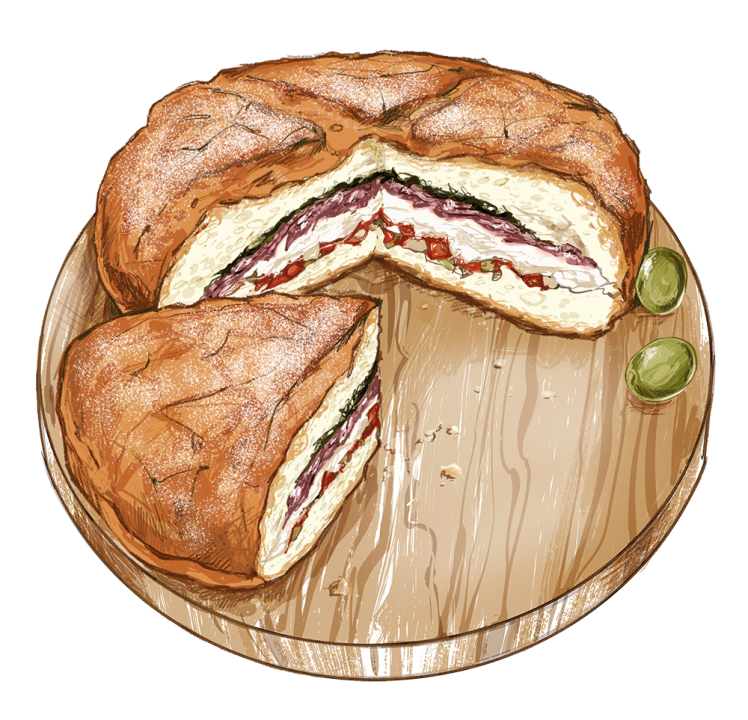
The turn of the 20th century saw an influx of Sicilian immigrants to New Orleans; almost 300,000 arrived in the city between the 1880s and 1920s, setting up shop (literally) in the French Quarter, in an area that became known as Little Palermo. They brought with them a whole host of Sicilian traditions, dishes and ingredients – including the muffuletta. Muffuletta (spellings vary) is a Sicilian bread, round and flat with a spongy crumb, and often topped with sesame seeds.
The key to this sandwich is bold generosity. Spoon on the olive salad until you start to question yourself
In 1906, Sicilian Salvatore Lupo opened Central Grocery in Little Palermo. He watched his fellow Sicilians shopping for traditional ingredients – meats, cheeses, relish, and the distinctive round, flat bread – and then trying to eat them and generally making a mess. He assembled the constituent parts inside the muffuletta bread, which quickly became the name of the sandwich as well. Central Grocery still stands today on Decatur Street, and still serves the muffuletta made to Salvatore’s original recipe.
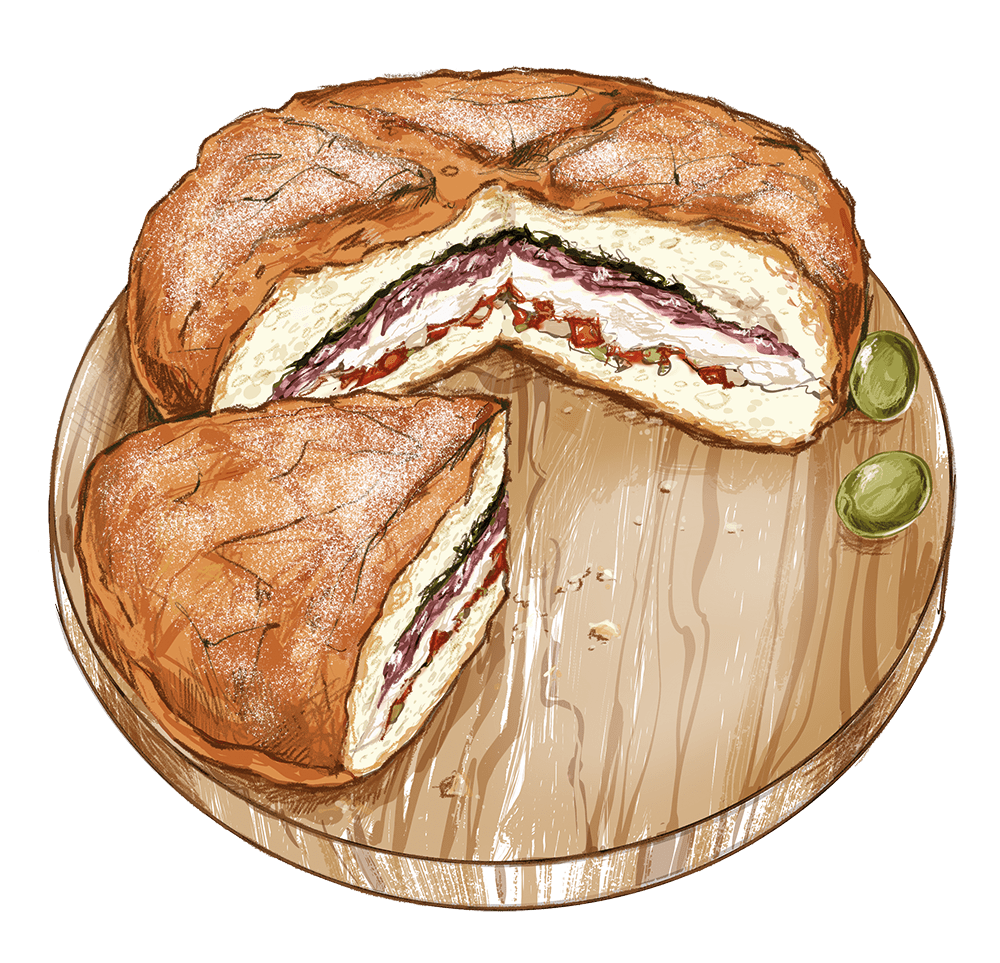
There are four integral elements to a muffuletta: the bread, cheese, meat and olive salad. There is variation, but all need to be present in some form to achieve a true muffuletta. Even the temperature of the sandwich varies. While it is traditionally served cold, Cochon Butcher, where I first tasted a muffuletta when on honeymoon in New Orleans a decade ago, serves its toasted, with the provolone cheese melting into the sandwich.
This is probably one of the most inauthentic recipes I’ve given, because it is highly doubtful you will find the eponymous bread unless you live in The Big Easy. The olive salad, too, is unlikely to show up on the supermarket shelf in Salford or Aberystwyth. And it’s hit or miss whether you can easily find provolone cheese. But even when you plump for all of the substitutes, and thereby make the most technically inauthentic muffuletta possible, if you have the four constituent parts, the flavour and spirit will be true.
If you can’t get provolone, you want a semi-firm cheese with a bite to it: gruyère or emmental work very well. A mixture of meats is ideal: I like salami and mortadella, but prosciutto or coppa or ham would all fit the bill. Whichever meats you choose, they should be thinly sliced, so that they can be layered in ripples. The bread itself may have given the sandwich its name, but there are good alternatives: I tend to use a standard cob loaf or a Ramazan pidesi, the puffy, seed-sprinkled Turkish flatbread. But ciabatta or focaccia will work – anything with a not-too-soft crumb and a not-too-crusty crust.

The olive salad, which gives the sandwich a unique flavour, is easy to make. Simply combine the component parts from existing pickles: mixed pickled veg (extra points if there’s cauliflower here), black and green olives, pickled, spicy pepperoncini, and roasted red peppers, all roughly chopped, and mixed with a slosh of olive oil and red wine vinegar.
The key to this sandwich and its assembly is bold generosity. Spoon on the olive salad until you start to question yourself, do not be cowed by the amount of cut meat you place lovingly on top of that relish, nor by the slices of cheese that go on top of that.
You can eat your muffuletta as soon as it’s assembled, and if you order one in a New Orleans deli, this is the most likely way it’ll reach you. But I rather like Kenji Lopez-Alt’s impulse-control version. He exhorts you to leave the sandwich for an hour after construction, to let the flavours mingle and absorb into the bread, and give everything a chance to relax a little. Isn’t it always a good thing for everything to relax a little?
Serves: 4
Hands-on time: 10 minutes (plus chilling)
Cooking time: no time at all
For the bread
- 1 round, flat loaf (ideally a muffuletta, but crusty cob loaf or Ramazan pidesi both work well here)
- 100g sliced salami
- 100g sliced mortadella or ham
- 60g sliced provolone cheese (or substitute with gruyère or emmental)
For the olive salad
- 200g mixed pickled vegetables
- 10 green and 10 black olives, stoned
- 1 whole roasted, marinated red pepper
- 2 pepperoncini
- 1 tbsp olive oil
- 1 tbsp red wine vinegar
- First make the olive salad. Roughly chop the mixed, pickled vegetables, both olives, and both types of pepper. Stir through the olive oil and the red wine vinegar, and leave to sit until needed. You can make this a couple of days in advance, cover and leave in the fridge; it will only improve.
- Slice the bread horizontally and, if it’s a thick cob loaf, scoop out some of the crumb to create a divot inside the bottom half. If your bread is quite flat, you needn’t do this. Spread the bottom of the loaf generously with the olive relish.
- Layer the first of your meats on top of the olive relish, folding it to create a ripple texture. Then place the sliced cheese on top of this, followed by the second sliced meat on top of the cheese. Replace the lid of the bread, and wrap the whole thing tightly in clingfilm. Leave to rest for one hour.
- Remove the clingfilm, and slice the bread into quarters. Eat it straight away – or toast in a pan,
if you’d prefer the cheese melted.
Join Olivia Potts for Truffles and Trattoria in Rome on 2-6 December 2026. For more details about this Spectator Club trip, go to spectator.com/tastings


Comments