

Here Comes J. Edgar! has a brash poster featuring a cross-dressing FBI agent in fishnet tights with his thighs splayed aggressively towards the viewer. He points a warning finger as if to say, ‘Enjoy this show or go to jail.’
The abrasive imagery aligns with the arrogant tone of most LGBTQ+ advertising but the show itself has a more humane and playful temper. Harry Shearer and Tom Leopold have written a superb tragicomedy about a powerful homosexual who wants to conceal his love life while hunting down America’s most notorious criminals.

We first meet Hoover as he lies in a hospital bed flanked by two chain-smoking nurses who discuss his health while filling the room with tobacco fumes. This quietly amusing scene sets the mood. Hoover muscles his way to the top of the FBI and falls in love with a handsome junior, Clyde, whom he appoints as his lifelong assistant – effectively a marriage proposal.
His secretary walks in and finds the couple in a clinch which Hoover explains away as a martial-arts hold. Later, she tries to flirt with him and he responds by planting an experimental kiss on her lips. ‘Oh, Mr Hoover,’ she gasps with feigned surprise. ‘What were you thinking of?’ ‘Honestly?’ he tells her, ‘Boy scouts.’
The show doesn’t try to hold its subject to account for his many abuses of power. We see him blackmailing FDR, Eisenhower and Lyndon B. Johnson by threatening to expose their secrets but the illicit deals are treated as harmless fun. His pursuit of the psychotic armed robber, John Dillinger, is played for comic-book laughs as well.
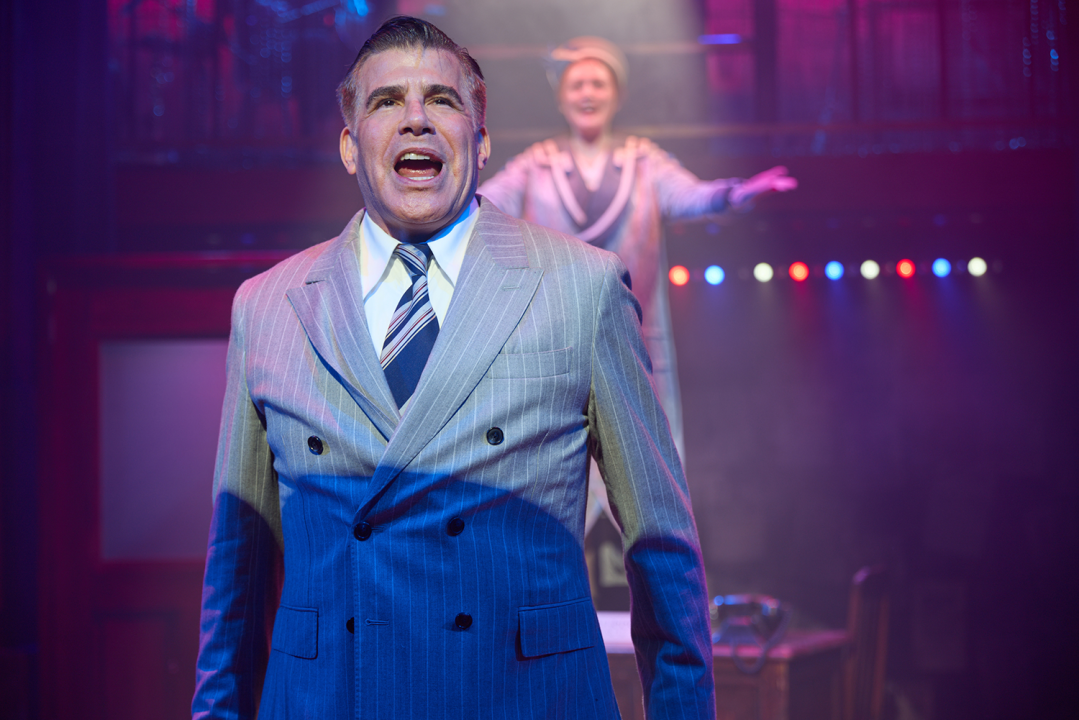
Bryan Batt presents Hoover as an adorable softie who likes ogling men’s body-building magazines while yearning for a quiet life of domestic bliss with the dependable Clyde. His penchant for wearing frocks barely features in the drama, which focuses on his inhibitions rather than on his ability to cast them aside.
The director, Josh Seymour, benefits from a lavish budget and a company of 16 actors plus a band of live musicians. The costumes are great and Jamie Platt’s stage lighting is superb. It feels like a West End show miraculously transferred to an intimate fringe venue. If this is a try-out for New York, it deserves to go all the way because the script is terrific and the show’s atmosphere is irresistibly warm and friendly. A new poster might reflect those virtues better.
A note of warning. Viewers under 30 are unlikely to understand all the references. The show is a paean to the United States at the zenith of its power in the second half of the 20th century. If you weren’t there at the time, you may not appreciate it.
Firebird is a harrowing play about rape gangs written by Rochdale resident Phil Davies. The opening and closing sections are hard to understand but the central scenes expose the gruesome ordeal of a fictional schoolgirl, Tia. (Excellent work from the charismatic Mollie Milne.)
It feels like a West End show miraculously transferred to an intimate fringe venue
Tia is abducted at the age of 14 and raped by multiple Asian men whose leader, AJ, gives her a chilling warning: ‘If you go to the cops you’ll be banged up for whoring yourself out.’ Nevertheless, Tia alerts a detective who promptly shares the information with AJ’s gang. Revenge follows swiftly. ‘I got my head kicked in,’ says Tia. A female social worker hears of the police’s dealings with AJ but she takes no action. ‘I’m here to help you, Tia,’ she says, but her decision to stay silent abets the rapists and prolongs Tia’s ordeal. Later Tia is attacked again and ends up in a wheelchair.
The play premièred in 2015 and this overdue revival deserves all the publicity it can get. The rape-gang story has received very little attention from theatre-makers because it doesn’t conform to their hierarchy of saints and devils. Drama producers like to believe that all minorities are model citizens, that all public-sector workers are community heroes, and that all rich white males are part of a plot to destroy the poor.
The grooming-gang scandal suggests otherwise. Rich white men such as Rupert Lowe and Elon Musk want to support the poor by exposing the cases. Public-sector workers are clueless fence-sitters whose reluctance to speak the truth appears to be supported by a semi-official cover-up. And hundreds of men are guilty of treating children as sex slaves and even ferrying them from city to city to take part in violent orgies.
So why do theatre producers make so little noise about this atrocity? The fact is that theatreland thrives on toadying and flattery. Preferment is won by those who tell powerful people whatever they want to hear. It’s no place for rebels.






Comments