
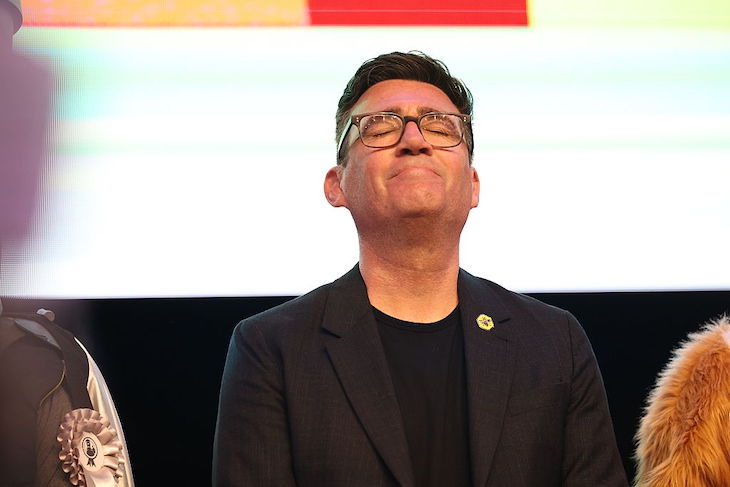
Andy Burnham has catapulted his way back to Westminster in a landslide victory, winning 55 per cent of the vote in Makerfield. The scale of that victory – and how much he trounced Reform – means it’s likely the Labour party hands him the keys to No. 10 in weeks rather than months as James Heale said on Coffee House this morning.
The scale of his by-election victory is the only card Andy Burnham has to play
But if I were the soon-to-be-former Manchester mayor, I would not want the keys to that particular door. An economic mess is all that awaits inside. And that mess was made worse by the latest figures on the public finances released this morning by the Office for National Statistics.
They show the Treasury had to borrow £23.3 billion last month to keep the country afloat. That was £5.4 billion more than in May last year and, crucially, was almost £6 billion more than the Office for Budget Responsibility watchdog had expected borrowing to be in its forecasts. In the financial year so far, the Budget is already off by nearly £8 billion.
Higher than planned debt interest payments were the culprit, totalling £11.7 billion – the highest May figure ever recorded. A large part of that was the ‘capital uplift’ on index-linked gilts which have obviously been pushed up by RPI inflation.
That is what awaits Burnham in Downing Street: a fate in which he will be utterly in hock to the bond markets. And that’s why I wouldn’t want to be him. His voters in Makerfield and his supporters across the country expect him to implement real change. But what on earth can he do?
The debt figures outlined this morning make it clear that more borrowing is not an option. Burnham has made it clear he sticks by Rachel Reeves’s fiscal rules whether he sticks by her or not. You can’t expect him to cut public spending given his appeal is about being left of Keir Starmer, whose backbenchers have destroyed him over the most modest spending cuts.
And so his only option is to hike taxes – and not just on the ‘wealthy’. To implement the kind of change Burnham allegedly wants to see – journalist Joanna Marchong calculates his campaign pledges would cost almost £50 billion a year before you even think about nationalisations – he’d need to bump up the basic rate of income tax. A 1p hike in the basic rate nets you about £8.2 billion while putting up the higher rate gets only £2.1 billion. I suspect Burnham would quite like to do either or both of those things – in spite of the destructive effect it would have on growth. Even then it wouldn’t be enough.
Regardless, Burnham can’t because of the ‘tax lock’ manifesto commitment the Tories dragged his party into during the last general election campaign. A promise that never needed to be made, and one that has left both Starmer and Reeves in a mess they can’t escape.
Given the fiscal realities Burnham would face as PM, boxed in from all sides, the scale of his victory today is the only card he has to play. So, snap election anybody?




Comments