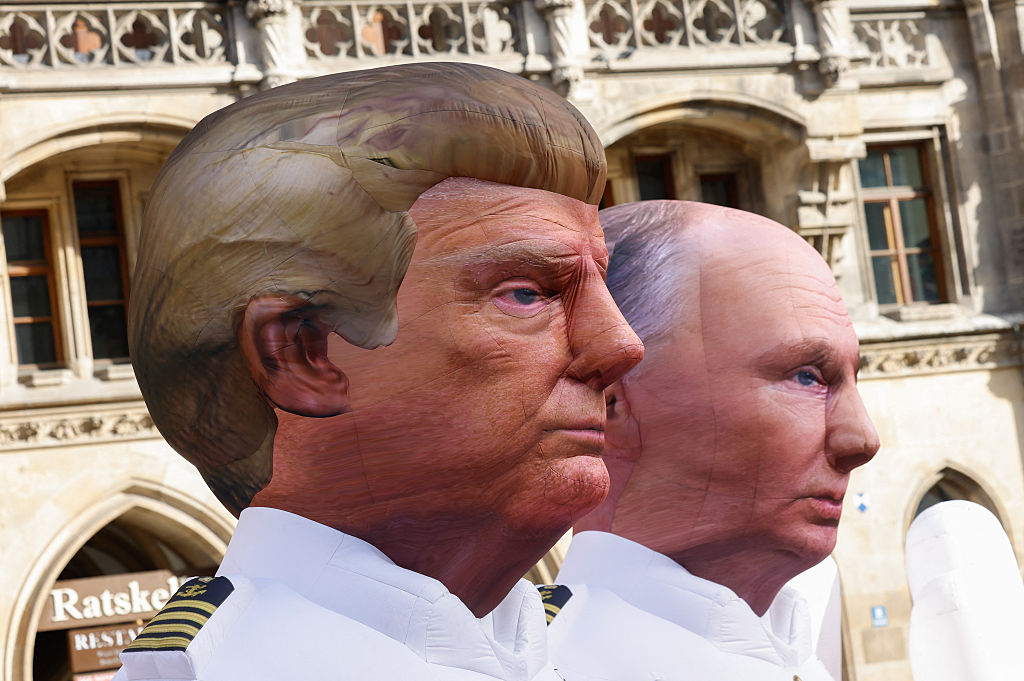


Not long ago, I participated in one of the many off-the-record discussions in Washington about ending the war in Ukraine. This conversation was quite detailed, with American academics and policy wonks asking a European who was especially well-informed on Russian matters just what a land-for-peace deal or security guarantees acceptable to all parties might look like. When my turn to speak came around, however, I had to wonder whether all this wasn’t moot.
There just isn’t much time to reach an agreement – let alone implement one –before the end of Donald Trump’s second term. And when America elects its next president in November 2028, Vladimir Putin will be 75 years old. It’s hard to imagine he’ll still be ruling Russia by the time he’s 80, should he live to see that milestone. Regime change is coming to Russia sooner rather than later, and Putin is hardly in a position to name a successor in advance. Not unless he wants to hasten his departure from this mortal coil.
In the US, the challenge for the American right is to make MAGA a permanent, institutional force
During the Cold War, the United States and the Soviet Union could negotiate as impersonal institutions – though Ronald Reagan, at the end of the frozen conflict, excelled in making superpower politics as personal as possible. Even Reagan felt constrained by the grim reaper: he used to joke that Soviet premiers kept dying on him before diplomacy could make any headway.
Today, the United States government is much more volatile than it was in the late 20th century. One party controlled the US House of Representatives for almost the whole of the Cold War, and presidents enjoyed far deeper and broader public support than they have since the fall of the Soviet Union. Russia, however, is facing not only a change in government a few years from now but potentially a complete reorganization – or disorganization.
It’s not only the US and Russia that are going to be playing their hands from a reshuffled deck before long. Benjamin Netanyahu is 76 years old. Xi Jinping is 73. The nation states that are driving world events at the moment are all due for generation change at the top. We’ve been living in a “great man” era that’s about to pass away. Some of these states may continue on their present course under new management. But they’ll all soon be at junctures where radical change is possible.
In the US, the challenge for the American right is to make MAGA a permanent, institutional force. Trump’s purging of the Republican party of dissidents and oddballs is a step in that direction. Although the remnants of the George W. Bush-era party dream of a return to the year 2000, politics is directed by stronger forces than nostalgia or baby boomer donor dollars. The Republican party of 25 years ago was adapted to the conditions of 25 years ago, when right-of-center voters still thought of mass migration as benign. That attitude has since shifted, in America and Europe alike.
Trump’s departure from office won’t reverse changes that were already in the making before he first won the Republican nomination. He accelerated an adaptation the GOP was going to have to make sooner rather than later. And it seems as if any likely Republican nominee in 2028 or 2032 is going to keep the party on its present path. An institutionally populist GOP might wind up being more Trumpian than the Trump-led party itself. Democrats, meanwhile, are also due for a reckoning over just what they stand for. The Democrats’ activist base doesn’t seem disposed to step away from racial quotas and transgender radicalism, no matter how queasy party leaders might get.
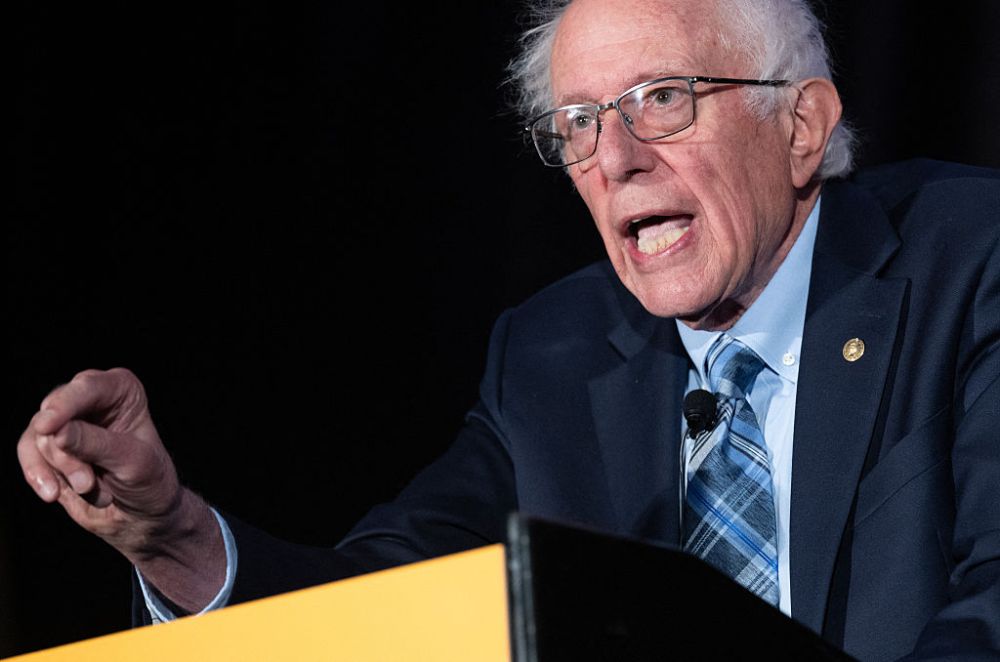
Israel after Netanyahu will have the same security priorities it has today, but the question will be whether the fragmented party system in the Knesset can deliver a functioning majority to any new leader from the right. Entropy, rather than a deliberate change of direction, is the likelier outcome. In China, the opposite is true: the Chinese Communist party won’t let its grip on power slip, but after Xi it could take steps to make sure that future leaders cannot overawe the party hierarchy. Yet there will be temptations to be more assertive, too – to show the party can still wield power with remorseless vigor even without a figure like Xi.
Russia, however, is the greatest question of all. The European expert to whom I directed my question had earlier cautioned his American audience against simply reducing Russian politics to Putin. But if Putin isn’t everything in the Russian system today, he’s the axle around which everything else revolves. His absence will put every institution into play. There’s little room for optimism here: the entropy Russia experienced in the Boris Yeltsin years gave way to Putin, and the KGB/FSB apparatus has survived every vicissitude.
Yet my European interlocutor did see grounds for hope. The rising generation of Russians have now had a long experience of war, and they’re sick of it. Generations have also come of age with no memory of the Soviet Union and, in the case of younger cohorts, no memory of how the transition to a market system was botched under Yeltsin. They’ve instead grown up watching formerly third-world economies rise to (relative) riches in the 21st century, and they’re eager to follow suit. Why shouldn’t Russia emulate the successes of countries with far fewer resources, rather than fighting an endless war in Ukraine? Putin is entrenched enough that he doesn’t have to answer that question. But his successor, however awful he may be, won’t be able to avoid it.




Comments